 how-to
How to Market Listings With Professional Photography
Table of Contents
- Why Professional Photography Is the Foundation of Listing Marketing
- Real Estate Listing Photography Best Practices That Drive Results
- The Benefits of Professional Real Estate Photography for Agents and Sellers
- How to Use Real Estate Photos on Social Media to Reach More Buyers
- Building a Referral Network and Client Acquisition Strategy Around Your Listings
- Integrating Video, Drone, and Virtual Tours Into Your Marketing Plan
- Tracking ROI and Post-Production Marketing for Long-Term Growth
- Frequently Asked Questions
Last Updated: September 25, 2026
Why Professional Photography Is the Foundation of Listing Marketing
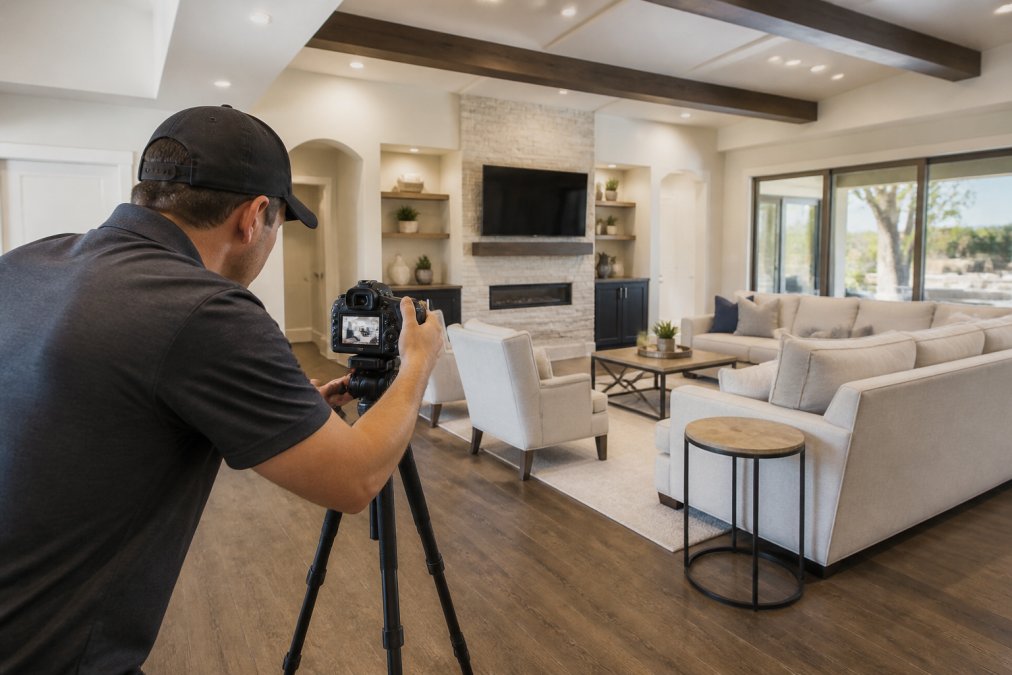
Professional real estate photography uses trained photographers, proper lighting, and edited high-resolution images to present a home for sale. Buyers form their first opinion online, before they ever step through the door.
- Curb appeal decides the click
- High-resolution images hold attention
- Property marketing starts with the photo set
Real Estate Listing Photography Best Practices That Drive Results
The best real estate listing photography follows three rules: stage the home, light it well, and shoot wide. Agents who insist on these basics get sharper images that sell faster.
Preparing the Property: Staging, Decluttering, and Depersonalizing
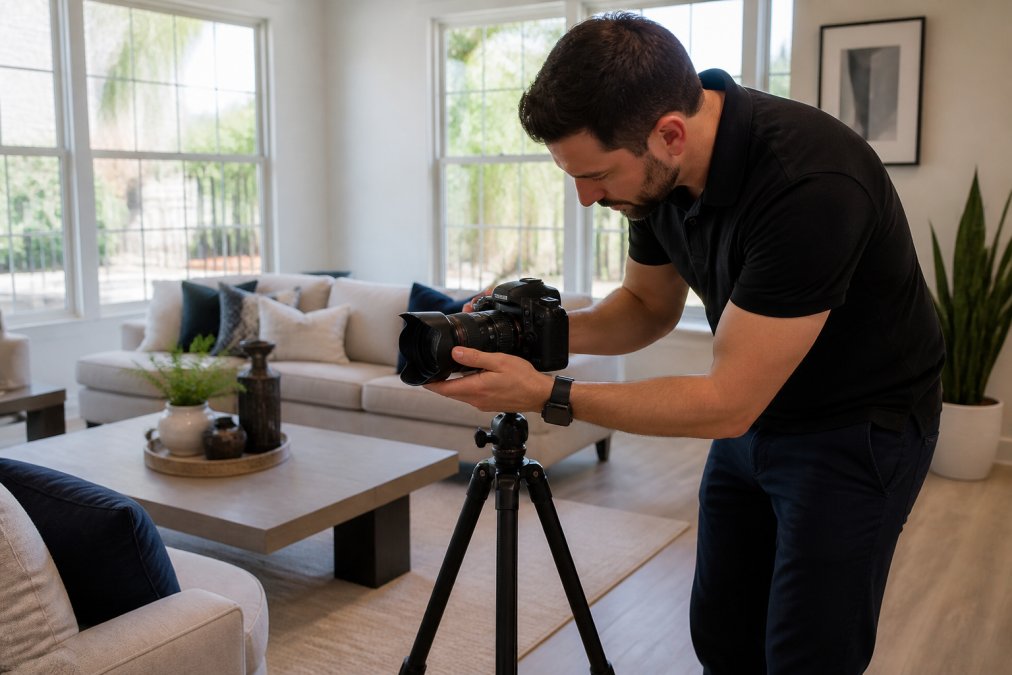
Home staging and decluttering come before the camera arrives. Clear countertops, remove personal photos, and let each room show its purpose so buyers can picture themselves there.
- Remove family photos and personal items
- Clear counters and shelves
- Add simple staging touches like fresh towels
Lighting, Angles, and the Technical Details That Matter
Lighting techniques separate amateur shots from professional ones. A good photographer balances natural and artificial light so rooms look bright, not blown out.
The Benefits of Professional Real Estate Photography for Agents and Sellers
The benefits of professional real estate photography come down to speed, price, and credibility. Better images attract more clicks, which means more showings and often faster sales.
- Stronger conversion rates on listing pages
- Higher social media engagement
- A clear competitive advantage over nearby listings
How to Use Real Estate Photos on Social Media to Reach More Buyers
How to use real estate photos on social media starts with one rule: lead with the best single image. What separates a post that dies from one that travels is rarely photo quality alone, it is the sequence, the crop, and the first three seconds.
The Hero-Shot-First Sequence
Agents who get consistent engagement follow a fixed posting order:
- Exterior hero shot, the single best curb-appeal image, shot at the angle a buyer would see pulling up.
- The "money room", kitchen or primary living space, the photo that answers "is this worth a showing?"
- One lifestyle detail, a staged countertop, a fireplace, a view. This is the emotional beat.
- Primary suite, buyers scroll for the bedroom they will actually sleep in.
- Floor plan or aerial, the context shot that closes the loop for out-of-area buyers.
- Instagram: Use 4:5 vertical crops for feed posts, they outperform 1:1 for real estate. Carousels of 5-7 images hold attention longer than single posts. Reels work best as 7-15 second walkthroughs cut from the stills with a slow pan (the "Ken Burns" effect) rather than shaky handheld video. Put the address or neighborhood in the first line of the caption.
- Facebook: Local neighborhood and city buy/sell groups still drive real showings, but only if you post as a neighbor, not a billboard. Lead with the photo, then a two-sentence description, then the listing link. Facebook's paid boost options let you target by ZIP code and radius, a small daily budget over the first weekend typically reaches the people most likely to tour.
- LinkedIn: Treat this as a credibility channel, not a lead channel. Post the hero shot with a short note about what the listing taught you (pricing, negotiation, staging), and tag the photographer. This is where referral partners, lenders, inspectors, attorneys, see your work and remember you at the next closing.
Captions, Hooks, and the Reply Habit
Keep captions short, ask a question, and reply to every comment, engagement feeds reach. Hooks that work:
- "Which room would you claim?"
- "Just listed in [neighborhood], open Saturday."
- ""
The Post-Production Angle Most Agents Miss
Once the photographer delivers the gallery, the images are raw material, not a finished product. The agents who get the most out of a shoot do three things:
- Cut vertical crops for Reels and Stories the same day, so the listing has a video asset without a second shoot.
- Write the listing description around the photos, not the other way around. If the hero shot is the kitchen, the first sentence of the MLS description should be about the kitchen, this alignment lifts click-through on syndicated sites.
- Save the best 10 images into a reusable "portfolio" folder for your next listing presentation. Over a year, that folder can become a strong pitch deck.
What Not to Do
- Do not post all 30 images. A carousel of 30 images may suggest a lack of curation.
- Do not add heavy filters. The photographer already color-corrected; a filter re-edits their work and can misrepresent the property.
- Do not reuse the photographer's images on your personal brand channels without checking the license. See the licensing note below.
A Simple Weekly Cadence
A pattern that works for most agents with an active listing:
| Day | Post |
|---|---|
| Listing day | Carousel with hero shot first |
| Day 2 | Reel cut from stills |
| Day 4 | Single "money room" image with a question caption |
| Weekend | Open house reminder with exterior shot |
| Following week | Neighborhood or lifestyle detail shot |
Building a Referral Network and Client Acquisition Strategy Around Your Listings
A referral network can grow when your photos present listings effectively.
- Send agents a one-page portfolio showcase
- Follow up after every closing
- Offer a simple email marketing campaign with new work
Integrating Video, Drone, and Virtual Tours Into Your Marketing Plan
Video, drone footage, and virtual staging can transform a static listing into an experience, assisting out-of-state and busy buyers in touring a home without a physical visit.
- Video and 3D tour integration lifts time-on-page
- Drone shots show lot size and surroundings
- Virtual staging helps vacant homes
Tracking ROI and Post-Production Marketing for Long-Term Growth
ROI tracking for agents means matching photo quality to real outcomes: clicks, showings, and days on market. Post-production marketing keeps those images working long after the listing sells.
How to Calculate the ROI of Professional Photography
The math is simpler than most agents assume. You need four numbers per listing:
- Photography cost, the invoice from the shoot.
- Days on market, from MLS active date to accepted offer.
- Showings booked, from your showing platform or lockbox log.
- Final sale price vs. list price, the negotiation outcome.
Track these numbers per listing:
| Metric | What It Shows | Why It Matters |
|---|---|---|
| Listing views | Photo appeal | Measures click-through on syndicated sites |
| Showings booked | Buyer interest | Ties images to action, not just impressions |
| Days on market | Listing speed | Shows pricing and photo impact together |
| Shares and saves | Social reach | Gauges engagement beyond your own feed |
| Sale-to-list ratio | Negotiation outcome | Connects presentation to final price |
Post-Production Marketing: Making the Photos Work After Delivery
The gallery is not the finish line. Three post-production moves turn a delivered shoot into ongoing marketing:
- Listing description SEO. Write the MLS description around the photo set. If the hero shot is a renovated kitchen, leading with the kitchen can be effective. If it is a view, leading with the view can be effective. The thumbnail and the first sentence can be aligned, as that alignment may contribute to clicks on syndicated sites.
- Social ad templates. Build two or three reusable templates (a hero-shot template, a carousel template, a Reel cover template) so every new listing can be posted in minutes rather than designed from scratch. Consistency can also build brand recognition.
- Repurposing for the next pitch. Save the best 10 images from every shoot into a portfolio folder. Over a year, that folder can become your listing-presentation deck, proof of work.
Legal and Licensing Considerations
When a photographer delivers images, the photographer typically retains copyright unless the contract says otherwise (What Photographers Should Know about Copyright). What the agent receives is a license, permission to use the images in specific ways. Before posting a photographer's work on your own channels, confirm:
- Who owns the copyright, usually the photographer, unless a work-for-hire or full-buyout clause says otherwise.
- What uses are permitted, MLS, syndication, social media, print, paid ads. These are often separate line items.
- How long the license lasts, some licenses are perpetual, some expire with the listing.
- Whether sublicensing is allowed, this matters if the seller, stager, or builder wants to reuse the images.
- Whether credit is required, some photographers require attribution on social posts.
Video and 3D Tour Integration
Video, drone footage, and virtual staging can transform a static listing into an experience, assisting out-of-state and busy buyers in touring without a visit and extending the life of the still gallery, as the stills can become the video's thumbnail and cover frame.
- Video and 3D tour integration lifts time-on-page, which syndicated sites reward with better placement.
- Drone shots show lot size, surroundings, and proximity to amenities that ground-level photos cannot.
- Virtual staging helps vacant homes, where empty rooms read as smaller and colder than they are.
Putting It Together
ROI tracking tells you whether the photography pays for itself. Post-production marketing keeps the images earning after the shoot. Licensing keeps you out of disputes. Video and 3D extend the reach. Running all four together can make the photography line item appear less like a cost and more like a valuable marketing investment.
Frequently Asked Questions
How does professional photography impact real estate listing performance?
Professional photography directly affects how quickly a home sells and for how much. High-resolution images with proper lighting and composition make listings stand out on MLS and Zillow, attracting more clicks and showings. Homes with professional photos typically sell faster and often command higher offers because buyers form a stronger emotional connection from the first image they see.
What are the best ways to showcase professional photos on social media?
Use a mix of single hero shots, carousel posts, and short video walkthroughs. Instagram and Facebook can be effective for showcasing before-and-after edits that highlight your photography's value. LinkedIn can be used for agent branding and referral network building. Always include a clear call to action, like 'DM for a private showing,' and post consistently to build a digital presence that attracts sellers.
Should I include drone photography in my listing marketing plan?
Yes, especially for properties with large lots, unique architecture, or scenic surroundings. FAA-licensed drone photography captures curb appeal and neighborhood context that ground-level shots miss. It is particularly effective for luxury listings where buyers expect a complete visual story. Always confirm your photographer holds current FAA certification to avoid liability issues.
How do virtual tours complement professional photography in listings?
Virtual tours give buyers an immersive walk-through experience that static photos cannot match. They can help reduce unnecessary showings by pre-qualifying serious buyers and allow out-of-state or international buyers to explore the home remotely. Combining professional photos with a virtual tour can create a complete marketing package that may increase engagement and shorten turnaround time from listing to offer.
Marketing listings well takes more than a good camera. It takes staging, sharp editing, and a plan to put those images everywhere buyers look. Desert Home Photography helps Phoenix Valley agents and homeowners do exactly that, with hand-blended imaging, immersive virtual walk-through tours, and FAA-licensed drone photography that make every listing stand out. Call or text Desert Home Photography to book your next shoot and give your listings the visual edge they deserve.