 ultimate-guide
Twilight Photography for Real Estate: Why It Matters
Table of Contents
- Why Twilight Photography Matters for Real Estate
- How Twilight Images Increase Buyer Interest and Listing Engagement
- Best Camera Settings for Twilight Photography
- How to Prepare a Home for Twilight Photos
- Virtual Twilight vs Real Twilight Photography
- ROI and Competitive Advantage for Agents
- Conclusion
- Frequently Asked Questions
Last Updated: September 24, 2026
Why Twilight Photography Matters for Real Estate
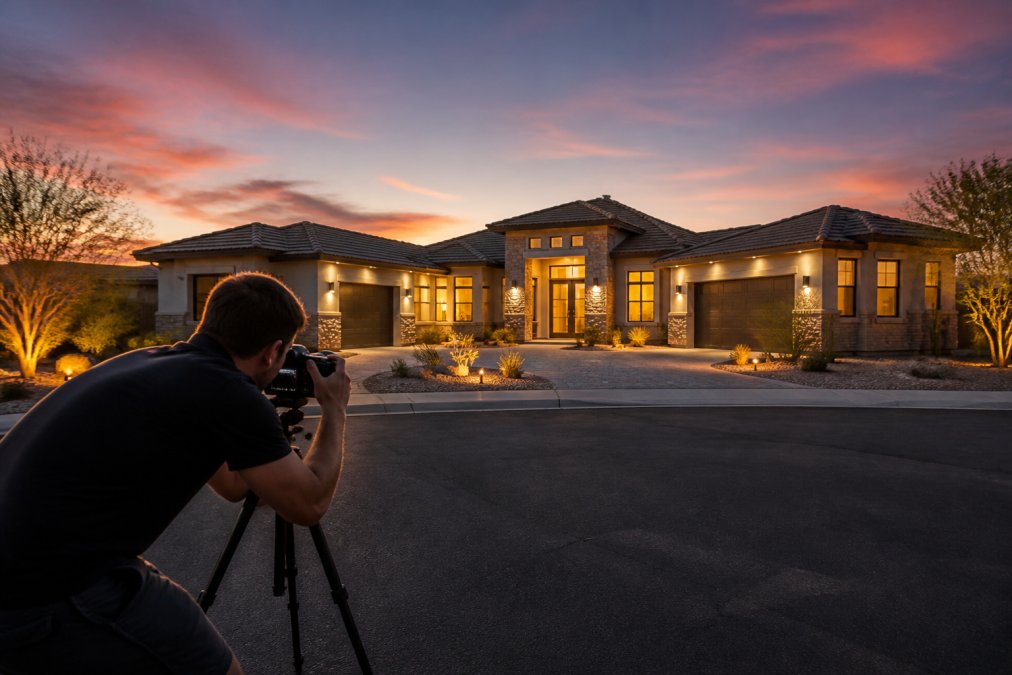
Twilight photography real estate has become essential for agents competing in today's market. The golden hour and blue hour create natural lighting conditions that transform a property's appearance, making homes feel more luxurious and inviting than daytime shots alone. Buyers scrolling listings on mobile are drawn to images that evoke emotion and aspiration, twilight images deliver exactly that.
Twilight photographs showcase architectural details under soft light, landscape lighting, and warm interior glows through windows, visual storytelling that changes how buyers perceive value.
Homes photographed during golden hour and blue hour consistently generate more inquiries and showings. The impact on buyer psychology and conversion rates has become impossible to ignore for serious agents.
How Twilight Images Increase Buyer Interest and Listing Engagement
Twilight images trigger emotional responses that daytime photos cannot match. The warm glow of golden hour and deep blue tones of blue hour create luxury and exclusivity, drawing strong responses from high-intent buyers.
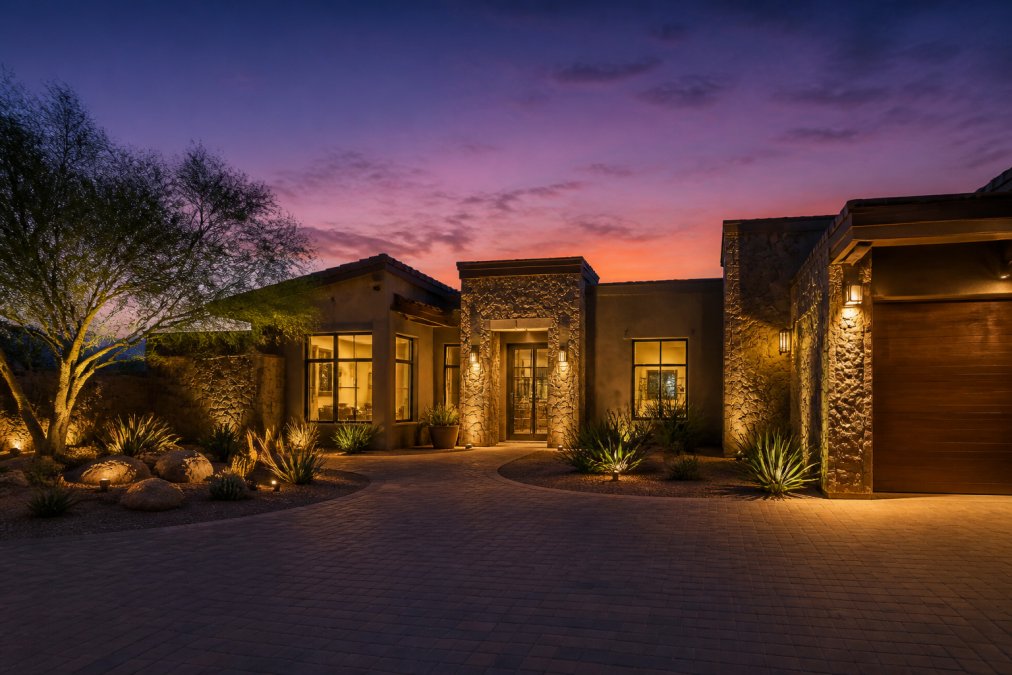
Properties with twilight photography real estate show measurably higher click-through rates, longer viewing times, and more showing requests. The emotional appeal creates momentum in the sales process.
Twilight photography captures homes at their visual peak: exterior lighting highlights architectural details, interior lights create warmth, and soft ambient light eliminates unflattering shadows. For agents managing multiple listings, twilight images become the competitive edge.
Best Camera Settings for Twilight Photography
Twilight photography real estate requires balancing ambient light with artificial lighting to create cohesive exposure. Camera settings are critical, as is understanding post-production workflow.
On-Location Settings
Start with aperture f/5.6-f/8, shutter speed 15-25 seconds, ISO 400-800, and white balance 3500-4500K (golden hour) or 5000-5500K (blue hour).
Shoot in RAW format exclusively for post-production blending flexibility. A sturdy tripod is non-negotiable at 15-25 second exposures.
The Exposure Blending Workflow
The real skill in twilight photography real estate lies in exposure blending. A single exposure cannot capture both dark sky and properly exposed architectural details. Professional photographers capture 3-5 frames at different exposure values: one for sky, one for landscape and exterior, one for interior lights.
Exposures are blended using manual layer masking in Photoshop or dedicated HDR software like Lightroom's HDR merge, Capture One, or Exposure Fusion. Lightroom is fast but can produce flat results; Photoshop masking offers maximum control but requires skill and time.
Common Post-Production Mistakes
Overblending is the most frequent error, creating halos or artificial looks. Sky replacement must match the original sky's color temperature and cloud structure.
Incorrect white balance during blending causes color casts. Adjust white balance selectively on different layers before blending to prevent muddy tones.
Uneven landscape lighting can amplify during blending. Scout the property beforehand to ensure balanced lighting, or plan to address it during editing.
Key Settings Summary
- Aperture: f/5.6 to f/8
- Shutter Speed: 15-25 seconds (adjust for ambient light)
- ISO: 400-800 (increase if darker)
- White Balance: 3500-4500K (golden hour) or 5000-5500K (blue hour)
- Format: RAW for maximum editing flexibility
- Tripod: Non-negotiable for sharp images at longer exposures
- Exposure Bracketing: Capture 3-5 frames at different EV for blending
How to Prepare a Home for Twilight Photos
Preparation determines success. A neglected property will still look neglected at twilight, just in softer light.
Ensure all exterior and interior lighting is functional and positioned to enhance the home. Buyers notice these details, and lighting directly impacts how the property photographs.
Landscaping should be immaculate: remove dead branches, trim hedges, clean lawn edges, and power wash driveways. A clean exterior is the foundation for successful twilight shoots.
Inside, declutter visible spaces, close garage doors, and remove vehicles unless high-end. Stage key rooms with soft furnishings and warm lighting to suggest lifestyle.
Preparation checklist:
- Test all exterior and landscape lighting
- Power wash driveway, walkways, and facade
- Trim landscaping and remove dead branches
- Clean windows inside and out
- Stage visible interior spaces with warm lighting
- Ensure garage doors are closed
- Remove clutter from visible rooms
- Arrange furniture to show space and flow
The investment in preparation pays dividends. Properties that are properly prepared for twilight photography real estate sessions produce images that generate significantly more buyer interest.
Virtual Twilight vs Real Twilight Photography
Virtual twilight, the digital creation of twilight conditions through post-production editing, has emerged as an alternative to traditional twilight photography. Understanding the differences, and the legal implications, helps agents make informed decisions about which approach serves their listings best.
Real Twilight Photography: Authenticity and Liability Protection
Real twilight photography requires shooting at actual dusk, during the golden hour or blue hour. This captures genuine ambient light, real sky color, and authentic architectural lighting. The images feel organic because they are. Buyers viewing these images see a home as it would appear if they visited at dusk.
From a legal standpoint, real twilight photography carries minimal disclosure risk. The National Association of Realtors (NAR) Code of Ethics requires that marketing materials not misrepresent properties, but showing a home at its actual appearance during twilight hours is not misrepresentation. The property genuinely looks this way at dusk. No disclosure is required beyond standard real estate marketing practices.
Virtual Twilight: Speed, Cost, and Disclosure Complexity
Virtual twilight uses daytime photography and applies sky replacement, lighting adjustments, and color grading to simulate twilight conditions. This approach offers flexibility: you can shoot during business hours and create twilight images afterward. The process is faster and sometimes more affordable than scheduling a dedicated twilight shoot.
However, virtual twilight carries legal and ethical complexity. If the virtual twilight edit significantly alters how the property appears, replacing the actual sky with a different sky, artificially brightening landscape lighting that isn't actually installed, or adding interior lights that don't exist, the image may cross into misrepresentation. Some state real estate boards and local Multiple Listing Services (MLS) have begun requiring disclosure when images are substantially altered. For example, if you use AI sky replacement or dramatically enhance lighting that doesn't match the property's actual capabilities, you may be required to label the image as "digitally enhanced" or "virtually staged."
Best practice: If you use virtual twilight, ensure the edits are subtle and authentic. The sky replacement should match realistic conditions for that location and season. Lighting adjustments should reflect the property's actual landscape lighting capabilities. When in doubt, disclose that the image is digitally enhanced. Check your local MLS rules, many now require disclosure for substantially altered images.
Mobile-First Viewing Performance
Most buyers begin their search on mobile devices, where image quality and impact are compressed. This affects which approach performs better.
Real twilight images maintain their visual impact on mobile screens. The warm glow and architectural detail remain compelling even at reduced resolution. The authenticity also builds trust, buyers know they're seeing a genuine representation.
Virtual twilight images on mobile can look artificial if the editing is heavy-handed.
Decision Framework
Choose real twilight photography for:
- Luxury properties ($750K+) where authenticity is critical
- Properties with strong architectural features or landscape lighting
- Markets where MLS disclosure requirements are strict
- Listings where buyer trust is paramount
Choose virtual twilight for:
- Budget-conscious sellers who want twilight imagery without the cost
- Properties where real twilight scheduling is difficult
- Supplementary images (in addition to real twilight shots)
- Subtle enhancements that don't materially alter the property's appearance
ROI and Competitive Advantage for Agents
For agents, the ROI question is practical: does twilight photography real estate justify the investment? The answer depends on property type and market positioning.
Conclusion
Twilight photography real estate isn't a luxury, it's becoming the baseline expectation for serious agents and sellers. The combination of emotional appeal, architectural detail visibility, and buyer psychology makes twilight images invaluable for listing success.
Frequently Asked Questions
What camera settings should I use for twilight real estate photography?
Twilight photography typically requires a shutter speed of 15-25 seconds, an aperture of f/5.6 to f/8 for depth of field, and an ISO between 100-400 depending on ambient light. A sturdy tripod is essential to prevent camera shake during long exposures. White balance should be set manually or adjusted in post-production to capture the warm glow of architectural lighting while preserving the cool blue hour tones. RAW format captures maximum detail for HDR blending and editing flexibility.
How does twilight photography impact perceived property value and buyer psychology?
Twilight images trigger emotional appeal by showcasing properties in their most flattering light, with warm architectural lighting and a luxurious ambiance that daytime photos cannot replicate. The golden hour and blue hour create visual storytelling that conveys quality and exclusivity. Research shows that high-quality listing images, especially twilight shots, significantly increase click-through rates and property valuation perception among high-intent buyers viewing listings on mobile and desktop platforms.
Can virtual twilight editing achieve the same results as on-site twilight photography?
Virtual twilight uses sky replacement and digital editing to simulate twilight conditions on daytime photos. While cost-effective, it cannot match the authentic architectural lighting, ambient light quality, and natural HDR blending that real twilight photography captures. Virtual twilight works best as a supplementary tool for agents with tight budgets, but luxury listings and competitive markets benefit from genuine twilight shoots, which convey authenticity that buyers and agents recognize immediately.
How long does the twilight photography process take from shoot to delivery?
The timeline depends on the scope and complexity of your project. A standard twilight shoot typically takes 1-2 hours on-site, capturing multiple angles and property facade details. Post-production, including image editing, hand-blended HDR processing, and color correction, varies in duration. Contact Desert Home Photography for a specific timeline based on your listing quantity, delivery deadlines, and whether you need drone photography or virtual tours included.