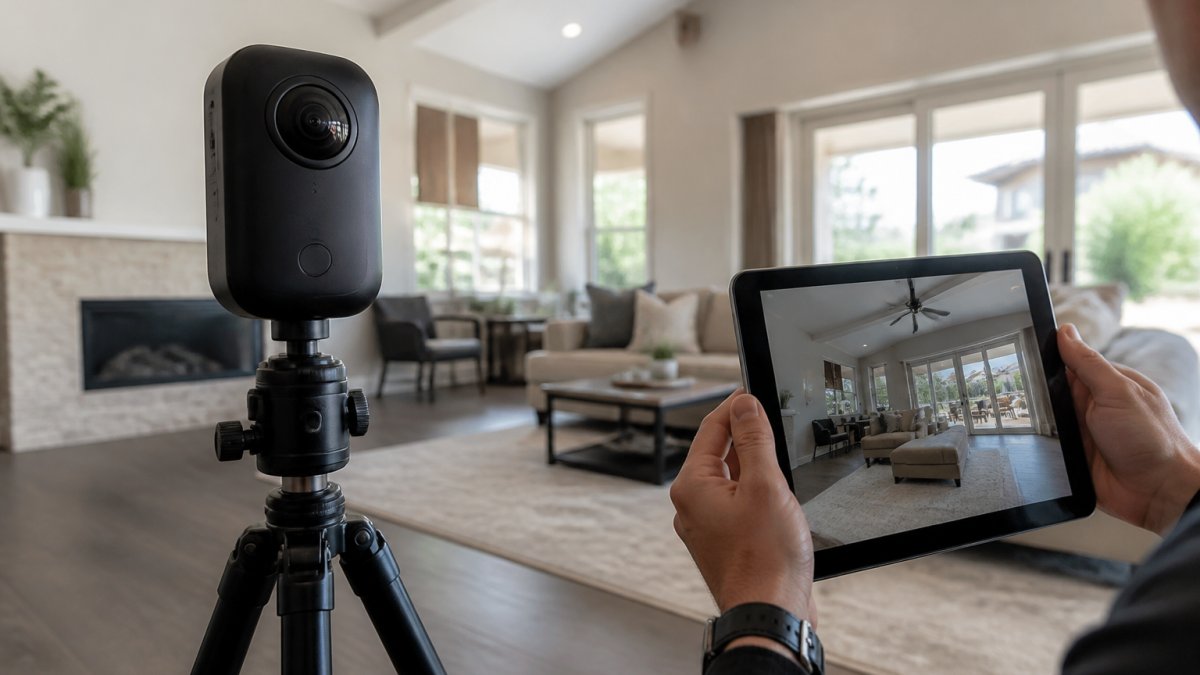
 ultimate-guide
Virtual Tours and Property Closing Times: The Real Impact
Table of Contents
- How Virtual Tours Impact Property Closing Times
- Average Time on Market for Homes With Virtual Tours
- Benefits of 3D Real Estate Tours for Buyer Engagement
- How to Increase Buyer Engagement on Property Listings
- Virtual Tours and Transaction Price: What the Data Shows
- The Psychological Impact of Immersive Virtual Experiences
- Virtual Tours for Different Property Types and Markets
- Frequently Asked Questions
Last Updated: September 27, 2026
How Virtual Tours Impact Property Closing Times
Virtual tours compress the sales cycle by changing how buyers interact with properties before purchase decisions, making understanding virtual tours closing times essential for agents managing listings.
Remote exploration pre-qualifies buyers, so serious showings happen faster and time on market shrinks.
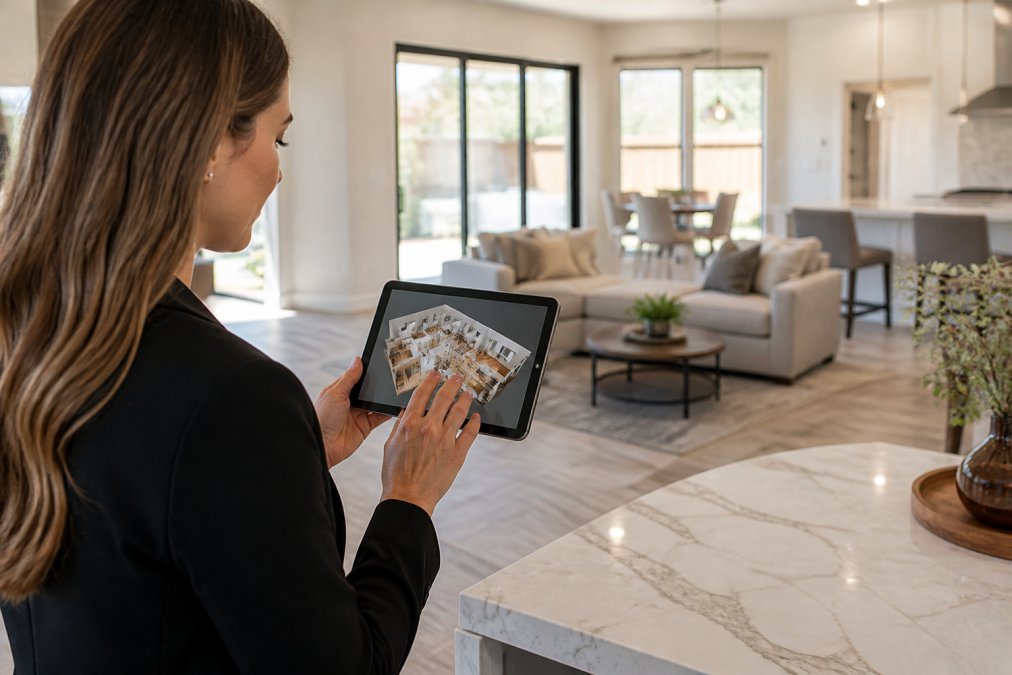
Low-pressure exploration builds emotional ownership before showings, accelerating serious inquiries and purchase intent.
Desert Home Photography understands this dynamic. Our immersive virtual walk-through tours give buyers 24/7 accessibility to your property, eliminating scheduling conflicts that delay serious offers. The result is faster buyer qualification and shorter closing timelines.
Average Time on Market for Homes With Virtual Tours
Properties with virtual tours spend less time on market across all conditions, though the reduction varies by price point and market.
Pre-qualified buyers eliminate tire-kickers and reduce time on market through self-filtering.
In competitive markets, virtual tours generate qualified leads faster and support offers before competing properties launch.
Virtual tours expand the buyer pool geographically, accelerating serious inquiries from out-of-town purchasers.
Benefits of 3D Real Estate Tours for Buyer Engagement
3D tours provide spatial awareness, room dimensions, flow, and lighting, that static images cannot.
Properties with 3D tours see higher view-to-inquiry conversion rates as buyers explore details thoroughly.
Engaged buyers ask fewer questions and submit offers faster because they've already committed mentally.
Virtual tours answer layout and lighting questions before showings, eliminating surprises that trigger renegotiation.
How to Increase Buyer Engagement on Property Listings
Understanding the ROI by Property Type
Engagement Metrics That Actually Predict Closing Speed
Track three metrics to confirm virtual tours closing times are actually improving and driving faster closings:
-
View-to-inquiry conversion rate. Properties with virtual tours can see a higher percentage of viewers submit inquiries compared to photography-only listings. If your virtual tour is generating fewer inquiries than expected, the tour quality may be the issue, not the concept.
-
Time from first inquiry to showing request. Virtual-tour buyers can request showings quickly after viewing the tour. If your inquiry-to-showing timeline is longer than desired, your follow-up process may be a factor.
-
Showing-to-offer timeline. This is the critical metric for closing speed. Properties with virtual tours can see offers arrive faster than comparable properties. If your virtual-tour listings are not seeing this compression, the tour may not be accurately representing the property, or your buyer pool is not aligned with the property's actual appeal.
Strategic Deployment by Market Conditions
Virtual tours deliver maximum impact in specific market conditions. In competitive markets (fewer than 2 months of inventory), virtual tours accelerate buyer decision-making and support multiple offers. In slow markets (more than 6 months of inventory), virtual tours still reduce time on market but have less impact on final price because buyer demand is the limiting factor, not information access.
In markets with high percentages of remote workers or out-of-state relocations, virtual tours are essential for competitive positioning. In markets where 80%+ of buyers are local and can visit in person easily, the ROI is lower but still positive through reduced showing burden.
Maximizing Engagement Through Strategic Presentation
Once you've decided a virtual tour is justified by property type and market conditions, optimize engagement through these specific tactics:
- Lead with the strongest visual asset. The thumbnail image determines whether a buyer clicks into the full listing. Use a professional photograph showing the property's most distinctive feature, architectural detail, view, or spatial flow, not a generic exterior shot.
- Embed the virtual tour prominently in the listing. Buyers should encounter it within the first three listing sections. Burying it behind multiple clicks reduces views by 40-60%.
- Provide context in the description that references the tour. Instead of "spacious kitchen," write "open-concept kitchen with island seating and sightlines to the living room (visible in the 3D tour)." This primes buyers to look for specific features in the virtual experience.
Professional real estate media elevates engagement across all formats. The integrated approach of combining hand-blended still photography with immersive virtual tours ensures your property looks exceptional in both discovery (static images) and exploration (interactive 3D) phases. This consistency keeps buyers engaged throughout the entire decision process and reduces the likelihood of expectancy violations during physical showings.
Virtual Tours and Transaction Price: What the Data Shows
The relationship between virtual tour availability and final sale price deserves careful attention. Properties that offer immersive digital experiences often sell for prices closer to asking price compared to those relying on traditional photography alone.
This doesn't happen by accident. Buyers who tour virtually before showing up are pre-qualified by their own expectations. They've seen the property at its best and committed mentally to the purchase. When they arrive for a physical showing, they're motivated to move forward rather than looking for reasons to negotiate downward.
The pricing advantage appears strongest in competitive markets where multiple offers occur. Serious buyers who've already explored the property virtually are more likely to submit strong offers quickly. This competitive pressure supports higher transaction prices. In slower markets, the advantage is more modest but still measurable through faster sales at stronger prices relative to comparable properties.
Luxury properties see particularly strong benefits. High-end buyers expect immersive digital experiences. Properties that fail to provide them are perceived as outdated or poorly marketed, which suppresses buyer interest and final prices. Conversely, properties that showcase architectural details, finishes, and spatial flow through professional 3D tours command stronger buyer engagement and support higher transaction prices.
The investment in professional virtual tours pays dividends through both faster sales and stronger final prices. This is where the real value emerges for sellers serious about maximizing their return.
The Psychological Impact of Immersive Virtual Experiences
Buyer psychology shifts fundamentally when virtual tours replace static images, but the mechanism goes deeper than convenience. Immersive digital experiences activate what behavioral economists call "pre-commitment", buyers who explore a property thoroughly in a low-pressure environment develop what researchers term "cognitive ownership" before any financial commitment occurs. This mental ownership accelerates the actual purchase decision because the buyer has already invested time and emotional energy into visualizing themselves in the space.
The reduction in decision friction is measurable. Traditional property showings compress information gathering into 20-30 minutes, forcing buyers to make rapid judgments under time pressure. Virtual tours eliminate this constraint. Buyers can pause, return to specific rooms, examine finishes from multiple angles, and cross-reference details against their mental checklist, all without an agent watching or scheduling pressure. This extended exploration window reduces what psychologists call "choice anxiety," the stress that comes from making major decisions with incomplete information.
When buyers arrive at a physical showing after touring virtually, they experience what's known as "confirmation bias" in their favor. They've already committed to the property's layout and features mentally. The in-person showing becomes a confirmation ritual rather than a discovery process. This psychological shift is why agents report that virtual-tour buyers ask fewer objections, express higher confidence, and move to offers faster. The property has already passed the buyer's internal evaluation criteria.
The accuracy of the virtual tour directly impacts trust and decision speed. If the 3D experience matches the physical property closely, buyers feel validated in their pre-commitment. If discrepancies emerge during the showing, a room appears smaller, lighting differs, or finishes look different, buyers experience what behavioral economists call "expectancy violation," which triggers renegotiation or deal withdrawal. This is why professional, accurately-rendered virtual tours compress closing timelines while poorly-executed tours can actually extend them by creating buyer doubt.
Out-of-town and remote buyers experience an even stronger psychological effect. Without the ability to visit multiple times before committing, they rely on virtual tours to reduce uncertainty. Buyers who can't easily return for a second showing invest more cognitive energy into the initial virtual exploration, creating stronger pre-commitment. This explains why virtual tours have the largest impact on closing timelines in markets with high percentages of relocating or remote workers, the technology solves a genuine psychological barrier to decision-making.
Virtual Tours for Different Property Types and Markets
Virtual tour effectiveness varies by property type and market segment. Understanding these differences helps agents deploy the technology strategically.
Luxury properties benefit most from immersive experiences. High-end buyers expect professional digital marketing. Properties in the $500,000+ range see significant engagement boosts from 3D tours. These buyers often live out of state and rely heavily on digital exploration before traveling to view. Virtual tours reduce the number of trips required while increasing purchase intent.
Residential properties in suburban markets see strong benefits from virtual tours because they expand the buyer pool.
| Property Type | Best Virtual Tour Benefit | Time on Market Impact |
|---|---|---|
| Luxury ($500K+) | Attracts out-of-state buyers | Significantly reduced |
| Suburban residential | Expands buyer pool | Moderately reduced |
| Investment/commercial | Accelerates investor decisions | Moderately reduced |
| Starter homes | Pre-qualifies serious buyers | Slightly reduced |
Frequently Asked Questions
Do virtual tours actually help sell homes faster?
Yes. Homes with virtual tours typically spend less time on market because buyers can conduct a thorough walk-through remotely before scheduling an in-person showing. This pre-qualification reduces the number of unqualified foot traffic and allows serious buyers to self-select, accelerating the closing timeline. Properties with immersive digital walk-throughs also attract more listing views, which increases the pool of potential buyers and speeds up transaction velocity.
How much time can a 3D tour shave off the listing period?
The reduction in time on market varies by property type and market conditions, but homes with virtual tours typically see meaningful reductions in marketing duration. Remote viewing capabilities allow out-of-town buyers to evaluate properties without travel, expanding your buyer pool instantly. This broader exposure and faster buyer qualification directly compress the time between listing and closing.
Are virtual tours worth the investment for residential listings?
For agents, virtual tours can deliver strong ROI through faster sales velocity and higher conversion rates. The investment in professional 3D technology can help reduce days on market and attract serious buyers. For luxury properties and homes in competitive markets, virtual tours can be essential, they provide a competitive advantage needed to stand out in the market and support premium pricing.
Why do buyers prefer listings with virtual walk-throughs?
Virtual tours provide 24/7 accessibility and spatial awareness that static images cannot match. Buyers can explore a property on their own schedule, understand room flow and scale, and make faster, more confident decisions. This reduces scheduling conflicts and eliminates wasted showings for properties that don't meet buyer expectations, resulting in a better buyer experience and faster closing efficiency.