 ultimate-guide
How to Choose a Real Estate Photographer in 2026
Table of Contents
- Why the Right Real Estate Photographer Changes Your Listing Results
- Questions to Ask Real Estate Photographers Before You Hire
- How Long Does a Real Estate Photo Shoot Take?
- Your Real Estate Photography Checklist for Vetting Pros
- FAA-Licensed Drone Photography for Real Estate Listings
- Pricing, Packages, and Scalability for High-Volume Agents
- Conclusion
- Frequently Asked Questions
Last Updated: September 13, 2026
Why the Right Real Estate Photographer Changes Your Listing Results
Choosing the right real estate photographer is the single highest-use decision you'll make before a listing goes live, because the photos are what stop the scroll. This guide from Desert Home Photography walks through the vetting process, the questions that expose weak providers, and the delivery standards that separate a fast listing from a stalled one.
Buyers decide in seconds. Your first image either earns the click or loses it.
Real estate photographer selection comes down to four things: portfolio depth, technical range, turnaround reliability, and contract terms. Get those right and the rest follows.
A common mistake is hiring on price alone. Agents who do often reshoot within a month, and the second shoot costs more than the first would have.
National Association of Realtors guidance on listing photography
Questions to Ask Real Estate Photographers Before You Hire
The best questions to ask real estate photographers are the ones that force specifics: delivery timelines in writing, insurance coverage, and how they handle a room that photographs badly. Vague answers are your signal to keep looking.
Ask these five before you book:
- How many finished images do I get, and at what resolution?
- What's your standard turnaround, and what slows it down?
- Do you carry liability insurance and operate under a signed service agreement?
- How do you handle a dark bedroom or a room with mixed lighting?
- Can I see two complete galleries from comparable properties?
Portfolio Review: Full Galleries vs. Highlight Reels
A highlight reel shows the photographer's best ten images from ten years. A full gallery shows consistency, and consistency is what you're buying. Request at least two complete sets from properties similar to yours in size, price band, and lighting conditions.
Look for vertical alignment in architectural lines, balanced exposure between windows and interiors, and a consistent look across every frame. If the sky is blown out in one shot and perfectly graded in the next, the post-processing is inconsistent.
Contractual Red Flags in a Service Agreement
Read the usage rights clause first. A service agreement should state clearly who owns the images, how long you can use them, and whether the photographer can resell them to a builder or stager.
Watch for these:
- No stated turnaround time or delivery deadline
- Usage rights limited to a set number of months
- No cancellation or reshoot policy
- No mention of insurance or drone certification
- Licensing fees buried in fine print for "extended use"
How Long Does a Real Estate Photo Shoot Take?
A standard real estate photo shoot takes 45 to 90 minutes for an average home, with larger or luxury properties running two hours or more (nar.realtor). Drone work, twilight shots, and virtual tours each add time on top of the base shoot.
Here's the rough breakdown:
| Service | Typical On-Site Time | Notes |
|---|---|---|
| Standard interior and exterior | 45-90 minutes | Homes under 3,000 sq ft |
| Large or luxury property | 2-3 hours | Multiple wings, extensive exteriors |
| Drone add-on | 20-30 minutes | Weather dependent |
| Twilight photography | 30-45 minutes | Scheduled at sunset |
| Virtual walk-through tour | 60-90 minutes | Requires clear, staged rooms |
Turnaround Time and Delivery Speed
Turnaround time is where listings are won or lost. Ask for a written commitment, not a verbal "usually a couple of days."
Twilight and drone edits take longer because of the blending work involved. If you list 15 to 20 properties a month, confirm whether the provider can hold that pace during peak season, when every agent in the Valley is booking at once.
Your Real Estate Photography Checklist for Vetting Pros
A real estate photography checklist turns a gut-feel decision into a scored one. Run every candidate through the same criteria so you're comparing like with like.
- Two full galleries reviewed, not a highlight reel
- Vertical lines corrected in every architectural shot
- Window and interior exposure balanced in the same frame
- Color accuracy consistent across rooms and floors
- Written turnaround commitment provided
- Liability insurance confirmed
- Drone certification verified if aerial shots are included
- Service agreement reviewed, including usage rights
- Reshoot policy stated in writing
- Pricing structure explained per service, not bundled vaguely
Technical Skills: Lighting, Composition, and Editing Standards
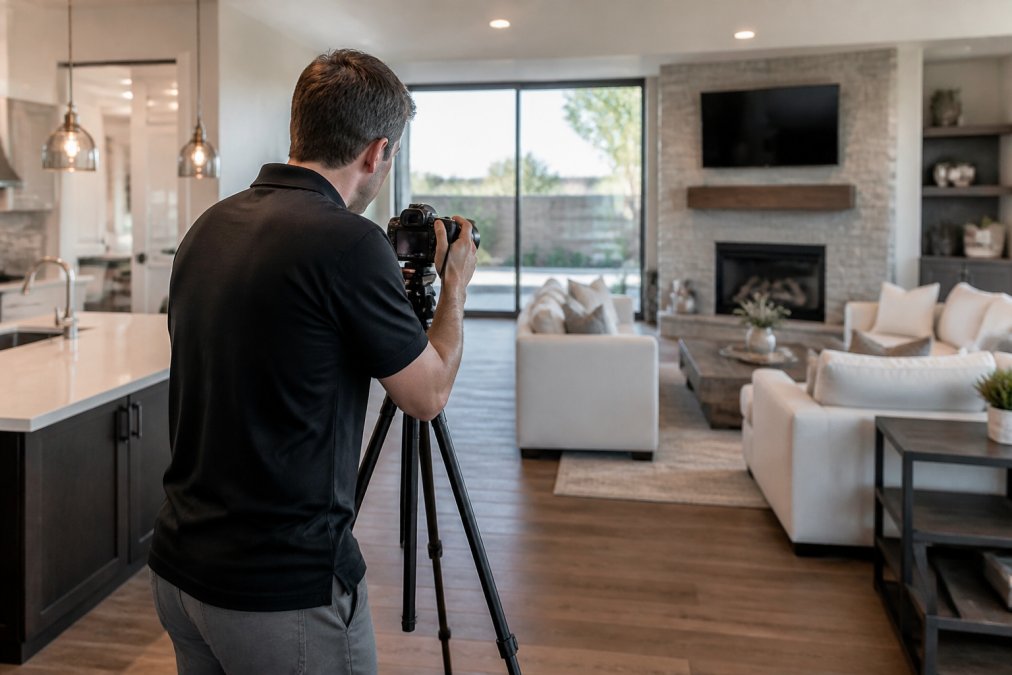
Lighting techniques matter more than camera bodies. A skilled photographer uses flash-ambient blending to keep window views visible while lighting the interior, a technique that separates professional work from phone snapshots.
Composition follows the same discipline. A wide-angle lens should capture the room without bending walls into curves, and vertical alignment should hold true in every frame. Post-processing should correct color accuracy without making the home look like a different property.
Hand-blended imaging produces a more natural result than automated presets.
FAA-Licensed Drone Photography for Real Estate Listings
FAA-licensed drone photography for real estate is not optional in the United States. Commercial drone operators must hold a Remote Pilot Certificate under Part 107 rules, and hiring an uncertified operator puts liability on you as the listing agent.
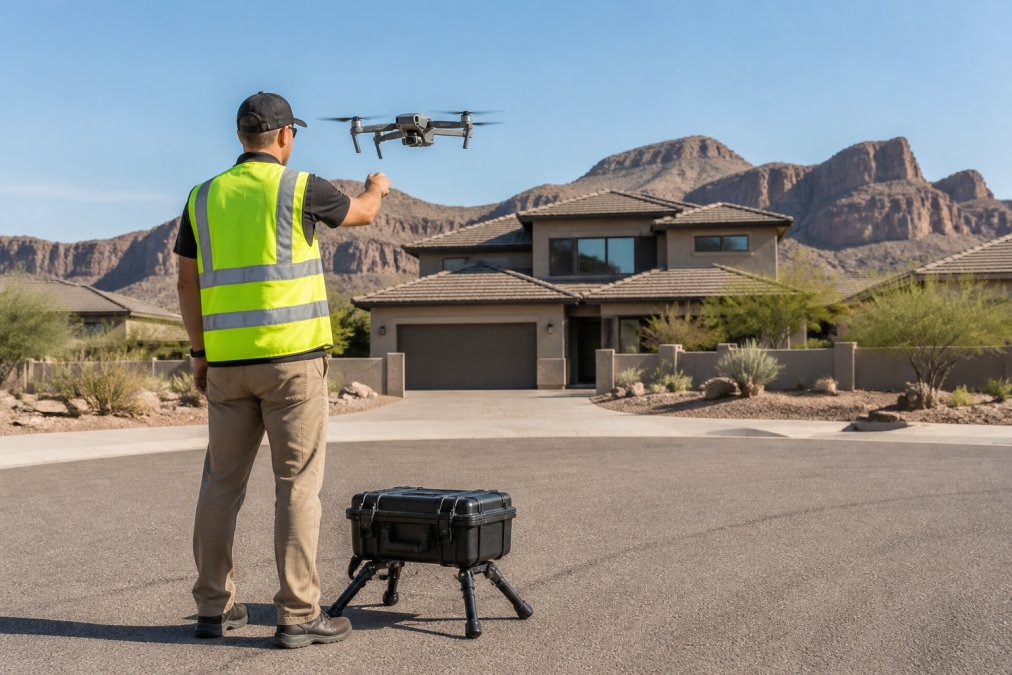
Ask directly: are you FAA-licensed, and do you carry the certification yourself, or do you subcontract? Subcontracted drone work introduces a second party you haven't vetted. Confirm the certificate before the shoot, not after.
Aerial drone shots sell land, acreage, and properties with mountain or golf course views better than any ground-level image can. For luxury listings, they're close to essential.
FAA Part 107 commercial drone rules
Pricing, Packages, and Scalability for High-Volume Agents
Pricing structures vary widely, and the honest answer is that cost depends on quantity, property size, and which services you add. A single standard shoot and a full luxury package with drone, twilight, and virtual tour are not comparable line items. What separates a good partner from a bad one is not the sticker price, it's whether the pricing model scales without breaking quality.
Most providers price in one of three ways:
- Per property (flat rate): One fee covers the standard set regardless of image count. Predictable for budgeting, but you need to confirm the image cap and what triggers an overage.
- Per image delivered: You pay for what you get. This rewards you for small listings but punishes large ones, and it can quietly incentivize a photographer to deliver more frames than you need.
- Tiered packages: Base shoot plus add-ons (drone, twilight, floor plans, virtual tour). This is the most common structure and the one most likely to hide costs in the add-on column.
How Volume Pricing Actually Works
If you're running 15 to 20 listings a month, ask for a per-listing rate rather than one-off quotes, and confirm in writing that the rate holds during peak season.
Ask these questions about any package:
- Is pricing per property or per image delivered, and is there an image cap?
- Are drone, twilight, and floor plans included or add-ons, and what is each add-on priced at?
- Is there a volume rate for agents with consistent monthly volume, and does it survive peak season?
- What's included in post-processing, and what costs extra (virtual staging, sky replacement, object removal)?
- What is the reshoot policy, and is a reshoot billed?
- Are there travel or mileage fees outside a defined service radius?
Scalability: The Question Most Agents Forget to Ask
A single great shoot proves nothing about whether a provider can deliver twenty great shoots in the same week. Scalability is a separate skill from photography, and it's where most solo operators fail.
Ask directly:
- How many shoots can you handle in a single week without extending turnaround?
- Do you have a second shooter or editor, and are their edits calibrated to the same standard?
- What happens to my delivery window if you get sick or the weather grounds a drone?
- Can you hold a consistent look across every listing I send you, or does quality drift when volume spikes?
A low per-listing rate means nothing if the provider can't hold it during spring and summer, when every agent in the market is booking at once. Confirm peak-season capacity before you commit your listing calendar to one provider.
For current pricing and a quote tailored to your listing volume, contact Desert Home Photography directly.
Conclusion
The gap between an average listing and a standout one usually comes down to the media, and the media comes down to who you hire. Vetting for portfolio consistency, written turnaround, FAA certification, and clear contract terms protects your listings and your reputation.
Desert Home Photography brings hand-blended imaging, FAA-licensed drone operators, and immersive virtual walk-through tours to every shoot across the Phoenix Valley. Agents and homeowners get a consistent look, fast delivery, and imagery that captures what makes each property worth buying.
Call or text Desert Home Photography to book your next listing shoot and see the difference a full, consistent gallery makes.
Frequently Asked Questions
What are the red flags to watch out for when hiring a real estate photographer?
Watch for portfolios that only show highlight reels instead of full galleries, unclear usage rights in the service agreement, no proof of FAA certification for drone work, and turnaround times that stretch past 48 hours. Also be wary if the photographer cannot explain their editing process or refuses to share a sample gallery from a similar property type. These gaps often signal inconsistent quality or hidden liability for your listing.
How do I evaluate a real estate photographer's portfolio?
Ask for three to five full galleries from properties similar to yours, not just the best shots. Check for vertical alignment in architectural lines, consistent color accuracy across rooms, and balanced exposure in windows and shadowed corners. Look at how they handle challenging interiors like dark master bedrooms or rooms with mixed lighting. A strong portfolio shows the same quality standard across every image.
How does professional photography impact the time a home stays on the market?
Professional real estate photography helps listings attract more buyer attention from the first day online. High-quality images with proper lighting, composition, and editing make properties more marketable and reduce the need for price drops caused by low engagement. While exact days-on-market varies by price point and location, agents consistently report that better listing media generates more showings and stronger offers.
Should I prioritize drone photography and virtual tours in my search?
It depends on your property type. FAA-licensed drone photography for real estate is valuable for large lots, acreage, and homes with notable surroundings like golf courses or mountain views. Virtual walk-through tours help out-of-state buyers and luxury listings where remote interest is high. Confirm the photographer holds FAA certification directly, not through a subcontractor, to avoid liability on your end.