 ultimate-guide
Professional Real Estate Photography Pricing Guide
Table of Contents
- What Drives Real Estate Photography Pricing
- Real Estate Photography Packages: What to Expect
- Real Estate Photography Add-Ons That Affect Your Budget
- Licensing, Usage Rights, and Post-Processing Costs
- Real Estate Photography Turnaround Time and Pricing
- Volume Discounts and How to Budget as a High-Volume Agent
- Conclusion
Last Updated: August 17, 2026
What Drives Real Estate Photography Pricing
Real estate photography pricing is one of those topics where the national averages you find online rarely tell the full story. At Desert Home Photography, we've worked with agents handling a single listing a month and teams moving 20+ properties at a time, and the cost variables are genuinely significant. Understanding what drives the price before you call a photographer saves you from sticker shock and helps you negotiate smarter.
Three factors dominate the pricing conversation: property size, the photographer's experience level, and where the property is located. Get those three aligned with your budget expectations, and everything else becomes easier to evaluate.
Square Footage and Property Size
Square footage is the most straightforward pricing driver in real estate photography. A 1,200-square-foot condo requires a fraction of the time and coverage that a 4,500-square-foot estate demands. Larger properties mean more rooms, more angles, more setups, and significantly more editing time in post-processing.
Most photographers structure their base packages around a square footage threshold, then charge incrementally above it. A property that pushes past that threshold by 1,000 square feet or more can meaningfully increase your session fee. For agents working luxury listings in higher price brackets, this is worth factoring into your marketing budget from the start.
Experience Level and Professional Portfolio
A common mistake agents make is treating real estate photography as a commodity. The difference between a hobbyist with a wide-angle lens and a seasoned professional with a refined portfolio shows up immediately in the final images, particularly in how interior lighting is handled.
Photographers with deep experience in architectural work understand how to balance the bright exterior light coming through large windows against the ambient interior light, a challenge that trips up less experienced shooters. Hand-blended imaging techniques, where multiple exposures are carefully merged in post-processing, produce results that automated HDR cannot replicate. Expect more experienced photographers to charge more, and in most cases, that premium is justified by the quality of client deliverables.
Regional Pricing Variations and Travel Fees
Geography shapes market rates more than most agents realize. Photographers operating in high-cost metro areas typically charge more than those in rural markets, reflecting overhead, demand, and local competition. According to National Association of Realtors research on marketing spend, professional photography is consistently cited as one of the highest-return marketing investments for residential property listings.
Travel fees are a separate line item worth clarifying upfront. Many photographers include a defined service area in their base rate and charge beyond that radius. If your listing is outside the photographer's primary coverage zone, expect a travel surcharge. Always confirm the service area before booking.
Real Estate Photography Packages: What to Expect
Real estate photography packages typically bundle a set number of edited images, a defined shooting window, and basic post-processing into a single per-project rate. The structure varies by photographer, but most offer tiered options designed to match different property types and listing budgets.
Entry-Level Packages for Residential Properties
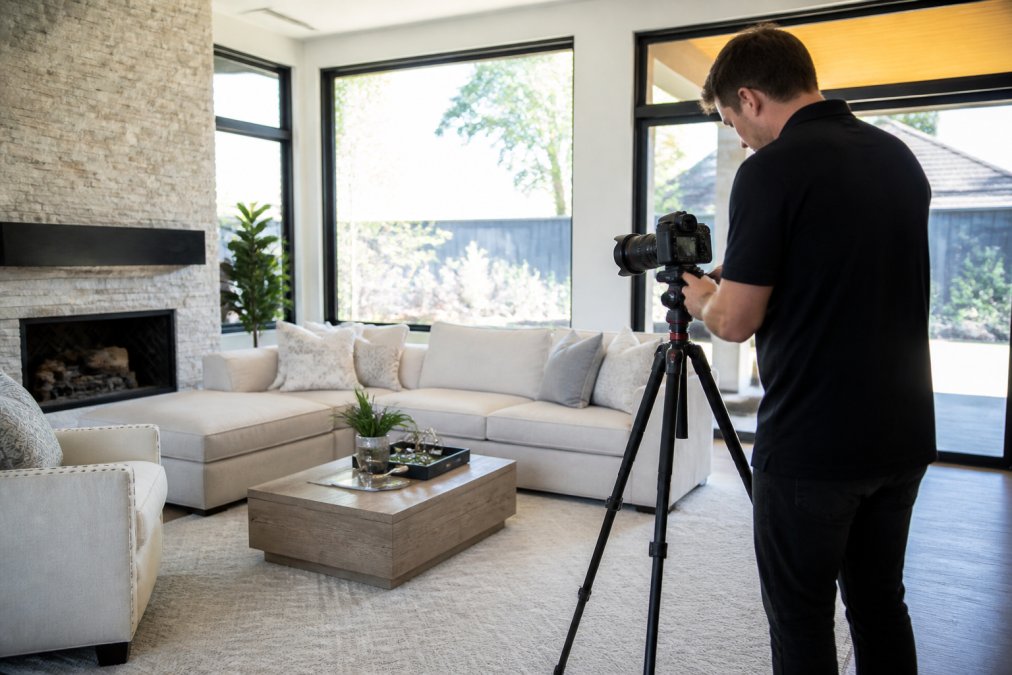
Entry-level real estate photography packages are designed for smaller residential properties where the goal is clean, well-lit images that represent the space accurately. These packages typically include a set number of high-dynamic-range images, shot with a wide-angle lens to maximize the sense of space in each room.
What's usually included at this tier:
- A defined number of edited photos (commonly 15-25 images for smaller homes)
- Basic post-processing: color correction, exposure balancing, and horizon straightening
- Digital delivery of final images within a standard turnaround window
- Usage rights for MLS listing purposes
What's usually not included: aerial imagery, video walkthroughs, floor plans, or twilight photography. Those are add-on services priced separately.
Mid-Tier and Luxury Listing Packages
Mid-tier packages bridge the gap between basic coverage and full-service production. For properties where staging, architectural detail, and visual storytelling matter, these packages include more images, longer shooting sessions, and often more sophisticated editing.
Luxury listing packages are in a different category entirely. For high-end residential and commercial real estate, the expectation is a comprehensive set of marketing collateral: a full suite of interior and exterior images, drone photography, a video walkthrough, and sometimes a virtual tour. The turnaround time may also be expedited to match tight listing schedules.
Desert Home Photography's approach to luxury listings centers on hand-blended imaging, a technique that produces richer, more accurate color and light representation than standard high-dynamic-range processing alone. For agents in markets where buyers are comparing multiple premium properties, that visual quality difference matters.
Real Estate Photography Add-Ons That Affect Your Budget
Add-on services are where real estate photography budgets expand quickly, and where the return on investment is often the strongest. The right combination of add-ons can meaningfully differentiate a listing in a competitive market.
Drone Photography and Aerial Imagery
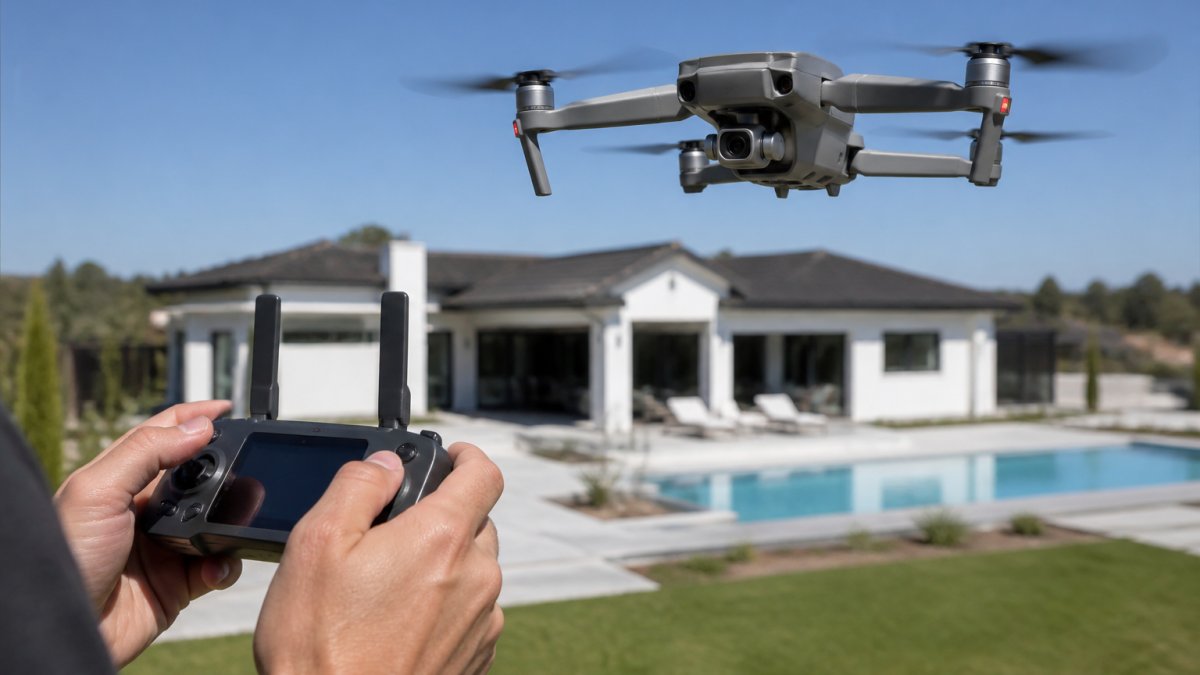
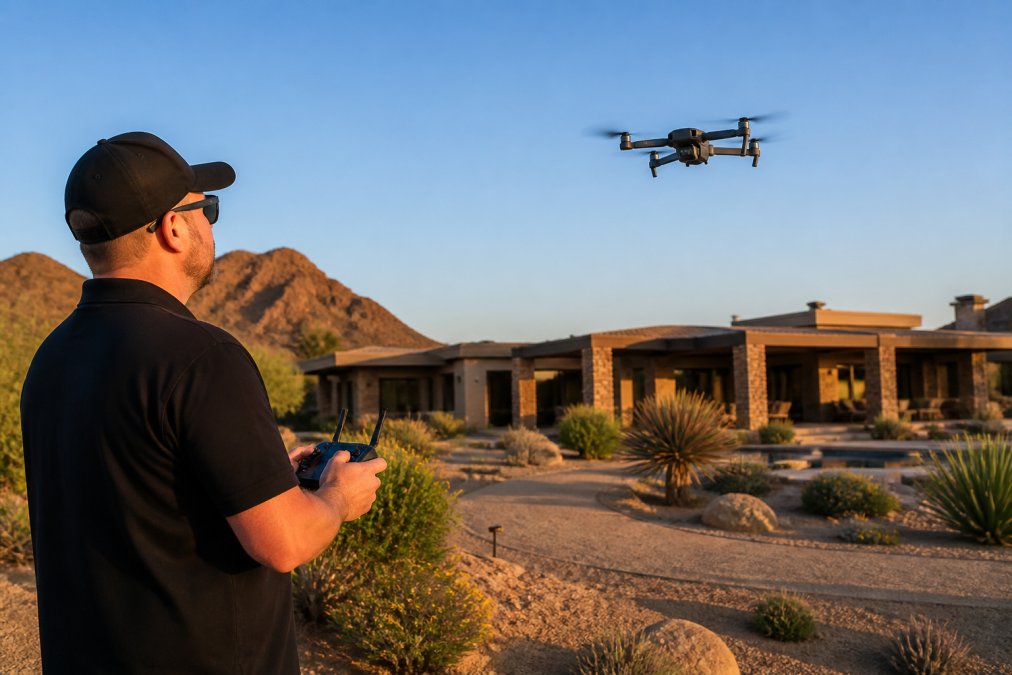
Drone photography and aerial imagery have become near-standard for mid-range and luxury listings, and for good reason. Aerial images communicate lot size, neighborhood context, proximity to amenities, and architectural scale in ways that ground-level photography simply cannot.
The critical detail most agents overlook: FAA licensing. Operating a drone commercially without proper FAA Part 107 certification is illegal under federal aviation regulations. As documented by FAA drone operator certification requirements, commercial drone operators must hold a Remote Pilot Certificate issued by the Federal Aviation Administration. Desert Home Photography's drone operators are FAA-licensed, which protects both the photographer and the listing agent from liability exposure.
Unlicensed drone work is not a technicality. It creates real legal risk for everyone involved.
Virtual Tours, Video Walkthroughs, and Floor Plans
Virtual tours and video walkthroughs have shifted from premium differentiators to expected features for many buyers, particularly those relocating or making decisions before an in-person visit. An immersive virtual walk-through tour allows buyers to move through a property at their own pace, which increases engagement time and filters for more serious inquiries.
Floor plans add a layer of spatial clarity that photographs alone can't provide. Buyers often struggle to mentally map a property from images; a floor plan resolves that immediately. For commercial real estate listings especially, floor plans are frequently a baseline expectation.
Pricing for these services varies based on property size and complexity. A video walkthrough of a 2,000-square-foot home requires less production time than one covering a 6,000-square-foot estate with multiple outbuildings.
Twilight Photography and Specialized Sessions
Twilight photography produces some of the most visually compelling listing images available, and it consistently outperforms standard daytime exterior shots for engagement. The technique captures a property during the brief window after sunset when interior lights glow warmly against a deep blue sky, creating an aspirational quality that daytime images rarely achieve.
Twilight sessions require precise timing and more complex post-processing than standard shoots. They're typically priced as a standalone add-on or as part of a premium listing package. For luxury properties, staging a twilight shoot alongside the main session is worth the additional investment.
Licensing, Usage Rights, and Post-Processing Costs
Licensing is the part of real estate photography that most agents never read closely enough, and it's where misunderstandings create real problems.
Licensing in real estate photography refers to the terms under which you, as the agent or homeowner, are permitted to use the images a photographer creates. Most standard real estate photography packages include MLS licensing, meaning you can post the images to the Multiple Listing Service and use them in standard marketing collateral for that listing.
What's often not included by default: perpetual usage rights, commercial use beyond the listing, use by other agents or brokerages, and use after the property sells. If you plan to use listing images in your personal marketing materials, social media advertising, or agency branding, clarify those rights before the shoot. Some photographers charge an additional licensing fee for extended or commercial usage.
Post-processing costs are sometimes bundled into the package rate and sometimes charged separately for enhanced services. Basic editing includes color correction, exposure adjustment, and lens distortion correction. More advanced post-processing, such as sky replacement, object removal, or the hand-blended multi-exposure techniques that produce superior window views and balanced interior lighting, may be priced as an upgrade or included as a standard feature depending on the photographer.
According to National Press Photographers Association guidelines on image licensing, copyright in a photograph remains with the creator unless explicitly transferred in writing. Agents who assume they own images outright simply because they paid for the shoot may be surprised to find that's not the standard industry arrangement.
Real Estate Photography Turnaround Time and Pricing
Turnaround time and pricing are more connected than most agents realize. Standard delivery windows for professional real estate photography typically run 24 to 48 hours after the shoot for edited images. That timeline works for most listings, but it creates friction when a property needs to go live immediately.
Many photographers offer expedited turnaround as a paid add-on. Rush delivery, sometimes defined as same-day or next-morning delivery, reflects the additional labor cost of prioritizing one client's edits over the standard queue. If you regularly need fast turnaround, factor that cost into your per-listing budget rather than treating it as an occasional exception.
| Service | Standard Turnaround | Rush Turnaround |
|---|---|---|
| Standard photo package | 24-48 hours | Same day or next morning |
| Drone/aerial imagery | 24-48 hours | 24 hours (weather dependent) |
| Virtual tour | 48-72 hours | 24-48 hours |
| Video walkthrough | 3-5 business days | 1-2 business days |
| Twilight photography | 48-72 hours | 24-48 hours |
The thing nobody tells you about turnaround time is that it affects post-processing quality. Rushed edits are more likely to miss the fine details that distinguish good listing images from great ones. If you can build a 48-hour buffer into your listing timeline, you'll consistently get better results than agents who are always scrambling for same-day delivery.
Volume Discounts and How to Budget as a High-Volume Agent
High-volume agents are in a genuinely strong negotiating position with professional photographers, and most don't use that use effectively.
Photographers value consistent, predictable work. An agent who books 15 to 20 shoots per month is a fundamentally different client than one who calls occasionally. That volume justifies a conversation about per-listing rates, priority scheduling, and bundled service agreements. Many photographers offer structured volume pricing for agents and brokerages who commit to a minimum number of shoots per month or quarter.
How to approach the conversation:
- Come with your actual monthly volume and a realistic projection for the next six months
- Ask specifically about per-project rates versus hourly rates for your property mix
- Negotiate for priority scheduling, not just price. Getting your shoots booked within 24 hours of request is worth real money
- Clarify what's included as standard versus what triggers an add-on charge, so your per-listing budget is predictable
- Ask about a brokerage-level agreement if multiple agents at your firm use the same photographer
For agents managing a mix of property types, from entry-level residential to luxury listings, a tiered agreement that accounts for square footage and add-on services by property type gives you cleaner budget forecasting than a flat per-shoot rate.
As noted by Real Estate Staging Association on listing marketing ROI, properties with professional marketing materials, including photography, consistently attract more buyer interest and spend less time on market. For high-volume agents, the math on professional photography is straightforward: better images mean faster sales, and faster sales mean more capacity for the next listing.
Budgeting tip: treat real estate photography as a fixed cost of doing business, not a variable you cut when margins are tight. The listings where agents skip professional photography are almost always the ones that sit.
Frequently Asked Questions
How does square footage affect real estate photography rates?
Square footage is one of the primary factors photographers use to set their session fee. Larger homes take more time to shoot, require more edited images, and often demand wider coverage of outdoor spaces. A compact condo might be photographed in under an hour, while a 5,000-square-foot luxury property could take two to three hours just for interiors. Most real estate photography packages are structured in size tiers precisely because of this time difference. Always confirm which square footage bracket your listing falls into before booking.
Is drone photography usually an add-on or included in pricing?
Drone photography is almost always priced as a real estate photography add-on rather than bundled into a base listing package. Because FAA Part 107 certification is required to fly commercially, not every photographer offers it, and those who do factor in equipment, licensing, and airspace authorization costs. For properties with significant lot size, pool areas, or scenic surroundings, aerial imagery can meaningfully improve buyer engagement. Confirm that your provider holds a current FAA license before booking drone work, as unlicensed commercial drone flights carry liability risk.
What is typically included in a standard real estate photography package?
A standard real estate photography package generally covers a set number of high-dynamic-range, wide-angle interior and exterior images sized for MLS upload and digital marketing collateral. Most packages include basic post-processing and editing services, with client deliverables delivered via an online gallery. The image count and resolution vary by provider and property size. Premium packages may add twilight photography, floor plans, or a virtual tour. Always ask what the package includes in writing so there are no surprises on delivery day.
How long does real estate photography turnaround time typically take?
Standard real estate photography turnaround time runs 24 to 48 hours after the shoot for most residential listings. Rush delivery, often needed when an agent wants to list within the same day or next morning, usually carries an additional fee. Turnaround can extend if the property requires heavy post-processing, HDR blending, or specialized editing for challenging interior lighting. Virtual tours and video walkthroughs typically take longer than still photography. When speed matters for your listing timeline, confirm the provider's standard and rush delivery windows before scheduling.
Desert Home Photography serves agents and homeowners across the Phoenix Valley who need listing media that actually moves properties. If you're managing a high volume of listings and need a photographer who can deliver consistent quality, fast turnaround, FAA-licensed drone work, and immersive virtual walk-through tours, call or text us to discuss a package that fits your workflow.
This article was written using GrandRanker