 ultimate-guide
Real Estate Photo Delivery Turnaround Time: What Agents Need to Know
Table of Contents
- Why Real Estate Photo Delivery Speed Matters
- Standard Turnaround Time for Professional Listing Photos
- Factors That Influence Real Estate Photo Delivery Speed
- Real Estate Photography Workflow Efficiency: How to Speed Up Delivery
- How to Speed Up Real Estate Photo Editing Without Sacrificing Quality
- Tiered Delivery Models and Service Level Agreements
- Legal and Contractual Implications of Missed Deadlines
- Frequently Asked Questions
Last Updated: August 31, 2026
Why Real Estate Photo Delivery Speed Matters
In competitive markets, agents who publish listings within 24 hours capture buyer attention before competitors even schedule their shoots. When photos sit in your files waiting for edits, you're losing momentum, buyer interest, and potential offers. Real estate photography workflow efficiency directly impacts your ability to serve clients and close deals.
At Desert Home Photography, we understand that timing matters. Professional listing photos require more than just a camera and basic editing, they demand a simplified workflow that gets polished, market-ready images into your hands without sacrificing quality. This guide breaks down realistic turnaround times, what factors slow things down, and how to speed up delivery without cutting corners.
Standard Turnaround Time for Professional Listing Photos
Most professional real estate photographers deliver edited photos within 2 to 5 business days. A 2-day turnaround is aggressive but achievable for straightforward properties. A 5-day window allows for more complex editing, larger galleries, and quality control without rushing.
The actual delivery depends on what's included: some photographers hand off raw files immediately and charge extra for editing, while others include edited images as standard. Some provide private online galleries; others email files directly. These variations affect both speed and usability.
Next-Day Delivery Expectations
Next-day delivery is possible if the property is small, lighting conditions are straightforward, and the gallery is modest (20-40 photos). Larger homes, complex interiors, or extensive galleries push into 2-3 business days even with expedited workflows.
Many photographers offer next-day delivery as a premium service. The cost reflects labor-intensive editing and operational constraints. If you need next-day turnaround regularly, discuss this upfront so the photographer can structure their workflow accordingly.
Rush Delivery and Pricing Impact
Rush delivery accelerates the timeline but introduces trade-offs. A photographer might deliver photos in 12 hours, but that's sustainable only occasionally. The strain on editing staff, the need to pause other projects, and quality-control shortcuts all justify higher pricing.
Clarify what rush delivery means before committing. Some photographers deliver the full edited gallery overnight; others deliver a smaller "quick gallery" for immediate listing, with the full gallery following in 2-3 days.
Factors That Influence Real Estate Photo Delivery Speed
Property Size and Complexity
A 2,000-square-foot home with straightforward layouts takes less editing time than a 5,000-square-foot luxury property with multiple rooms, varied lighting conditions, and architectural details demanding precision editing. A master bedroom with mixed tungsten and daylight requires careful color correction. A kitchen with reflective surfaces needs targeted exposure blending. Each adds 10-20 minutes per image to the editing queue.
Large properties also mean more photos. A typical home yields 30-50 photos; a luxury estate could produce 100+ (peer-reviewed research). Volume directly impacts delivery speed.
Post-Production and Photo Editing Requirements
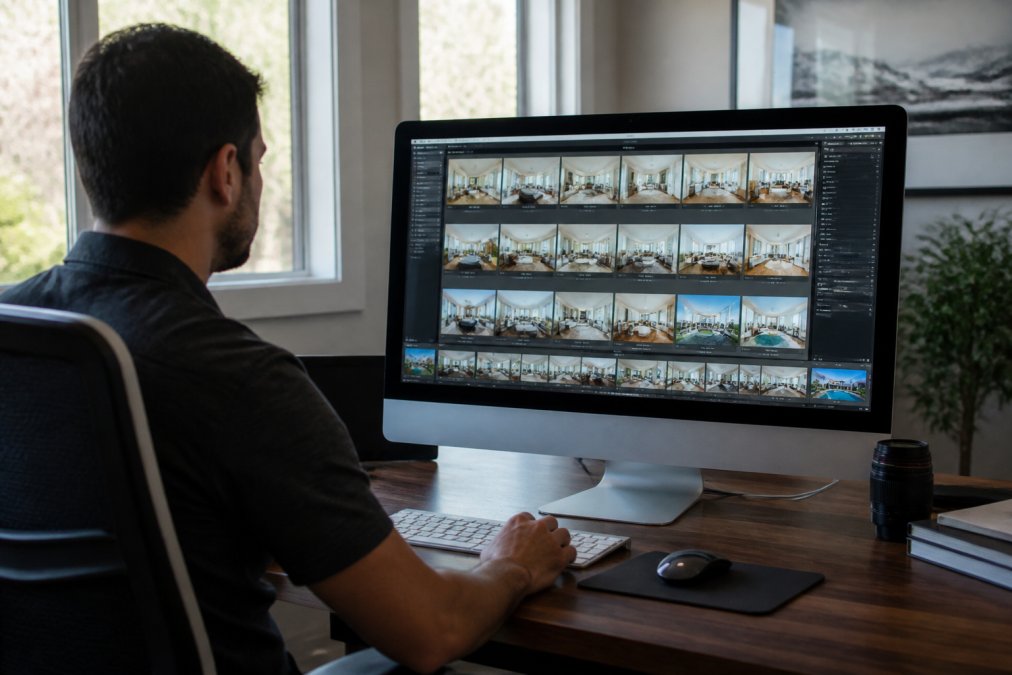
Hand-blended editing, the technique Desert Home Photography uses, takes longer than automated filters but produces superior results. Hand blending selectively combines multiple exposures to balance interior and exterior light, correct color casts, and preserve detail in shadows and highlights. A single image might need 5-10 minutes of careful editing; a gallery of 40 photos could require 4-8 hours of work (ppa.com).
Automated delivery services use batch processing and preset filters, which accelerates turnaround but often sacrifices the visual quality that moves properties.
Media Delivery Method and File Transfer
Cloud-based gallery links can be active within minutes of the final image being uploaded. Email delivery of high-resolution files takes longer due to file size constraints. Cloud storage and gallery hosting solutions have become standard because they're fast, secure, and accessible. A photographer can upload the final gallery to a private portal and send you the link within hours of the last edit.
Real Estate Photography Workflow Efficiency: How to Speed Up Delivery
Faster photo delivery turnaround time is achievable through deliberate workflow design.
Batch Processing and Automated Delivery
Batch processing groups similar images together for editing efficiency. All bedroom photos get consistent color correction; all kitchen shots get the same exposure blending approach. This consistency speeds up work and prevents disjointed results.
Automated delivery systems, cloud galleries that update in real time, and notification emails sent automatically when galleries are ready remove manual handoff steps. Workflow automation also includes standardized naming conventions, preset folder structures, and templated editing profiles. A photographer who has shot 200 properties develops shortcuts that accelerate work without sacrificing quality.
Cloud Storage and Gallery Hosting Solutions
Cloud-based systems eliminate file transfer delays. Photographers upload directly to a hosted gallery; clients access images immediately via private link. Gallery hosting provides built-in organization: photos sorted by room, tagged, and searchable. Clients can share links with their team, download individual images or full galleries, and sometimes add notes or mark favorites.
The best gallery platforms handle different file formats and resolutions automatically, serving optimized web versions to browsers and high-res downloads when requested.
How to Speed Up Real Estate Photo Editing Without Sacrificing Quality
Fast turnaround requires disciplined quality control, not less of it.
Quality Control in Fast Turnaround Workflows
A photographer editing quickly might miss color casts, exposure inconsistencies, or minor distractions. A second set of eyes catches these issues before delivery. The most efficient workflows build quality control into the process: the photographer edits, then a second editor reviews for consistency and correctness. This adds 10-15 minutes per gallery but prevents delivering inconsistent or flawed images.
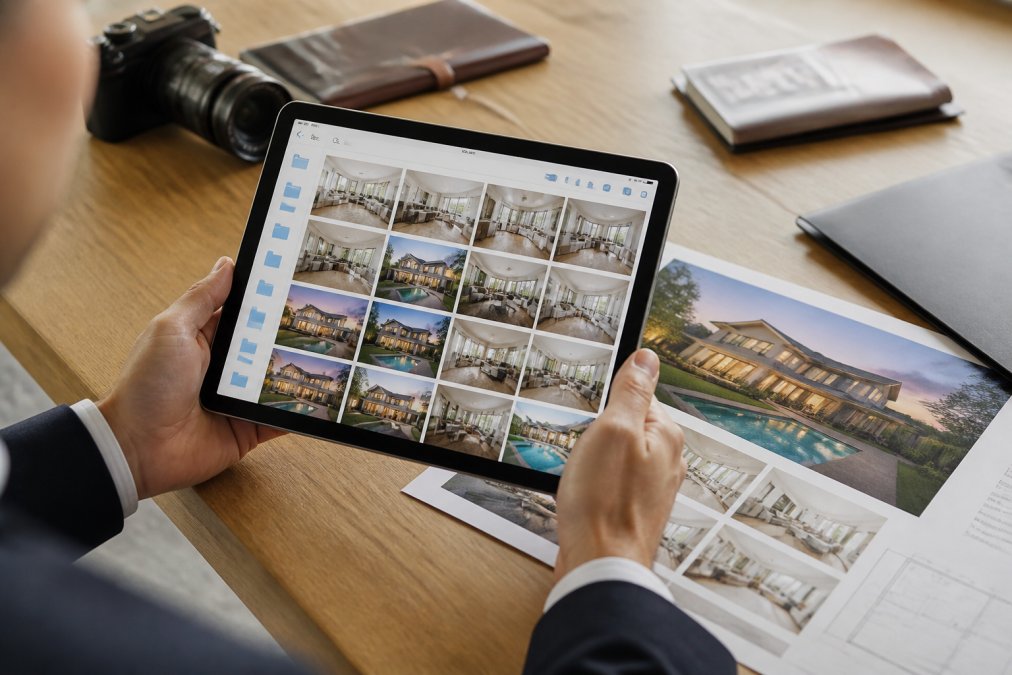
Balancing Speed and Professional Standards
Professional standards don't change based on turnaround time. A photo delivered in 24 hours should look as polished as one delivered in 5 days. The difference is in efficiency, not corner-cutting. Focus on simplified workflows that maintain quality while accelerating delivery. A photographer who has shot the same types of properties hundreds of times develops instincts that allow faster work without sacrificing results.
Tiered Delivery Models and Service Level Agreements
Many photographers offer tiered delivery options: a standard tier at 3-5 business days, an expedited tier at 1-2 business days for an upcharge, and a rush tier guaranteeing next-day delivery at a premium.
Service level agreements should specify exactly what you're getting: how many photos, what editing standard, what file formats and resolutions, and what happens if the photographer misses the deadline. A clear agreement prevents misunderstandings and protects both parties.
The agreement should define business days versus calendar days (sba.gov). A 2-day turnaround typically means 2 business days, not including weekends.
Legal and Contractual Implications of Missed Deadlines
A missed deadline can have real financial and legal consequences. A clear, specific contract protects both photographer and client by defining expectations, remedies, and liability limits.
Service Level Agreement (SLA) Essentials
Turnaround Time Definition State the commitment as "2 business days" not "2 days," clarifying that weekends and holidays don't count. Specify the start point: when the photographer receives the shoot request, when the shoot occurs, or when editing begins. Define the end point: when files are uploaded to the cloud gallery, when the client receives a link, or when the client downloads files.
Example language: "Photographer will deliver edited images to a private cloud gallery within 2 business days of the shoot date. Delivery is complete when the client receives the gallery access link via email."
Scope of Delivery Specify the number of edited photos included (e.g., "up to 50 edited photos"), file formats and resolutions (e.g., "high-resolution JPEGs suitable for MLS listing and print, plus web-optimized versions for social media"), and what "edited" means: hand-blended exposures, color correction, minor retouching, or other specific techniques. State whether revisions are included and, if so, how many rounds and what timeline applies.
Example language: "Delivery includes up to 50 hand-edited photographs in full-resolution JPEG format (minimum 4000 × 3000 pixels) and web-optimized versions. Editing includes exposure blending, color correction, and minor retouching. Client is entitled to one round of revisions; additional revisions will be billed at $50 per hour."
Remedies for Missed Deadlines Specify what happens if the photographer misses the agreed turnaround time. Common remedies include partial refund (10-25% of the shoot fee), service credit toward future work, or expedited delivery of the next project at no additional cost. Include a "force majeure" clause that limits liability for delays caused by circumstances beyond the photographer's control.
Example language: "If Photographer fails to deliver by the agreed date due to circumstances within Photographer's control, Client is entitled to a 15% refund of the shoot fee. If delay is caused by force majeure (equipment failure, illness, internet outage), Photographer will deliver as soon as practicable with no penalty."
Cancellation and Rescheduling Define notice required to cancel or reschedule without penalty (typically 48-72 hours). Specify refund or credit policies for cancellations made with less notice.
Example language: "Client may reschedule the shoot with 48 hours' notice at no charge. Cancellations made with less than 48 hours' notice forfeit 50% of the shoot fee."
Protecting Yourself as an Agent or Homeowner
Build buffer time into your timeline. If you need photos live by Friday, request delivery by Wednesday or Thursday. Include a "satisfaction clause" in your agreement: you have 24 hours after receiving the gallery to review and request revisions. The photographer commits to delivering revisions within 24 hours of the revision request.
Document all communication about deadlines in writing (email, not text or phone calls). If the photographer misses a deadline, you have a record of the commitment.
Protecting Yourself as a Photographer
Your contract should specify that rush delivery is available only with advance notice and may not be available on short notice. Include language limiting liability if a client provides inaccurate information about property access, lighting conditions, or the number of rooms, factors that can extend editing time unexpectedly.
Consider a "scope change" clause: if a client requests significantly more photos than originally agreed, or if the property is substantially more complex than described, the photographer can extend the turnaround timeline or charge an additional fee.
Example language: "If Client requests more than 10 additional photos beyond the agreed scope, or if property complexity requires significantly more editing time than anticipated, Photographer may extend the turnaround timeline by 1-2 business days or charge $75 per additional hour of editing work."
Industry Standard: What to Expect
Most professional real estate photographers include a service agreement as part of their standard booking process. Review the agreement before booking to ensure the turnaround time, scope, and remedies align with your needs. If the photographer's standard terms don't work for you, negotiate. Most photographers are willing to adjust deadlines, scope, or pricing if you discuss it upfront.
Frequently Asked Questions
What is the typical turnaround time for real estate photography?
Standard turnaround time for professional listing photos typically ranges from 2-5 business days after the shoot, depending on the number of images, editing complexity, and the photographer's workflow. Rush delivery options exist but often come with additional fees. Next-day delivery is possible for smaller properties or partial galleries, though this requires advance coordination and may limit editing depth.
Does faster photo delivery compromise image quality?
Not necessarily. Streamlined real estate photography workflow efficiency through automation and batch processing can maintain quality while reducing turnaround time. However, extremely tight deadlines (same-day delivery) may limit post-production refinement. Professional photographers balance speed with quality control by using standardized editing presets and proven workflows that don't sacrifice the hand-blended techniques that make images stand out.
What factors most influence how long real estate photo editing takes?
Property size, lighting conditions, number of images, and editing requirements are the biggest factors. Larger estates with multiple buildings take longer. Interior lighting issues common in certain climates require more careful post-production. File transfer method and cloud storage setup also affect delivery speed. Photographers using automated delivery systems typically achieve faster turnaround times than those relying on manual file transfers.
How does professional photo delivery speed impact my home sale timeline?
Faster delivery means your listing goes live sooner, capturing early buyer interest when engagement is highest. Delayed photos can cost you days or weeks of market exposure. Agents who prioritize quick turnaround times for listing launch report higher buyer engagement and faster sales. Service level agreements that guarantee specific turnaround windows help you plan marketing campaigns and coordinate with your MLS listing schedule.
This article was written using GrandRanker