 ultimate-guide
Real Estate Photography Editing Techniques 2026
Table of Contents
- Real Estate Photography Editing Fundamentals
- HDR Blending Techniques for Property Listings
- AI Real Estate Photo Editing Tools
- How to Edit Real Estate Photos for Faster Turnaround
- Manual Retouching vs. AI Automation
- Legal and Ethical Considerations in AI-Assisted Editing
- Frequently Asked Questions
Last Updated: September 1, 2026
Real Estate Photography Editing Fundamentals
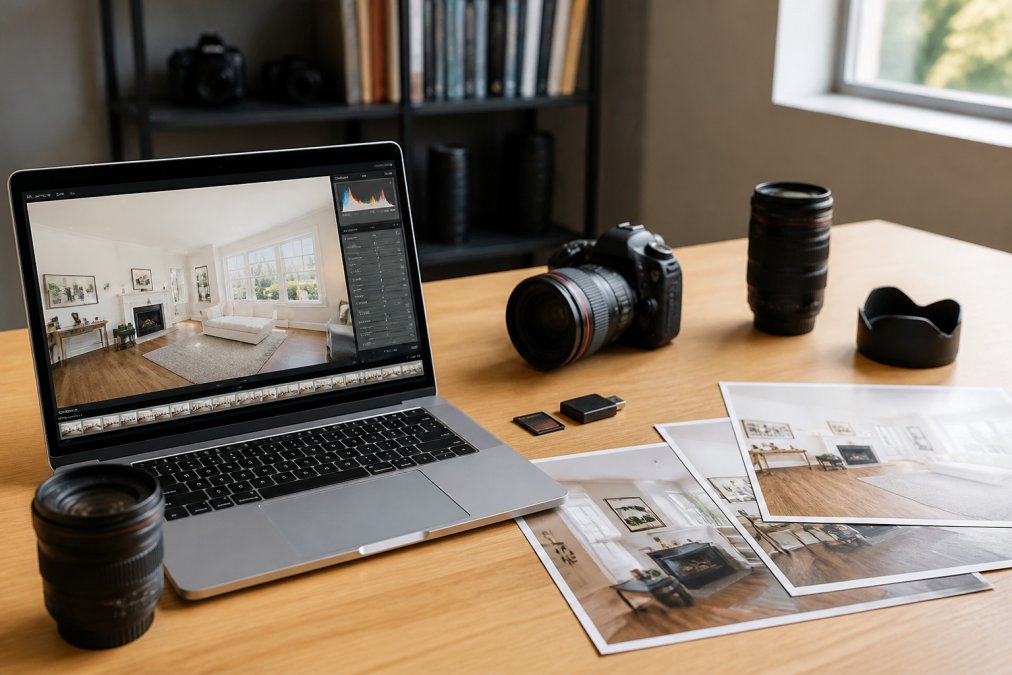
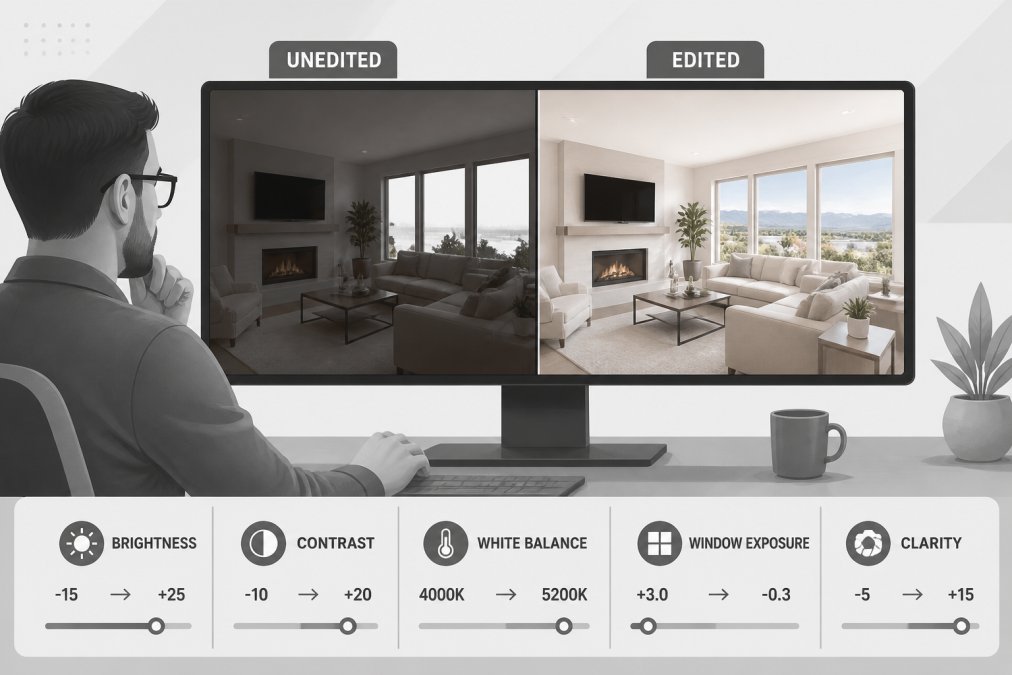
Real estate photography editing enhances property images to showcase homes competitively and appealingly to potential buyers. The difference between raw, unedited photographs and professionally edited ones often determines whether a property attracts serious inquiries or gets scrolled past online.
Professional editing involves correcting exposure inconsistencies, balancing natural and artificial light, recovering shadow and highlight detail, managing color accuracy, and removing distracting elements. These techniques transform how properties appear to buyers browsing listings online and on mobile devices.
Why Editing Matters for Property Listings
Raw camera files often contain blown-out windows, color casts from mixed lighting, and flat interiors. Buyers making decisions in the first 5-10 seconds of viewing a listing notice these quality issues immediately (peer-reviewed research). Professional editing corrects these problems systematically, ensuring natural light reads naturally, interior colors appear warm and inviting, and architectural details stand out.
Properly edited photos communicate that the property has been professionally presented, signaling value and care to potential buyers. This matters especially in competitive markets where dozens of properties compete for attention. Desert Home Photography understands that editing quality directly impacts buyer perception and listing performance. Hand-blended editing techniques ensure each property's unique features shine through, creating images that maximize marketability across all platforms.
Professional Standards vs. DIY Results
The gap between DIY editing and professional standards is substantial. Homeowners or inexperienced agents using smartphone apps or basic software typically produce oversaturated, unnaturally brightened, or color-shifted images that backfire.
Professional editing follows established standards for real estate photography. Color grading maintains accurate white balance while enhancing warmth. Exposure blending creates balanced images where windows aren't blown out and interiors aren't dark. Retouching removes temporary distractions without altering the property's actual appearance.
A common mistake is assuming aggressive editing looks better. Professional editing enhances reality; it doesn't invent it. Buyers expect to see the property as it actually exists, just presented optimally.
HDR Blending Techniques for Property Listings
HDR blending, also called exposure fusion or tone mapping, solves real estate photography's biggest technical challenge: capturing both bright windows and dark interiors in a single image. This technique has become standard practice in professional real estate photography.
Exposure Bracketing and Auto-Exposure Bracketing
Exposure bracketing captures the same scene at multiple exposure levels, typically three to five shots ranging from underexposed to overexposed (imaging.org). Modern cameras automate this with auto-exposure bracketing (AEB), which fires multiple frames at different exposures in rapid succession.
Underexposed frames preserve window detail and prevent blown-out skies. Overexposed frames capture interior shadow detail. When blended together, these frames create an image where windows remain clear while interiors are fully visible and properly lit. This technique is essential for interior real estate photography, eliminating the compromise between exposing for windows or interiors.
Exposure Fusion vs. Traditional HDR
Exposure fusion and traditional HDR tone mapping are related but distinct. Traditional HDR often produces exaggerated local contrast and artificial appearance. Exposure fusion blends multiple exposures more subtly, maintaining a natural look while recovering detail in shadows and highlights.
Exposure fusion is preferred in professional real estate photography because it preserves authentic appearance while optimizing visibility. The result looks like a photograph, not a digital creation. The blending process requires careful attention to alignment, masking, and color consistency across blended areas, where professional expertise separates polished results from amateur attempts.
AI Real Estate Photo Editing Tools
AI-powered editing tools have transformed real estate photography workflows. Rather than manually blending exposures or spending hours on retouching, photographers can automate many tasks while maintaining professional quality.
Sky Replacement and Virtual Twilight Conversion
Sky replacement analyzes the existing sky, removes it, and substitutes a more appealing option, typically a vibrant blue sky with realistic clouds or a dramatic sunset. Virtual twilight conversion transforms daytime exterior shots into evening images with warm lighting and darker skies, popular for luxury property marketing.
Replaced skies must match original lighting direction and maintain realistic proportions. Poor sky replacement looks obviously fake. Professional tools handle this better than consumer-grade options, but results still require human judgment about whether the final image represents the property fairly.
Object Removal and Virtual Staging
AI object removal eliminates unwanted elements, parked cars, trash cans, temporary staging furniture, by analyzing surrounding pixels and intelligently filling removed areas. Virtual staging adds furniture and décor to empty rooms, helping buyers visualize how spaces function.
Both techniques require restraint. Excessive virtual staging can mislead buyers about room size or layout. The best approach uses these tools conservatively, removing genuine distractions while avoiding major alterations that misrepresent the property.
Window Pull and Glare Correction
Window pull recovers detail in windows that would otherwise appear as white, blown-out glass. Glare correction addresses harsh light creating bright spots on windows or glass surfaces. These corrections are subtle but significant, windows are major architectural features, and proper correction makes interiors feel brighter and more open.
How to Edit Real Estate Photos for Faster Turnaround
Speed matters in real estate. Professional editing workflows balance quality with efficiency through systematic processes and automation.
Batch Processing and Workflow Automation
Batch processing applies the same edits across multiple images simultaneously. Once you've established color grading and exposure settings for one image, apply those settings to dozens of others from the same shoot in seconds. Workflow automation extends this through presets, saved combinations of adjustments for common scenarios.
The most efficient workflows establish these systems before editing begins. Shooting in consistent lighting conditions and organizing files systematically ensures nothing gets missed. A common mistake is trying to perfect every image individually. Professional workflows prioritize consistency and speed, with individual images receiving minor tweaks while major adjustments are handled at the batch level.
Color Correction and White Balance Consistency
Consistent color across a property listing is essential. If the master bedroom looks warm but the kitchen appears cold, the inconsistency looks unprofessional. White balance correction ensures neutral surfaces appear neutral across all images, regardless of light sources in each room.
Color grading establishes the overall palette, whether images should feel warm and welcoming, cool and modern, or neutral and clean. Applying consistent grading across all images creates visual cohesion. Professional software allows sampling color from reference points to ensure consistency, with batch processing making this efficient.
| Editing Task | Turnaround Impact | Automation Potential |
|---|---|---|
| Exposure blending | High - most time-intensive | Medium - requires some manual alignment |
| Color correction | Medium - significant but batched efficiently | High - presets handle most work |
| Object removal | High - labor-intensive if extensive | Low - requires individual assessment |
| Sky replacement | Medium - quick once tool is selected | High - applies to multiple images |
| Window correction | Medium - noticeable quality impact | High - batch processing works well |
| Retouching | High - most detailed work | Low - needs individual judgment |
Manual Retouching vs. AI Automation
The choice between hand-blended editing and AI automation isn't binary. Different projects benefit from different approaches.
When Hand-Blended Editing Outperforms Automation
Professional hand-blended editing involves manually creating layer masks and making pixel-level adjustments that AI tools can't replicate. Hand blending excels at complex scenarios with mixed lighting sources, multiple windows, or architectural features needing selective enhancement. A skilled editor can maintain visual hierarchy and realism.
Retouching, removing blemishes or fixing minor imperfections, often requires hand work. High-end luxury properties demand hand-blended editing, the polish expected justifies additional time investment. The tradeoff is speed; hand-blending isn't practical for high-volume photographers.
Hybrid Workflows: Combining AI and Professional Retouching
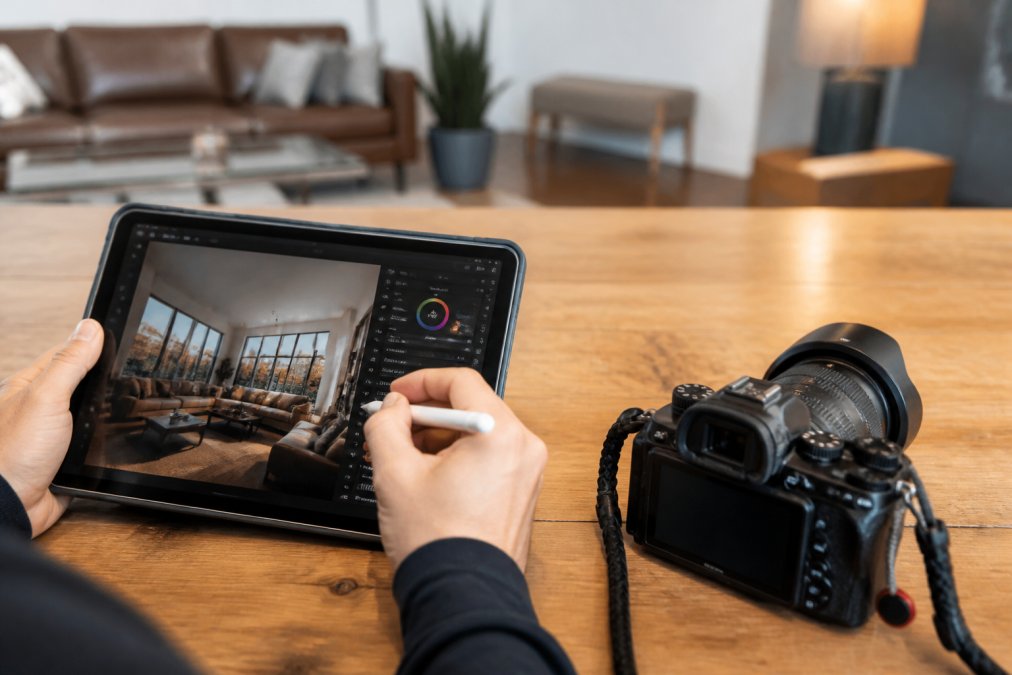
The most efficient professional workflows use AI as foundation and hand retouching as refinement. Start with AI tools for bulk corrections, exposure blending, color grading, and sky replacement. Then apply selective hand retouching to areas needing precision.
This approach delivers professional results faster than pure hand-blending while maintaining quality better than pure automation. AI handles repetitive, systematic tasks. Humans handle judgment calls and precision work. Desert Home Photography employs hand-blended imaging techniques using this hybrid approach, combining professional judgment with modern tools to deliver images showcasing each property's unique features while maintaining efficient turnaround times.
Legal and Ethical Considerations in AI-Assisted Editing
As AI editing tools become standard, legal and ethical questions arise about acceptable editing levels. Edited images should represent the property fairly. Correcting exposure, color, and lighting to show the property in its best light is standard and expected. Removing temporary distractions or enhancing architectural features is generally acceptable.
However, fundamentally altering the property, making rooms appear larger, removing permanent features, or creating non-existent lighting conditions crosses into misrepresentation. Real estate listing standards vary by jurisdiction, but most require photographs represent the property accurately. Virtual staging is widely accepted if disclosed (nar.realtor). Sky replacement is generally acceptable.
Photographers and agents should establish clear guidelines about acceptable editing. Documenting the editing process and before/after images provides protection if questions arise. As AI tools make sophisticated editing easier, restraint is both ethically sound and legally safer. Images accurately representing the property, enhanced for optimal presentation, serve everyone's interests better than images promising more than the property delivers.
Real estate photography editing in 2026 demands both technical skill and strategic judgment. The most effective approach combines professional understanding of light, color, and composition with modern tools that accelerate the editing process.
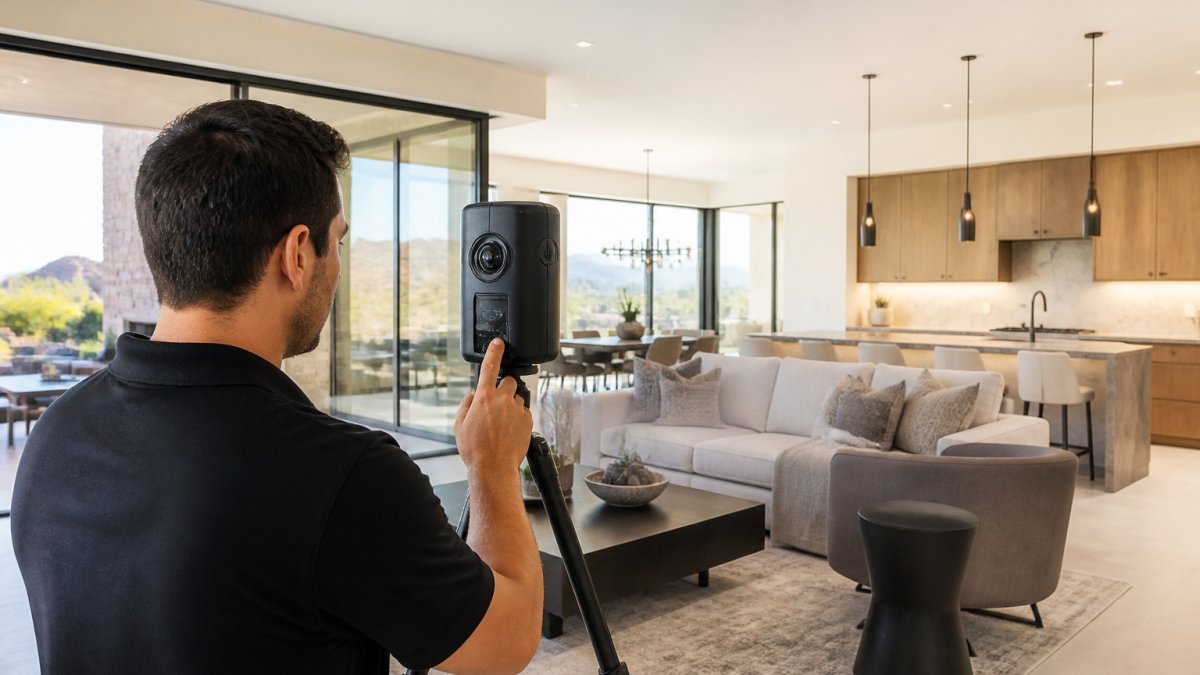
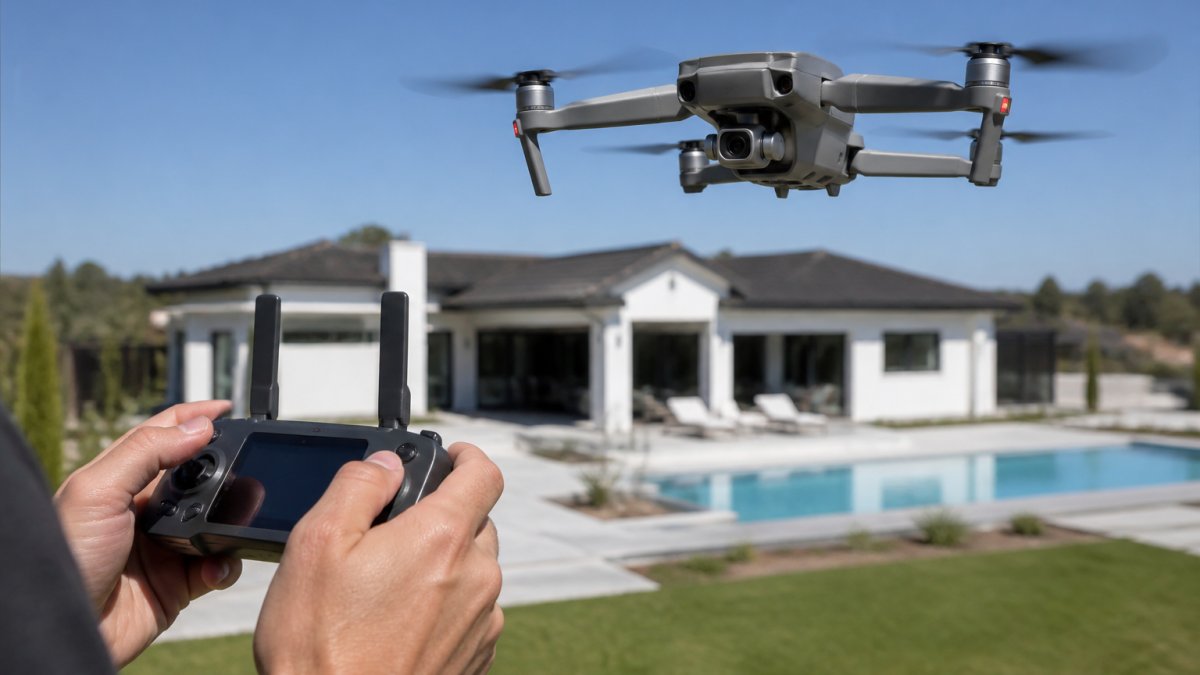
Desert Home Photography specializes in delivering professionally edited real estate images capturing each property's unique beauty. Our hand-blended imaging techniques, combined with FAA-licensed drone photography and immersive virtual tours, help agents and homeowners maximize listing appeal and attract serious buyers. For properties throughout the Phoenix Valley and surrounding areas, professional editing presents your property competitively and accurately to the market. Call or Text to discuss how professional photography and editing can elevate your listings.
Frequently Asked Questions
What is the best editing tool for real estate photography?
The best tool depends on your workflow speed and quality standards. Professional-grade software handles batch processing, HDR blending, and precise color correction. Many photographers use a combination of tools: one for initial raw processing, another for batch adjustments, and specialized software for advanced techniques like sky replacement or virtual staging. The ideal choice balances your turnaround time requirements with the level of control you need over final image quality.
How do AI-driven editing trends change real estate photography workflows in 2026?
AI tools now handle routine tasks like sky replacement, object removal, and window pull automatically, cutting editing time significantly. However, professional photographers increasingly use AI as a starting point rather than a complete solution. Hybrid workflows that combine AI automation with hand-blended retouching produce high-quality results. This shift means faster turnaround without sacrificing quality.
What are the industry standards for HDR vs. flash-ambient blending in 2026?
HDR blending via exposure bracketing and auto-exposure bracketing remains a standard for capturing full dynamic range in challenging lighting. Exposure fusion, blending multiple exposures without tone mapping, is preferred for natural-looking results. Flash-ambient blending is used for interiors where natural light alone cannot balance shadows and highlights. Most professionals now use a combination: HDR for exteriors and bright spaces, exposure fusion for detailed interiors, and selective flash-ambient blending for transitional areas.
How do you balance speed and quality in real estate photo post-processing?
Establish preset templates for your most common scenarios: bright exteriors, dark interiors, and transitional spaces. Use batch processing to apply consistent color grading and white balance across similar shots. Reserve manual retouching for features that drive buyer decisions: windows, kitchens, and primary bedrooms. This approach reduces turnaround time while maintaining professional quality.
What are the essential manual editing techniques every real estate photographer needs?
Master these core techniques: white balance correction to match interior and exterior lighting, shadow recovery to reveal detail in dark rooms, highlight clipping recovery to preserve window detail, lens correction to fix perspective distortion, and selective masking for precise control over specific areas. These fundamentals separate professional results from amateur edits. While AI handles routine adjustments, these manual techniques ensure your photos stand out and accurately represent each property's unique features.
Can AI editing handle interior lighting challenges in desert climates?
AI tools excel at balancing harsh exterior sunlight and interior shadows common in desert properties. Sky replacement and window pull techniques manage bright, blown-out windows while preserving interior detail. However, AI sometimes struggles with mixed color temperatures, warm afternoon sun combined with cool interior lighting. Hand-blended editing allows photographers to selectively adjust color grading in different zones, ensuring living spaces maintain natural warmth while windows stay properly exposed.
This article was written using GrandRanker