 ultimate-guide
Real Estate Photography Turnaround Time: What to Expect
Table of Contents
- Real Estate Photography Turnaround Time: Standard Expectations
- Factors That Influence Delivery Speed
- Average Real Estate Photo Editing Time and Post-Production Workflow
- Real Estate Photography Workflow Best Practices for Faster Delivery
- Rush Delivery Fees for Real Estate Photography and Service Level Agreements
- Turnaround Times for Different Media Types
- Setting Realistic Client Expectations and Managing Busy Seasons
- Balancing Speed and Image Perfection
- Frequently Asked Questions
Last Updated: September 2, 2026
Real Estate Photography Turnaround Time: Standard Expectations
Most professional real estate photographers deliver edited listing photos within 24 to 48 hours of a shoot, though this timeline varies based on several factors (realtor.org). The standard expectation in the industry is next business day delivery for most residential listings, though rush options and seasonal variations can extend or compress this window. Knowing what to expect helps you manage client timelines and set realistic delivery windows.
Factors That Influence Delivery Speed
Real estate photography turnaround time depends on multiple variables that compound or accelerate the entire production process.
Listing Size and Photo Count
The number of photos required directly impacts editing time. A small condo requiring 15-20 photos moves through post-production faster than a luxury estate needing 60-80 images. Hand-blended imaging, which combines multiple exposures to achieve perfect lighting in every room, adds processing time per image. A photographer blending three to five exposures per photo requires more time than basic single-image editing.
Seasonal Demand and Photographer Availability
During busy seasons, spring and early summer in most markets, photographer availability tightens considerably. A photographer booked solid for three weeks may push your turnaround to five business days simply because they're juggling multiple shoots simultaneously. Off-season shoots in fall or winter often see faster delivery because photographers have more processing time between appointments.
Photographer availability also depends on team size. A solo operator handles one shoot at a time, while a team with multiple photographers can parallelize work. Desert Home Photography's FAA-licensed drone operators and multi-person crew structure allows us to manage busy season demand without sacrificing delivery speed.
Client-Side Preparation Impact
How well you prepare the property before the shoot directly affects post-production time. A clean, decluttered home with working lights and open curtains requires less corrective editing. Pre-shoot communication matters, providing the photographer with a floor plan and listing details allows them to plan efficiently and reduces on-site time.
Average Real Estate Photo Editing Time and Post-Production Workflow
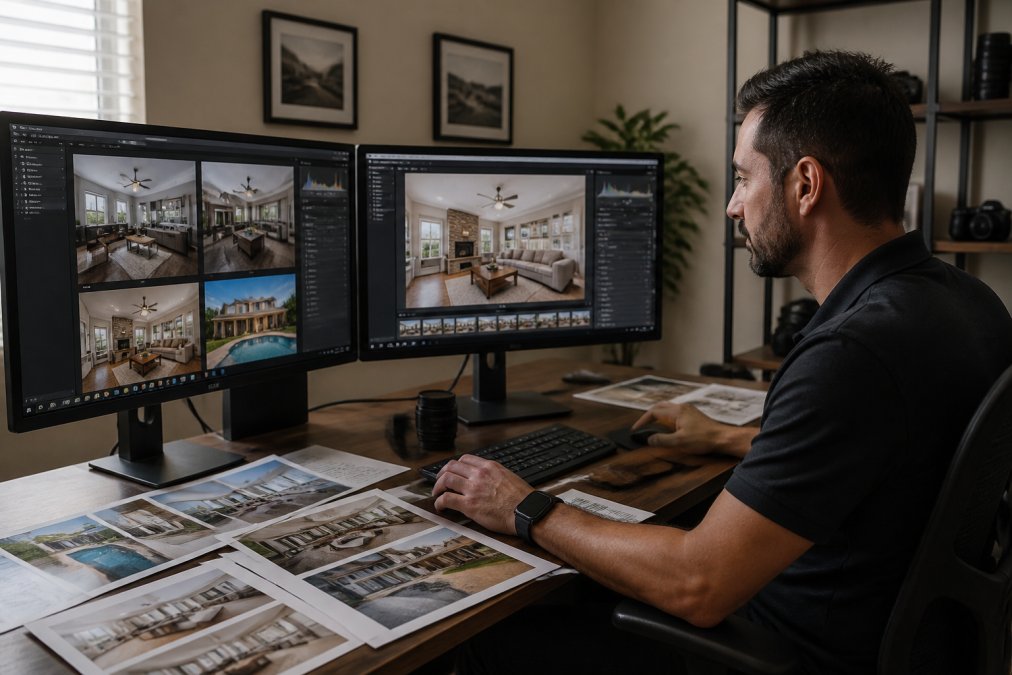
Most professional photographers spend 30-60 minutes per property on post-production, depending on listing size and complexity. For a 30-photo listing, that's roughly one to two minutes per image. The post-production workflow typically follows this sequence: culling (selecting the best images), color correction (adjusting white balance and exposure), hand-blending (combining multiple exposures), quality control review, and final export.
Hand-Blended Imaging and Color Correction
Hand-blended imaging separates professional real estate photography from amateur work. The photographer captures multiple exposures of each room, typically three to five, then manually blends them to achieve perfect lighting throughout the space. This prevents blown-out windows while maintaining detail in interior shadows. Color correction addresses lighting challenges by adjusting white balance and exposure inconsistencies, adding 30-45 seconds per image beyond basic editing.
The Valley's intense natural light creates unique editing challenges. Desert sunlight streaming through windows requires careful exposure blending to prevent harsh shadows and overexposed areas. Photographers experienced with local conditions complete this work faster because they understand the specific corrections needed.
HDR Merging and Quality Control Checkpoints
HDR (High Dynamic Range) merging combines multiple exposures into a single image with detail in both highlights and shadows, typically requiring three to seven minutes per image depending on complexity (peer-reviewed research). Quality control checkpoints prevent mistakes from reaching clients by reviewing each edited image for color consistency, proper exposure, and technical accuracy. This step adds 10-15 minutes to each batch but prevents costly revisions.
Professional photographers maintain service level agreements (SLAs) that specify delivery windows and quality standards. A typical SLA might guarantee next business day delivery with a maximum of two revision rounds included.
Real Estate Photography Workflow Best Practices for Faster Delivery
Optimizing your workflow reduces turnaround time without sacrificing quality.
Batch Processing and Production Timeline Optimization
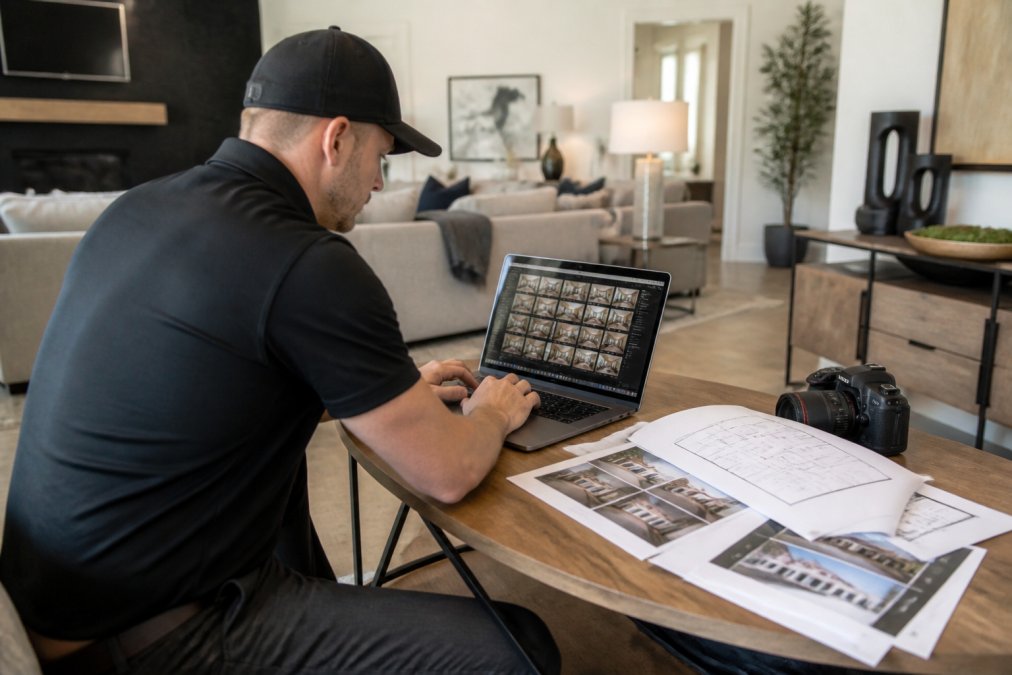
Batch processing, handling similar tasks in sequence rather than switching between different types of work, dramatically improves efficiency. A photographer processes all color corrections for the day's shoots before moving to hand-blending, rather than jumping between tasks for each property.
Standardized editing presets accelerate color correction. Rather than adjusting white balance and exposure individually for each image, photographers apply consistent presets based on the property's lighting conditions, then make fine adjustments. This reduces per-image editing time from two minutes to 45 seconds while maintaining quality.
Culling and Technical Workflow Bottlenecks
Culling, selecting the best images from a full shoot, is where many photographers lose time. A thorough culling process eliminates blurry shots, duplicates, and unflattering angles, reducing post-production time by ensuring only viable images enter the editing pipeline.
Technical bottlenecks often emerge in the rendering and export phase. Professional photographers invest in fast hardware and efficient software to prevent delays. File management and naming conventions prevent lost images and duplicate work, allowing photographers to find and process images faster.
Rush Delivery Fees for Real Estate Photography and Service Level Agreements
Rush delivery options exist but carry premium pricing because they disrupt a photographer's normal workflow. Same-day delivery requires the photographer to prioritize your shoot above others, often working late into the evening.
Same-Day and Next Business Day Options
Same-day turnaround typically means photos delivered by 5 PM the day of the shoot. Most photographers charge 25-50% premiums for same-day delivery because it prevents them from scheduling additional shoots that day. Next business day delivery, the industry standard, allows the photographer to complete a full day of shoots before beginning post-production and typically incurs no premium.
Contractual SLA Templates and Delivery Windows
A service level agreement specifies exactly what "delivery" means and when it occurs. A standard SLA template includes delivery window, number of included revision rounds (typically 1-2), definition of major revisions versus minor adjustments, backup timeline if the photographer becomes unavailable, rush delivery fees, and payment terms. Including these details in your photographer contract protects both parties.
Turnaround Times for Different Media Types
Real estate photography turnaround time varies significantly depending on the media type.
Still Photos vs. Video Production and Virtual Tours
Still photos represent the fastest turnaround option, typically 24-48 hours for a 30-photo listing. Video production takes considerably longer, a 60-second property walkthrough requires scripting, filming, editing, color grading, and audio mixing, typically 3-5 business days (realtor.org). Virtual walk-through tours combine still photos with navigation software and require additional processing, adding 2-3 business days to the standard turnaround.
Drone Photography and Aerial Imagery Timelines
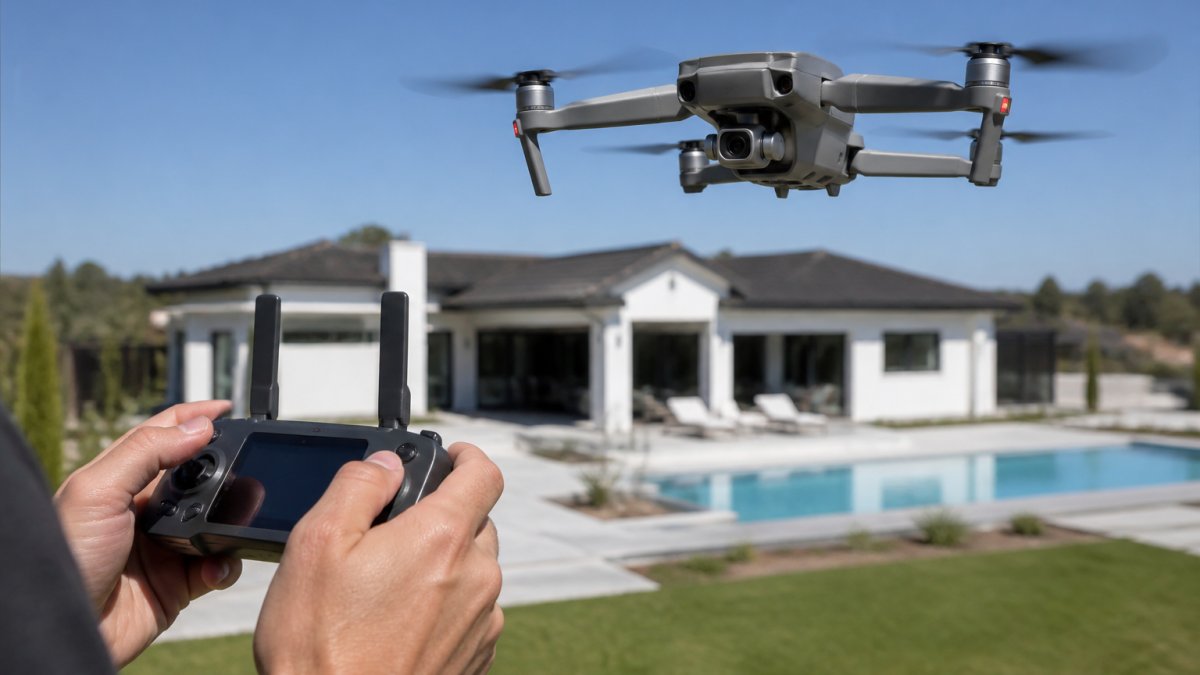
Drone photography requires FAA-licensed operators and specific weather conditions, which may require rescheduling. Once captured, drone imagery requires similar post-production work as ground-level photos. Drone video requires color grading, stabilization, and often background music or voiceover, adding 2-3 days to the project timeline.
Setting Realistic Client Expectations and Managing Busy Seasons
How you communicate turnaround expectations determines client satisfaction more than actual delivery speed. Set expectations based on the season and photographer workload. During spring and early summer, communicate that turnaround may extend to 3-5 business days rather than the standard 24-48 hours.
Provide clients with a realistic timeline immediately after booking the shoot, including the shoot date, expected editing start date, and guaranteed delivery window. Clarify what "delivery" includes, edited photos only, uploaded files to a client portal, or digital download links.
For agents managing multiple shoots monthly, negotiate tiered pricing based on volume. A photographer handling 15-20 properties per month can offer faster turnaround and lower per-listing costs, incentivizing consistent business and allowing the photographer to optimize their workflow.
Balancing Speed and Image Perfection
The fastest turnaround comes from cutting corners, which undermines the purpose of professional photography. Professional photographers understand this trade-off. A photographer promising same-day delivery on every shoot isn't hand-blending images or performing thorough quality control.
The optimal real estate photography turnaround time balances speed with quality. Next business day delivery allows time for proper hand-blending, color correction, and quality control without excessive delays. This is why it's the industry standard, it's the sweet spot where efficiency meets excellence.
When evaluating photographers, ask about their actual turnaround times for different listing types. A photographer who delivers 20-photo residential listings in 24 hours but requires 5 days for 60-photo luxury estates is being realistic about production requirements, suggesting they prioritize quality over speed.
Choosing a real estate photographer means understanding the turnaround time they can realistically deliver. Desert Home Photography specializes in hand-blended imaging and FAA-licensed drone photography that elevates property listings and attracts serious buyers. Our team manages turnaround timelines strategically, delivering next business day service for most residential properties while maintaining the image perfection that distinguishes luxury listings. Whether you need standard listing photos, immersive virtual tours, or aerial drone imagery, we structure our workflow to meet your timeline without compromising quality. Contact Desert Home Photography to discuss your listing photography needs and get a realistic turnaround estimate for your properties.
Frequently Asked Questions
What is a standard turnaround time for professional real estate photos?
Most professional real estate photography services deliver edited photos within 2-5 business days. Standard turnaround typically falls in the 3-5 day range, depending on the number of photos, editing complexity, and photographer workload. Rush options are available but usually cost more. Factors like busy seasons and listing size can affect these timelines, so confirm specific delivery dates with your photographer upfront.
How does average real estate photo editing time impact my listing delivery?
Average real estate photo editing time typically ranges from 15-30 minutes per photo for professional-quality work. This includes culling, color correction, HDR merging, and final quality control. A 30-photo listing can take 8-15 hours of editing work alone. Complex properties with challenging lighting or high-end listings requiring hand-blended imaging take longer. Understanding this editing workflow helps you set realistic expectations for when your digital assets will be ready.
What factors cause delays in real estate photography delivery?
Common delays stem from photographer availability during peak seasons, large batch orders, technical workflow bottlenecks in post-production, and inadequate property preparation by clients. Cluttered interiors, poor lighting conditions, and scheduling conflicts can extend timelines. Geographic variance also affects delivery, as busy metropolitan markets may have longer wait times. Communicating your deadline early and preparing the property help minimize delays.
Are rush delivery fees worth paying for faster real estate photography turnaround?
Rush delivery fees make sense when listing freshness is critical or you're managing multiple properties. Same-day or next business day options cost significantly more but ensure rapid market entry. For high-end listings or competitive markets, the premium may justify faster turnaround. However, rushing the editing process can compromise image perfection. Evaluate your timeline needs against your budget and the property's market conditions before committing to expedited service.
This article was written using GrandRanker