 how-to
How to Choose a Luxury Architectural Photographer
Table of Contents
- Why Luxury Listings Need a Specialist, Not a Generalist
- Architectural Photography Portfolio Review: What to Look For
- Confirming the Photographer's Process and Site Preparation
- Luxury Real Estate Photography Pricing: What Drives the Cost
- Questions to Ask About Equipment, Licensing, and Deliverables
- Hiring a Professional Real Estate Photographer Checklist
- Red Flags to Watch For Before You Sign
- Conclusion: Match the Portfolio to the Project
- Frequently Asked Questions
Last Updated: September 9, 2026
Why Luxury Listings Need a Specialist, Not a Generalist
A luxury architectural photographer is defined by their ability to translate three-dimensional space into images that command premium asking prices. This specialization differs fundamentally from standard real estate photography, requiring an eye for composition, controlled perspective, and an understanding of how light shapes architectural details. The right imagery transforms buyer perception, turning a property listing into a visual narrative that sells a lifestyle rather than just square footage.
The distinction matters because buyer expectations have shifted. High-end residential and commercial facilities demand publication-ready visuals for glossy brochures and curated online platforms. A generalist with decent gear cannot consistently deliver the technical precision required for architectural documentation, where vertical lines must remain straight and color grading must feel natural.
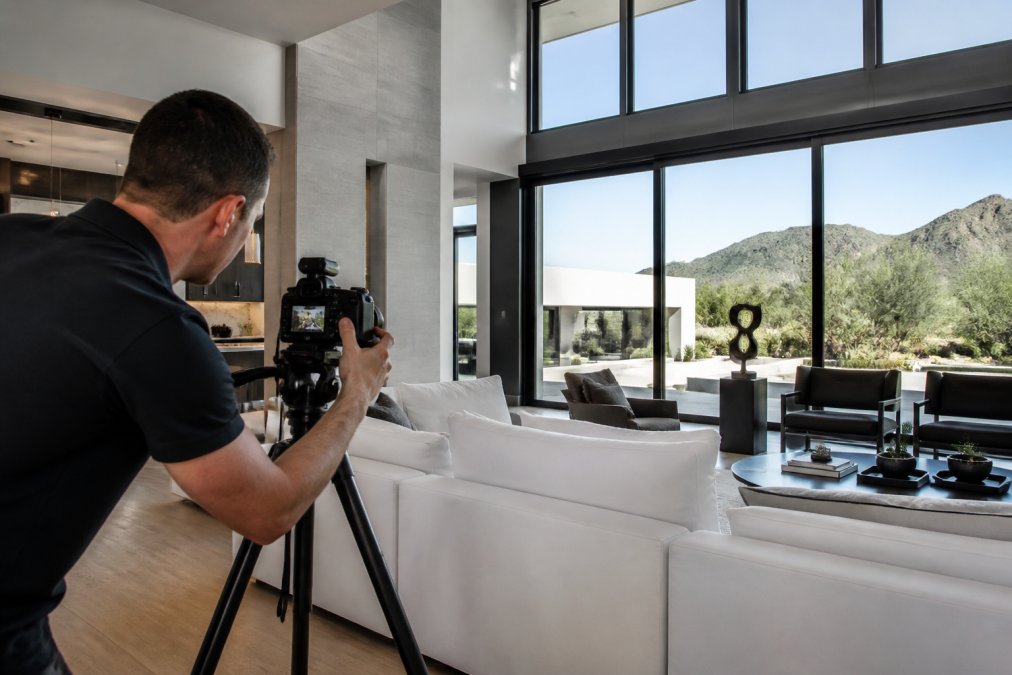
Below, we'll walk through the specific criteria for evaluating a luxury architectural photographer, from portfolio review to contract terms, so you can hire with confidence.
Architectural Photography Portfolio Review: What to Look For
The portfolio is your primary evidence of capability, so review it with the same scrutiny you would apply to the final product. Look for consistency across a range of properties, not just a single impressive shoot that masks weaker work. A strong portfolio demonstrates a clear aesthetic vision across different interior design styles, from minimalist modern to classic traditional.
Effective architectural photography portfolio review focuses on visual storytelling: does the photographer capture the flow between rooms, the relationship between indoor and outdoor areas, and the unique architectural details that define a luxury property? If the portfolio feels repetitive or relies on the same angles, that signals a limited creative range.
Lighting and Technical Precision in Every Shot
Lighting separates competent photographers from true specialists. Examine how the photographer handles natural versus artificial light in challenging conditions, such as the harsh midday sun common in desert climates. Look for images where window views are properly exposed without blowing out the exterior, and where interiors feel bright and inviting rather than dark and cavernous.
Technical precision also appears in perspective control. A wide-angle lens is standard, but the photographer must manage distortion so walls appear straight and proportions feel accurate (nist.gov). Review the sharpness of details, from cabinetry hardware to crown molding, to gauge overall image quality.
Assessing Post-Production and Editing Consistency
Post-production is where raw captures become polished, publication-ready images. Scrutinize editing consistency across the entire portfolio, not just individual standouts. Color grading should feel uniform, with whites appearing clean and skin tones natural in lifestyle shots.
Ask about the post-production workflow. Does the photographer use hand-blended imaging techniques to balance exposure across a single frame? This approach, common among specialists, merges multiple exposures to create a final image that accurately represents the space. A commitment to this level of detail signals professional standards.
Confirming the Photographer's Process and Site Preparation
A professional process begins long before the shoot day. Confirm that the photographer conducts pre-shoot site scouting, visiting the property to assess lighting, plan camera positions, and identify the strongest architectural features. This preparation prevents wasted time on site and ensures the final images highlight the home's best attributes.
The collaborative process matters too. A specialist should ask about the property's selling points, the target buyer, and how you intend to use the images. This dialogue shapes the shoot, ensuring deliverables align with your marketing strategy. Ask about turnaround time, as it directly impacts your ability to list the property quickly.
Luxury Real Estate Photography Pricing: What Drives the Cost
Luxury real estate photography pricing is not a line-item expense; it is an investment in how quickly a property sells and at what premium. Most practitioners frame the cost as a fraction of the marketing budget, not the construction budget.
How Quotes Are Actually Built
A professional quote is built from a base session fee plus line-item add-ons. The base fee typically covers a set number of final images (usually 15-25), a single photographer, and standard post-production. From there, costs scale with:
- Square footage and complexity: A 4,000-square-foot home with open-plan living areas is faster to shoot than a 3,000-square-foot home with many small, compartmentalized rooms. Each additional room or distinct space adds time for lighting setup and compositing.
- Twilight or dusk shoots: These require scheduling at the exact golden hour, often meaning the photographer works a single session per day.
- Aerial photography: FAA-licensed drone work adds a separate charge per hour or per property, and it requires a site visit to confirm airspace restrictions (faa.gov). If the property is near an airport or helipad, the photographer may need to coordinate with air traffic control, which adds lead time.
- Virtual tours and walkthroughs: Matterport scans or 3D tours are usually priced per square foot or per scan position.
- Usage rights: The single largest hidden variable. A license limited to one listing for a specific duration may differ in cost from a buyout that allows for broader, perpetual use. Always ask what the quote includes.
The ROI Case: Why the Cost Is Justified
Professional architectural photography is not a cost center, it is a revenue driver. High-end buyers make a judgment in the first few seconds of viewing a listing; if the images look amateur, they assume the property is overpriced or poorly maintained. Publication-quality images are a prerequisite for:
- Architectural awards: Most major design awards require professional photography for submission. Winning or even being shortlisted adds a prestige marker that justifies a higher asking price.
- Editorial placement: Magazines and online design platforms only accept submissions with professional imagery. A single editorial feature can generate multiple qualified buyer inquiries.
- Broker marketing collateral: Luxury brokerages expect a certain visual standard for their off-market and pocket listings. If your images do not meet that bar, the property may not get the same internal promotion.
What a Transparent Quote Should Include
Before signing, request a written quote that itemizes every deliverable, including:
- Number of final edited images
- Resolution and file format (typically 300 DPI TIFF or high-res JPEG)
- Turnaround time
- Number of revision rounds included
- Usage rights and license duration
- Travel fees, if the property is outside the photographer's standard service area
- Overtime or additional session fees
If a photographer cannot or will not itemize these elements, that is a red flag. The quote is not just a price, it is the first document that defines your legal relationship. A vague quote leads to a vague deliverable, and in luxury real estate, vagueness is expensive.
Guidance on hiring professional photographers reinforces that clear agreements protect both parties. Treat the quote as the foundation of that agreement, and do not proceed until every line item is explicit.
Questions to Ask About Equipment, Licensing, and Deliverables
Before signing, clarify the technical and legal details of the engagement. Ask about the photographer's equipment, including camera bodies, lenses, and lighting gear, to confirm they can handle the property's specific challenges. For aerial shots, verify the photographer holds a valid FAA license for drone operations.
Discuss image licensing and usage rights explicitly. Understand whether you receive full ownership of the digital assets or a license limited to specific marketing uses. Clarify the number of edited images, resolution and file formats, and whether revisions are included. These questions prevent misunderstandings and ensure the final package supports your listing strategy.
Hiring a Professional Real Estate Photographer Checklist
A checklist is only useful if it surfaces what you cannot see in a portfolio. The visual work tells you about taste and skill; the contract tells you about professionalism and risk. Use this two-part checklist to evaluate both the creative and the business side.
Part One: Creative and Technical Verification
| Checklist Item | What to Verify | Why It Matters |
|---|---|---|
| Portfolio consistency | Review 3-5 full projects, not just highlights | A single great shoot can mask inconsistent output |
| Lighting range | Look for twilight, overcast, and harsh sun examples | Confirms the photographer can handle your property's specific conditions |
| Vertical line control | Check that walls and door frames are perfectly straight | Crooked lines signal a lack of perspective-control technique |
| Post-production transparency | Ask to see a before-and-after example | Reveals whether the editing is clean and realistic or heavily manipulated |
| Site scouting process | Confirm a pre-shoot walkthrough is standard | Prevents wasted time on shoot day and ensures the best angles are planned |
| Turnaround commitment | Get a written delivery date | Aligns with your listing timeline and marketing calendar |
Part Two: Contractual Red Flags and Legal Protections
This is the section most hiring guides skip, yet it is where luxury projects fail. A photographer's contract determines who owns the images, how they can be used, and what happens if something goes wrong. Review the agreement for the following clauses before you sign:
- Usage rights specification: The contract must state exactly where the images can be used (listing portals, print brochures, social media, award submissions) and for how long. A vague "marketing use" clause is a trap; it may not cover editorial submissions or future resale of the property.
- Ownership transfer: If you want full ownership of the digital assets, the contract must include a copyright transfer clause. Without it, the photographer retains copyright and you hold only a license. For luxury projects where images may be reused across multiple campaigns, a buyout is often worth the premium.
- Indemnification for drone operations: If aerial images are part of the scope, the contract must confirm the photographer holds a valid FAA Part 107 license and carries liability insurance. You do not want to inherit liability for a drone incident on your property.
- Revision policy: The contract should state how many revision rounds are included and what constitutes a revision. A change in camera angle or lighting setup is a reshoot, not a revision; color grading tweaks are revisions. Make sure the distinction is clear.
- Cancellation and rescheduling terms: Luxury properties often have shifting timelines. Confirm the policy for rescheduling due to weather, construction delays, or a change in listing date. A photographer who charges the full fee for a weather-related cancellation is not being unreasonable, but the policy should be explicit.
- Payment schedule: Standard practice is a deposit (often 50%) with the balance due on delivery. Be wary of a photographer who demands full payment before the shoot; this removes your leverage if the deliverables are substandard.
- Late delivery penalties: For a time-sensitive listing, a late delivery can cost you a buyer. Ask whether the contract includes any remedy for missed deadlines. Many photographers will not offer penalties, but the conversation itself clarifies their commitment.
The Final Screen
Before you sign, run this final check: Does the photographer's contract protect you as much as it protects them? A balanced contract is a sign of a mature professional. A one-sided contract that favors the photographer on every point is a warning that the working relationship will be equally unbalanced. If the contract is missing any of the clauses above, ask for them to be added. A professional will accommodate reasonable requests; a photographer who resists written clarity is not the right partner for a luxury project.
Red Flags to Watch For Before You Sign
Certain warning signs should prompt caution. A photographer who cannot articulate their post-production workflow may deliver inconsistent results. Vague answers about equipment or drone licensing create unnecessary risk. Contractual red flags include unclear usage rights, no written agreement, or demands for full payment before the shoot without a clear revision policy.
Also be wary of someone who overpromises turnaround times or lacks a portfolio that matches your property's style and price point. A luxury architectural photographer should demonstrate a track record with similar high-end properties, showing they understand the expectations of discerning buyers.
Conclusion: Match the Portfolio to the Project
Choosing a luxury architectural photographer requires matching their demonstrated strengths to your specific project needs. Review portfolios for lighting mastery, technical precision, and consistent post-production. Confirm their process includes site preparation, and clarify licensing and deliverables before signing.
At Desert Home Photography, we specialize in real estate and architectural photography, capturing the unique beauty of every home through hand-blended imaging and FAA-licensed drone photography. Our team serves the Phoenix Valley and surrounding areas, helping agents and homeowners entice potential buyers and maximize marketability. Call or text Desert Home Photography to discuss your project and experience the difference professional imagery makes.
Frequently Asked Questions
What is the difference between standard real estate and luxury architectural photography?
Standard real estate photography documents a property for a listing. Luxury architectural photography is about visual storytelling. It emphasizes composition, perspective control, and lighting techniques to highlight architectural details and the flow of a home. The goal is publication-ready images that feel like an editorial feature, not just a record of the rooms.
How much does professional luxury architectural photography cost?
Luxury real estate photography pricing depends on the project scope, square footage, number of final images, and required deliverables like twilight shots or drone footage. A photographer's experience and post-production standards also factor into the rate. Request a detailed quote from Desert Home Photography for your specific property to get accurate pricing based on your needs.
Do I need a photographer with FAA-licensed drone certification?
Yes, for aerial shots of a luxury property, the photographer must hold a valid FAA Remote Pilot Certificate. This is a legal requirement for commercial drone operation in the United States. Hiring an FAA-licensed photographer protects you from liability and ensures the work meets professional standards for safety and regulations.
What should I look for in a luxury architectural photographer's portfolio?
Look for consistency in image quality across different projects. Check that they handle natural light and artificial lighting with technical precision. Review their architectural photography portfolio for straight vertical lines, sharp focus, and a sophisticated color palette. See if their aesthetic vision matches the style of your property, and confirm they have experience with high-end residential homes.