 how-to
How to Market Residential Architectural Photography
Table of Contents
- Why Residential Architectural Photography Needs a Distinct Marketing Plan
- Build an Architectural Photography Portfolio That Wins Residential Clients
- How to Pitch Architects for Photography Work
- Master Direct Outreach to Real Estate Agents
- Architectural Photography Pricing Guide: Set Rates That Reflect Your Value
- Best Social Media Platforms for Architectural Photographers
- Marketing Architectural Photography With Local SEO and Referrals
- Conclusion: Build a Marketing System That Keeps Your Calendar Full
- Frequently Asked Questions
Last Updated: September 5, 2026
Why Residential Architectural Photography Needs a Distinct Marketing Plan
Marketing residential architectural photography is a different discipline from chasing commercial or editorial work. Residential clients buy on speed, reliability, and a visual style that makes a property feel aspirational. The photographers who win this work treat it as a local service business, not an art career.
A stunning portfolio does little if the agents listing mid-range properties never hear your name. The winning approach combines a targeted portfolio, direct outreach, transparent pricing, and a referral engine. Below, we show you how to build that system so your marketing produces booked shoots rather than compliments.
Build an Architectural Photography Portfolio That Wins Residential Clients
Your portfolio must answer one question instantly: can this photographer make a home look its absolute best? Show the design intent of a space with compositional balance, perspective correction, and high-resolution imagery. You do not need fifty projects; you need eight to twelve exceptional ones that demonstrate range.
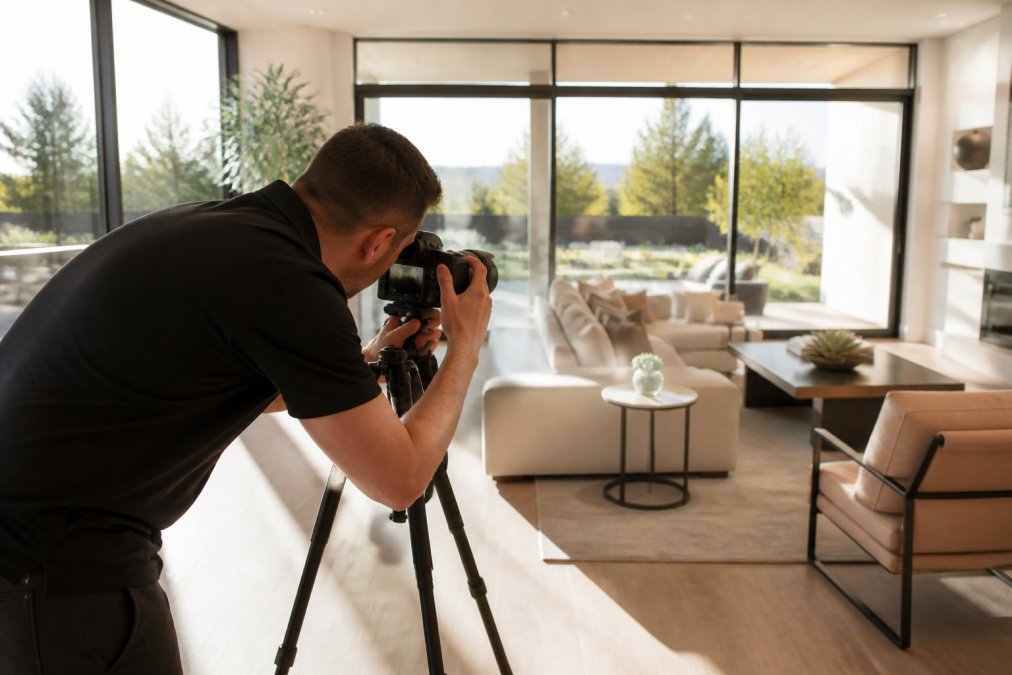
Curate your portfolio around the properties you want to shoot. Luxury listings require hero shots of pools, dramatic entries, and high-end finishes; volume agents want clean, bright interiors that handle tricky lighting. Avoid filling your portfolio with one-off architectural marvels that leave agents unsure you can handle a standard suburban listing.
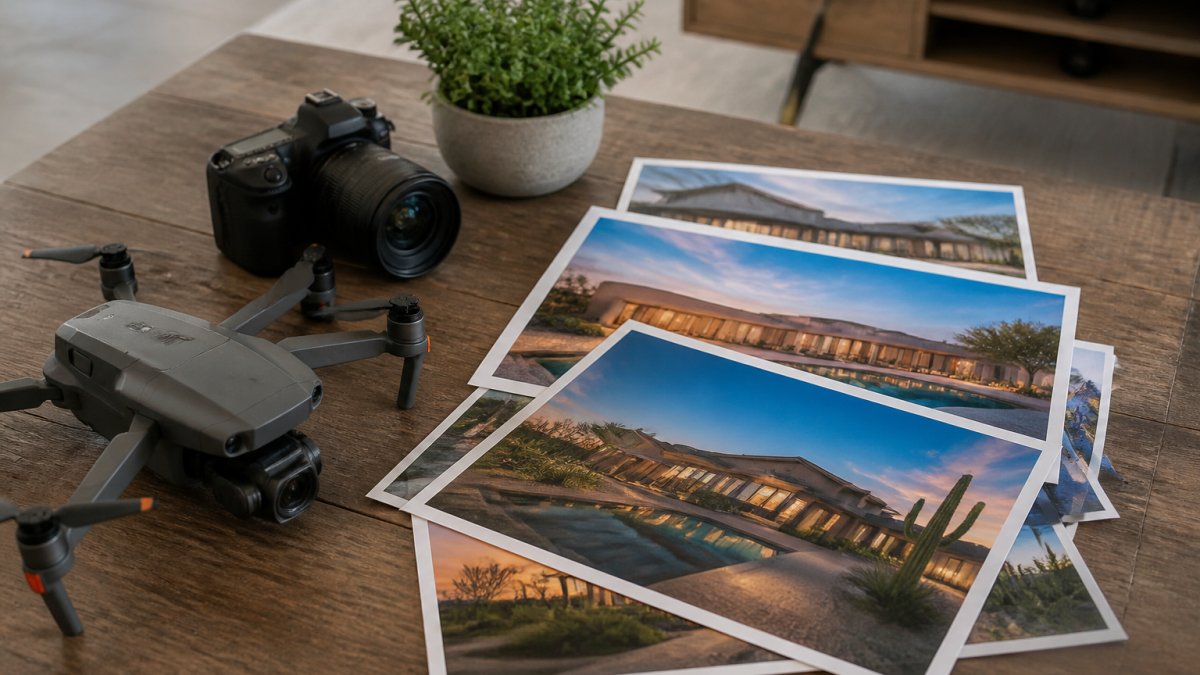
Include exterior twilight shots, interior wide angles, and detail shots that show craftsmanship. Label each project with square footage and neighborhood to help agents self-identify with the work.
How to Pitch Architects for Photography Work
Pitching architects requires a different angle than pitching agents. Frame your images as a portfolio piece for their firm as much as a listing tool for the homeowner. Architects need project photography for their own marketing, award submissions, and publication pitches, so emphasize accuracy and design intent.
Start with a targeted list of residential architects who design the style of homes you want to shoot. Reference a recent project you admire, then offer a discounted or complimentary "portfolio build" shoot for an upcoming completion. This builds relationships with the people who control access to high-end residential work.
Your pitch should read like a business proposition. Include a link to a portfolio page with similar architectural language and state your turnaround time clearly. Architects work on long timelines, so follow up every few weeks; one architect who likes your work can feed you multiple projects per year.
Master Direct Outreach to Real Estate Agents
Real estate agents are your highest-volume residential source, but they are also the most heavily pitched audience in your market. Your outreach must be a low-friction, high-clarity business proposition that solves their immediate problem: listing photos that are fast, reliable, and make their phone ring. A structured, direct email sequence respects their time and demonstrates your value in their language.
The 3-Email Sequence That Gets Replies
Most agents decide in the first five seconds whether to read your email (hbr.org). A subject line like [Neighborhood] Listing Photography - 48-Hour Turnaround signals you are local and fast, the two primary concerns for a listing agent.
Email 1: The Value Proposition (Day 1, Tuesday 7:00 AM)
This email is not about you; it is about their problem. Lead with a specific observation about their current work, not your portfolio.
Subject: [Neighborhood] Listing Photography - 48-Hour Turnaround
Hi [Agent Name],
I noticed your new listing at [Address] just hit the market. The staging in the living room is excellent, but the wide-angle shots on the MLS are doing it a disservice by making the space feel smaller than it is.
My name is [Your Name] with [Your Business Name]. I specialize in architectural photography for residential listings in [Neighborhood]. My images are designed to make rooms feel more expansive and aspirational, which helps your listings stand out and sell faster.
I can shoot your next listing with a 48-hour turnaround. Here is a link to a portfolio of homes in your area that I've recently shot: [Link to Portfolio Page]
Would you be open to a brief 10-minute call next week to discuss how I can support your business?
Best, [Your Name] [Your Phone Number] [Your Website]
Email 2: The Value-Add Follow-Up (Day 6)
If you get no response, do not send a 'just checking in' email. Provide value that positions you as a resource, not a salesperson.
Subject: A quick resource for your [Neighborhood] listings
Hi [Agent Name],
I wanted to follow up on my previous email. I know you're busy, so I put together a short guide on how to prepare a home for a photo shoot to maximize the final result. It covers simple things like decluttering countertops and turning on all the lights, which can make a significant difference.
You can access it here: [Link to a PDF or Blog Post]
I'm also available for a sample shoot on one of your slower listings at a reduced rate if you'd like to see the quality of my work and my turnaround time firsthand.
Best, [Your Name]
Email 3: The Direct Ask (Day 14)
This is your final touch: a direct, low-pressure ask that acknowledges their potential inaction without being needy.
Subject: One last thought on photography for [Neighborhood]
Hi [Agent Name],
I know you're getting pitched by a lot of photographers. I just wanted to send one last note to let you know that I have availability in my calendar for the next few weeks for new listings.
If you ever need a photographer who delivers consistent, high-quality images on time, I'd be happy to work with you.
Best, [Your Name]
The 'Sample Shoot' Strategy
Offering a sample shoot is the single most effective way to convert a hesitant agent. Offer interior stills for a flat fee roughly 50-75% of your standard rate in exchange for feedback and a testimonial. Agents who see the difference in their listing's presentation will not go back to their previous photographer.
Timing and Tracking
Agents are most receptive on Tuesday and Wednesday mornings (realtor.com). Use a simple CRM or spreadsheet to track each agent's name, brokerage, first email date, and responses. A consistent drip of 10-15 targeted emails per week yields more results than a one-time blast to 500 agents.
Architectural Photography Pricing Guide: Set Rates That Reflect Your Value
Agents compare photographers on price before they compare portfolios, but competing on price alone is a mistake. Structure your pricing around value and licensing, not just the time you spend on a shoot. This section breaks down a common pricing framework and the licensing rights that protect your income.
A Tiered Pricing Structure for Residential Work
A standard tiered structure lets agents choose based on the property's price point and sets clear expectations for deliverables and turnaround times:
- Essential Package: This is your entry-level offering for smaller listings or budget-conscious agents. It typically includes 15-20 professionally edited interior and exterior stills with basic color correction and perspective adjustment. Turnaround is 48 hours. This package is designed for a standard MLS listing.
- Premium Package: This is your most popular package for higher-end listings. It includes 25-35 images and adds hand-blended imaging (also known as exposure bracketing or HDR) to manage challenging interior lighting, a common challenge in markets with strong sun exposure that creates deep shadows and blown-out windows. This package is for agents who want the home to look aspirational and magazine-ready. Turnaround is 48 hours.
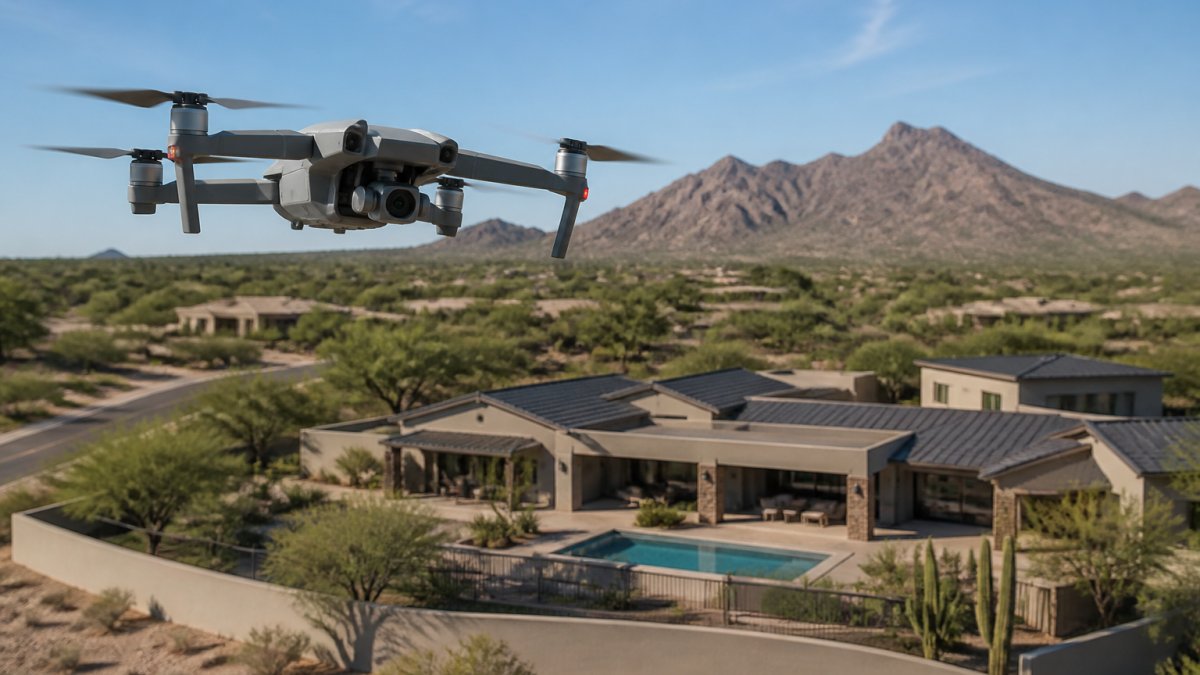
- Luxury Package: This is your top-tier offering for luxury listings. It includes everything in the Premium package, plus drone photography (if you are FAA-licensed) and a virtual walk-through tour. This package is for properties where the marketing budget is significant and the agent expects a full multimedia experience. Turnaround is 72 hours.
The Critical Conversation: Licensing and Usage Rights
You are not selling the images; you are selling a license to use them. Include a standard license in your package price that covers the agent's use for the specific listing (e.g., MLS, their website, and social media) for a defined period, such as 12 months.
Charge a licensing fee for any other use. This is a significant revenue stream competitors often ignore. For example:
- Extended MLS Use: If the home is relisted after the license expires, a fee is reasonable.
- Print Advertising: If the agent wants to use a photo in a magazine or a large-format brochure, this is a separate, higher fee.
- Architect or Interior Designer Portfolio Use: If the architect or designer wants to use the images for their own marketing or award submissions, this is a separate license. You can offer a 'portfolio use' license for a reduced fee, as it provides you with a portfolio credit and potential future referrals.
Negotiation Tactics That Protect Your Value
When an agent asks 'Can you do it for less?' do not simply discount. Offer to reduce the scope: 'I can do the Essential package, which includes 15 images. The Premium package includes 30 images and hand-blended imaging to handle the harsh light in the great room. Which would you prefer?' This reframes the conversation from price to value.
Another tactic is to offer a small discount for a multi-property agreement. If an agent commits to three shoots in a month, you can offer a discount on the total. This secures recurring revenue for you and provides a predictable cost for them.
Positioning Your Price as an Investment
Resist underpricing to win volume; agents who pay rock-bottom rates treat photography as a commodity. Position your pricing around the outcome: a property that photographs well spends less time on the market and attracts stronger offers. Frame the fee as an investment in the seller's return, not a cost line item.
Best Social Media Platforms for Architectural Photographers
The best social media platforms for architectural photographers are those where visual quality translates to lead generation: Instagram and Pinterest. Instagram builds instant credibility with a grid of bright, well-composed interiors. Pinterest functions as a search engine for design, where images can keep surfacing for years when pinned with the right keywords.
Post the hero shot first, then a carousel of the full property. Use location tags for every post, because agents and sellers search by neighborhood, and a post tagged with the specific suburb reaches the exact audience you want.
Before-and-after content from your post-processing demonstrates the technical skill that justifies your pricing. Agents share this with sellers who question the value of professional photography, making your social media work as a sales aid. Post consistently and engage with local agent content.
Marketing Architectural Photography With Local SEO and Referrals
Local SEO and referrals keep a residential photography business full without the constant grind of cold outreach. Your website should target phrases like the city and "real estate photographer" or "listing photography," and your Google Business Profile must be complete with service areas, portfolio samples, and reviews.
Referral marketing is the faster win. Ask every agent, "Who else do you know that lists in this area?" Offer a referral credit for each new agent they send your way, and deliver it without being asked. A photographer who delivers on time becomes a name agents recommend freely.
Google's guidance on local search ranking emphasizes the importance of consistent business information and quality reviews, so make collecting reviews a standard part of your delivery workflow. Send a follow-up message after each shoot asking for a review on Google and any platform the agent uses. Those reviews become social proof that answers the objection of a new agent who is nervous about switching from their current photographer.
Conclusion: Build a Marketing System That Keeps Your Calendar Full
Marketing residential architectural photography is about building a system that consistently puts your work in front of the right local buyers: a targeted portfolio, direct outreach that respects their time, transparent pricing, and a referral engine that compounds with every successful shoot.
For photographers serving the Phoenix Valley, the opportunity is clear: agents and sellers here need imagery that handles the desert light and showcases the indoor-outdoor living that defines the market. Desert Home Photography has built its reputation on exactly that, with hand-blended imaging to manage challenging interiors, FAA-licensed drone operators for stunning aerials, and immersive virtual walk-through tours that let buyers experience a home before they visit. Call or text Desert Home Photography to see how professional architectural photography can elevate your next listing.
Frequently Asked Questions
How much should I charge for residential architectural photography?
Pricing varies based on square footage, number of images, editing complexity, and usage rights. A standard residential shoot typically costs more than a basic real estate package because it requires careful composition, perspective correction, and hand-blended editing. Review an architectural photography pricing guide to understand market rates, but remember that licensing fees add value when clients want to use images for marketing or publications. For a custom quote, contact a local provider like Desert Home Photography.
What is the difference between real estate and architectural photography?
Real estate photography focuses on helping buyers understand a property's layout and features quickly, often using wide-angle lenses and bright, uniform lighting. Architectural photography treats the home as a design object, emphasizing composition, materials, and the architect's intent. This style requires more time for staging, perspective correction, and post-processing. Residential architectural photography often serves homeowners who want to showcase unique design features or architects building their portfolios.
How do I get architects to notice my portfolio?
Start by identifying local architects whose design style matches the work in your portfolio. Send a brief email introducing yourself, link to three relevant images, and explain how your photography helps them win projects. Avoid generic messages. Mention a specific project of theirs you admire and suggest a portfolio-building collaboration. Follow up once after a week. Attending AIA chapter events and offering a discounted test shoot can also open doors.
What are the best social media platforms for architectural photographers?
Instagram is the primary platform for visual discovery. Post before-and-after edits, behind-the-scenes shots, and final images with detailed captions about the design. Pinterest drives long-term traffic from homeowners planning renovations. LinkedIn reaches architects, interior designers, and real estate developers who search for vendors professionally. A focused presence on one or two platforms outperforms a weak presence everywhere.
This article was written using GrandRanker
Frequently Asked Questions
Q: How much should I charge for residential architectural photography?
A: Pricing varies based on square footage, number of images, editing complexity, and usage rights. A standard residential shoot typically costs more than a basic real estate package because it requires careful composition, perspective correction, and hand-blended editing. Review an architectural photography pricing guide to understand market rates, but remember that licensing fees add value when clients want to use images for marketing or publications. For a custom quote, contact a local provider like Desert Home Photography.
Q: What is the difference between real estate and architectural photography?
A: Real estate photography focuses on helping buyers understand a property's layout and features quickly, often using wide-angle lenses and bright, uniform lighting. Architectural photography treats the home as a design object, emphasizing composition, materials, and the architect's intent. This style requires more time for staging, perspective correction, and post-processing. Residential architectural photography often serves homeowners who want to showcase unique design features or architects building their portfolios.
Q: How do I get architects to notice my portfolio?
A: Start by identifying local architects whose design style matches the work in your portfolio. Send a brief email introducing yourself, link to three relevant images, and explain how your photography helps them win projects. Avoid generic messages. Mention a specific project of theirs you admire and suggest a portfolio-building collaboration. Follow up once after a week. Attending AIA chapter events and offering a discounted test shoot can also open doors.
Q: What are the best social media platforms for architectural photographers?
A: Instagram is the primary platform for visual discovery. Post before-and-after edits, behind-the-scenes shots, and final images with detailed captions about the design. Pinterest drives long-term traffic from homeowners planning renovations. LinkedIn reaches architects, interior designers, and real estate developers who search for vendors professionally. A focused presence on one or two platforms outperforms a weak presence everywhere.