 how-to
What to Look for in Real Estate Drone Photo Portfolios
Table of Contents
- Why Drone Photo Portfolios Matter for Real Estate Listings
- Real Estate Aerial Photography Examples: What Quality Looks Like
- Evaluating Camera Quality and Image Resolution
- Assessing Composition, Framing, and Visual Storytelling
- How to Choose a Real Estate Drone Photographer
- Real Estate Listing Photography Checklist
- Red Flags and Portfolio Weaknesses to Avoid
- Frequently Asked Questions
Last Updated: October 15, 2026
Why Drone Photo Portfolios Matter for Real Estate Listings
A strong drone photo portfolios can be the difference between a property that sits and one that sells quickly.
A real estate drone photographer's portfolio reveals their technical skill, composition eye, and whether they understand what buyers want.
The challenge is knowing what to look for. Some portfolios are technically correct but lack visual impact; others nail composition but miss property details.
Real Estate Aerial Photography Examples: What Quality Looks Like
A strong real estate aerial photography portfolio shows consistency across property types and seasons.
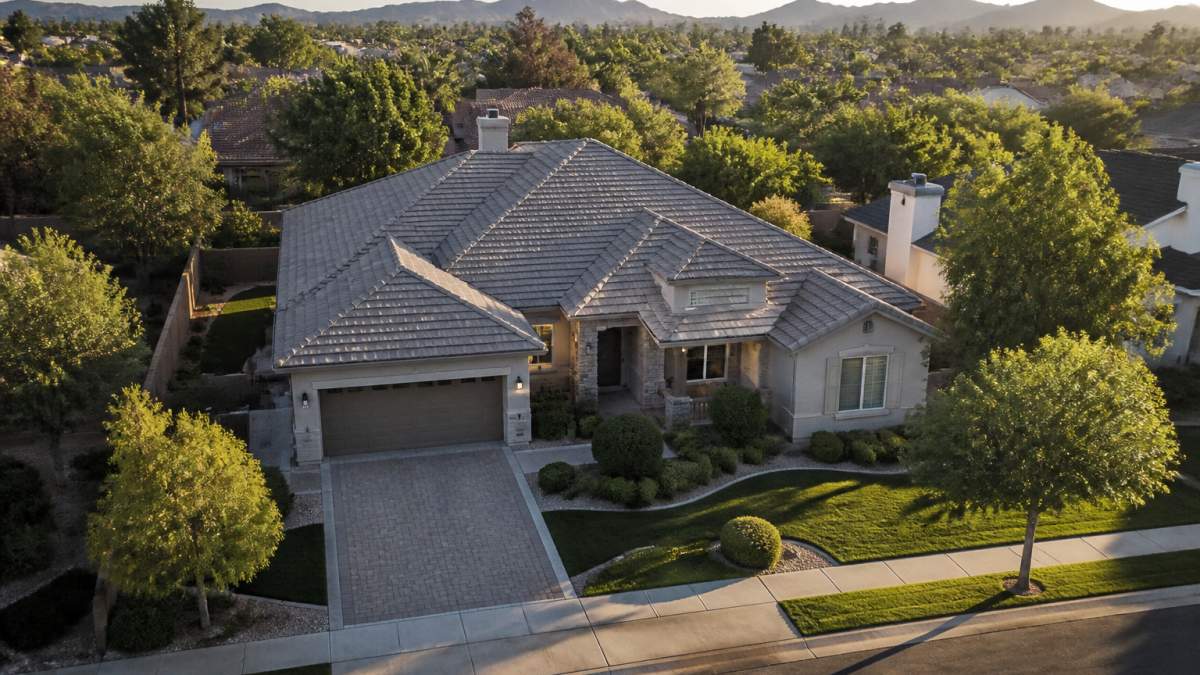
Residential Property Examples
Residential properties need aerial shots highlighting footprint, lot size, and landscaping, how the house sits on the land, driveway layout, yard size, and proximity to trees or water.
Look for even lighting; morning or late afternoon beats harsh midday sun, which blows out skies and darkens shadows.
Good residential portfolios show variety, single-story and two-story homes, pools, large lots, different neighborhood settings, proving the photographer adapts to each property.
Luxury Property Examples
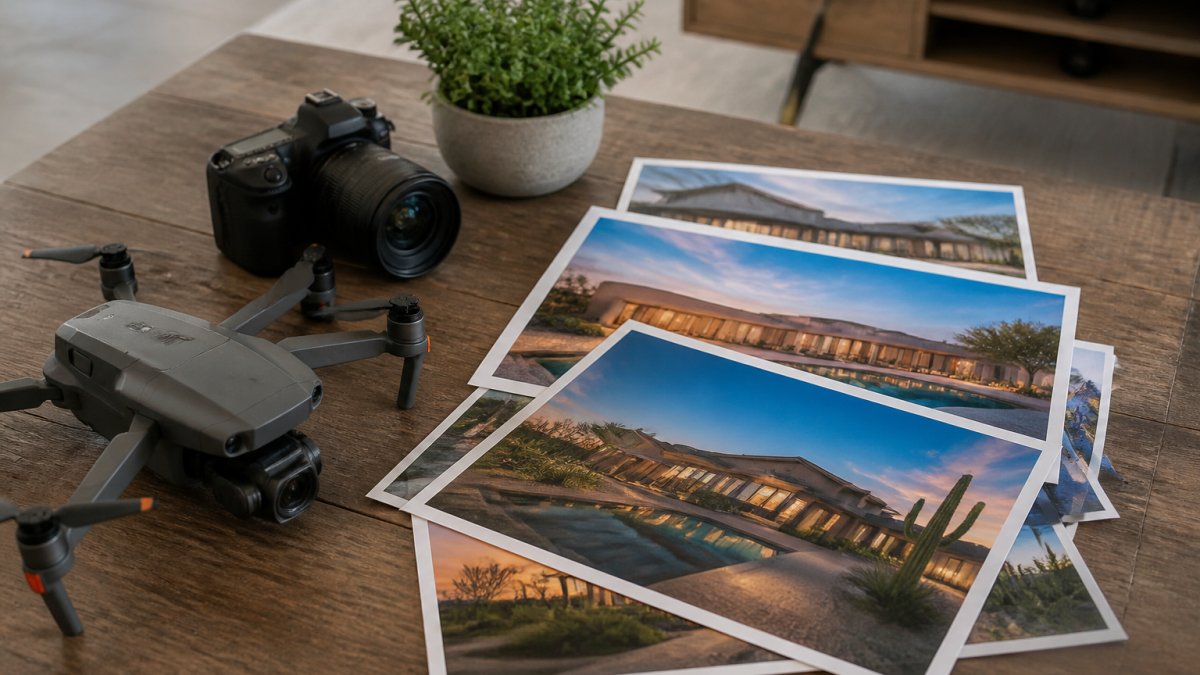
Luxury properties demand shots emphasizing scale, exclusivity, and premium features: sprawling grounds, resort-style pools, guest houses, or dramatic views.
Luxury portfolios often include sunset or golden hour shots for emotional impact, with HDR processing that balances sky and ground.
A strong luxury portfolio includes properties in high-end areas, ideally the communities you sell in, showing the photographer understands what luxury buyers expect.
Commercial Property Examples
Commercial properties need aerial shots showing parking lots, building footprint, access roads, and surrounding commercial context, highlighting practical features while staying visually appealing.
Look for images showing the property's relationship to nearby businesses, highways, or commercial districts, captured when the property looks active, not empty lots or closed storefronts.
Evaluating Camera Quality and Image Resolution
Most portfolio reviews fail because the reader just scrolls and thinks "looks nice." A portfolio is a technical document you can grade with a consistent pass/fail inspection. Here's a practical rubric for any real estate drone portfolio.
The Six-Point Image Inspection
1. Sharpness and focus. Zoom to 100% on the roofline, chimney, or HVAC unit.
2. Exposure and dynamic range. In the same frame, both sky and shadowed wall should show detail.
**3.
4. Lens distortion and horizon alignment. Rooflines, fences, pool edges, and driveways should be straight; wide-angle barrel distortion must be corrected.
**5.
6. Resolution and crop headroom. Ask the native capture resolution.
Before-and-After Editing Examples
A gallery can't tell you how much of the final image is camera versus edit. Ask for one or two before-and-after pairs, original RAW next to delivered JPEG, the fastest way to judge editing quality and realism.
What to look for in the pair:
- Restraint. The edit should look like a better-lit original, not a different property. Changed lawn color, replaced sky, or a stretched house is a red flag for compliance and buyer trust.
- Sky handling. A good edit recovers clipped sky detail; a bad one pastes in a stock sky with the wrong sun direction, ground shadows and sky light source should agree.
- Shadow recovery. The dark side of the house should gain detail without turning gray and flat. Muddy shadows or HDR halos mean the editor pushed too hard.
A Quick Equipment Sanity Check
You don't need to be a drone expert, but know what a professional setup looks like. Most working real estate drone photographers fly current prosumer or professional platforms with RAW stills and at least 20 megapixels.
FAA Part 107 remote pilot certificate overview
Equipment isn't destiny, a skilled photographer with a mid-tier drone beats a novice with a flagship, but the answer tells you whether they've invested in tools for consistent, croppable, editable files.
Assessing Composition, Framing, and Visual Storytelling
Technical quality is just the foundation. Great drone photography tells a story, and composition determines whether an image draws buyers in or leaves them indifferent.
Framing matters too: include context without clutter, the property, surrounding land, and enough neighborhood to convey location, but never so wide the home becomes insignificant.
Look for variety in angles and heights. Only straight-down or only 45-degree shots show limited perspective; good portfolios give buyers a complete sense of the property.
How to Choose a Real Estate Drone Photographer
Selecting the right drone photographer means verifying qualifications, understanding their process, and confirming they can deliver what you need.
Verify FAA Licensing and Flight Safety Credentials
This is non-negotiable. Ask directly: is the photographer FAA-licensed for commercial drone operation?
An FAA license means they understand airspace restrictions, weather limits, and safety protocols, and carry appropriate commercial drone insurance, protecting you from liability if something goes wrong.
Ask to see the certificate. Don't accept "we work with licensed operators." If they fly, they should be licensed; if they outsource, get the actual operator's name and license number.
Check Turnaround Time and Deliverables
Understand exactly what you're getting and when. Ask:
- How many edited images per typical residential property?
- What formats (JPEG, RAW, high-resolution)?
- How long from shoot to delivery?
Turnaround matters: a two-week delivery may miss the critical first days of listing exposure. Most quality photographers deliver within a few business days.
Ask about revisions too: how are crops, color corrections, or additional edits handled? A good photographer includes reasonable revisions.
Confirm Licensing, Insurance, and Usage Rights
Understand what you can do with the images. Ask:
- Do I own the images, or do you retain copyright?
- Can I use them as long as I list the property?
- Can I use them across MLS, website, social media, and print?
- What about after the property sells?
Licensing terms vary, some retain copyright with broad usage rights, others transfer ownership. Make sure the terms work for your business.
Confirm liability insurance covers property damage or injury from a drone malfunction. Ask for proof of coverage.
Real Estate Listing Photography Checklist
Most checklists for hiring a drone photographer are really vendor checklists. This one is a portfolio review rubric: every item can be verified by looking at existing work, asking one question, or requesting one document. Print it and score each line pass or fail.
Section A, Portfolio Evidence (verify by looking)
- At least 10-15 distinct properties, not the same house from five angles. A thin portfolio is the most common weakness.
- Property-type coverage matching your business. Residential listings need residential examples; land or commercial needs those. A luxury-only portfolio doesn't prove skill on a 1,200-square-foot ranch home.
- Seasonal and lighting variety. Summer, fall, winter; morning, midday, golden hour. An all-golden-hour portfolio hides how they handle harsh light.
- Consistent editing across the portfolio. Same color science, contrast curve, and horizon discipline image to image.
Section B, Credentials and Compliance (verify by asking)
- FAA Part 107 remote pilot certificate. Ask for the number and verify it. "We work with licensed pilots" isn't the same as the person flying your shoot being licensed.
- Liability insurance. Get a certificate of insurance showing commercial drone coverage, so the policy responds if a drone damages a roof or injures a bystander.
- Airspace awareness. Ask how they check controlled airspace, temporary flight restrictions, and local ordinances. A professional will mention LAANC authorization or equivalent approval.
- Privacy practices. Ask how they avoid capturing neighbors, license plates, or people without consent, this matters for listing compliance and neighbor relations.
Section C, Deliverables and Usage Rights (verify in writing)
- Written deliverable count. How many edited stills and video clips per property? Get the number in the contract, not conversation.
- File formats and resolutions. Confirm full-resolution JPEGs at minimum, ask whether RAW is available, and confirm pixel dimensions.
- Turnaround time in business days. Get the guaranteed window and what happens if it slips. A timely delivery is important; delays can risk missing the critical first week of exposure.
- Usage rights spelled out. Confirm in writing you can use images on MLS, website, social media, print, and paid ads, for as long as the listing is active and for your portfolio afterward. Watch for single-platform or single-year limits.
Section D, Fit for Your Business (verify by reference)
- References from agents with a similar listing mix. Ask for two agents in your price band and property type.
- Pricing structure matching your volume. Per-property, package, or monthly retainer? Get numbers in writing before committing.
- Scheduling reliability. Ask how far ahead they book and how they handle last-minute listing launches.
How to Score the Checklist
Count the passes. A practical threshold to consider:
- 90%+ passes: Strong candidate. Move to pricing and scheduling.
- 70-89% passes: Usable, but negotiate weak items in writing before booking.
- Below 70% passes: Keep looking. The portfolio may look good, but the business isn't ready for your listings.
Run this checklist on two or three photographers before deciding. The comparison is where the real signal shows up, one passes Section A easily but stumbles on Section C, another the reverse. Knowing which trade-off you'll accept is the point of the review.
Red Flags and Portfolio Weaknesses to Avoid
Watch for these warning signs when evaluating drone photographers.
Washed-out or overexposed images suggest poor settings or editing. Consistently soft or blurry images indicate equipment issues or weak technique.
A portfolio with only a few examples is a red flag, you want at least 10-15 diverse properties.
Inconsistency is concerning: if some images are excellent and others mediocre, quality is unreliable.
Avoid photographers who can't explain their process or seem evasive about licensing and insurance.
Choosing the right drone photographer shapes how your listings perform. When you're ready to showcase your properties at their best, get in touch to discuss how professional aerial photography can transform your listings.
Frequently Asked Questions
What should a real estate drone photography portfolio include?
A strong real estate drone photo portfolio should showcase diverse property types including residential, luxury, and commercial properties. Look for aerial shots that demonstrate property size and layout, neighborhood context, and surrounding land features. The portfolio should include examples of different seasons and lighting conditions, before-and-after editing samples showing professional color correction and HDR processing, and a variety of shot angles and compositions. Professional portfolios also highlight video clips or demo reels, interior-to-aerial transitions, and evidence of work with various property price points to match your listing needs.
How can you tell if real estate drone photos are professionally edited?
Professional editing shows consistent color grading, proper exposure across the entire image, and enhanced visual interest without looking artificial. Look for sharp details, balanced sky and ground exposure using HDR or advanced post-processing techniques, and consistent editing style across multiple photos. Professional work avoids over-saturation, maintains natural lighting, and shows attention to composition with clear focal points. Compare similar properties in the portfolio, if editing quality varies significantly between photos, the photographer may lack consistent standards or use automated processing rather than hand-blended techniques.
How do you choose a real estate drone photographer?
Start by verifying FAA Part 107 certification, which proves the operator is legally qualified and insured for commercial drone work. Review their portfolio for property types matching your listings and editing quality that aligns with your brand. Ask about turnaround time, deliverables included, and usage rights for your marketing materials. Request references from other agents or homeowners, confirm they carry liability insurance, and discuss how they handle challenging lighting conditions common in your area. Meet or call to assess professionalism and communication, you need someone reliable who understands your market and timeline requirements.
What drone shots should be included in a real estate listing?
Essential shots include a wide establishing view showing the entire property and surrounding land, closer angles revealing roof condition and architectural details, and shots capturing neighborhood context like nearby amenities or views. Include property layout and size perspective from multiple angles, and if applicable, pool, patio, or outdoor living spaces. For luxury properties, add dramatic angles that showcase premium features and landscape design. Virtual staging or 3D tour integration enhances the presentation. A complete listing should combine 8-15 aerial shots with ground-level photography and video to tell the full property story and appeal to potential buyers.