comparison
Professional Real Estate Photographers vs DIY
Table of Contents
- DIY vs Professional Listing Photos: Quick Comparison
- The Benefits of Professional Real Estate Photography
- Real Estate Photography Pricing: What to Expect
- The Hidden Costs of DIY Real Estate Photography
- How to Choose a Real Estate Photographer
- Legal and Licensing Considerations for Drone and Virtual Tours
- Hybrid Approaches and Mobile-First Listing Performance
- Conclusion
- Frequently Asked Questions
Last Updated: September 11, 2026
DIY vs Professional Listing Photos: Quick Comparison
Hiring professional real estate photographers versus going the DIY route comes down to one question: does better imagery earn back its cost? The answer almost always favors professional work.
Real estate photographers are specialists who capture homes with professional lighting, composition, and hand-blended editing built for listing platforms. The difference shows up fast. Here's how the two approaches stack up:
| Factor | DIY Photos | Professional Photography |
|---|---|---|
| Equipment | Smartphone or basic camera | Wide-angle lenses, lighting rigs, tripods |
| Lighting control | Whatever the room offers | Controlled exposure, shadow recovery |
| Editing | Filters and presets | Hand-blended color correction |
| Time per listing | 2-4 hours | 1-2 hours of your time |
| Buyer engagement | Inconsistent | Consistently stronger |
| Best for | Tiny budgets, quick rentals | Any listing where price matters |
The pattern is consistent: DIY saves money upfront, but professional photos protect the listing's first impression. For most sellers, that trade favors hiring a pro.
The Benefits of Professional Real Estate Photography
Professional real estate photography is the practice of capturing a home with controlled lighting, deliberate composition, and post-processing that makes rooms look the way buyers expect to see them. The benefits reach past pretty pictures into how buyers behave.

Lighting, Composition, and Buyer Psychology
Interior lighting is where DIY efforts fall apart most often. A smartphone can't balance a bright window against a dim hallway, so rooms turn muddy or blown out. Professional lighting and shadow recovery fix that, and the payoff is psychological: buyers form an opinion of a home within seconds of seeing the first photo, and that opinion shapes whether they book a showing at all.
Composition matters just as much. Wide-angle lenses and careful framing make a modest room feel open, while proper white balance keeps paint colors honest. Staging, curb appeal, and visual storytelling all depend on getting these fundamentals right.
Real Estate Photography Pricing: What to Expect
Real estate photography pricing depends on the scope of the shoot, the size of the property, and the market you're listing in. Because no two listings are alike, most photographers quote per property rather than per hour, a small condo, a mid-range family home, and a luxury estate each carry different requirements for time, equipment, and editing.
Typical Package Tiers
Most photographers structure pricing into three rough tiers. Exact figures vary by market, but the pattern is consistent:
| Package | What's Included | Typical Scope |
|---|---|---|
| Essential | Interior + exterior stills, standard editing, MLS-ready delivery | Condos, small homes, rentals |
| Standard | Essential plus twilight shots, drone exteriors, floor plan | Mid-range family homes |
| Full media | Standard plus virtual tour, walkthrough video, social cutdowns | Luxury, acreage, high-price listings |
Add-ons like drone work, virtual tours, and twilight shoots are usually priced separately because they require additional equipment, licensing, and editing time. Ask whether editing, delivery, and usage rights are bundled or billed as line items, the cheapest quote is often the one with the most add-ons hidden behind it.
An ROI Framework You Can Actually Run
Most guides tell you professional photos "pay for themselves" without showing the math. Here's a framework any agent can run before booking a shoot.
Step 1, Estimate your commission on the listing. Take the expected sale price and multiply by your commission rate. That's your gross revenue if the home sells at ask.
Step 2, Estimate the cost of a longer market time. Every additional week on market increases the odds of a price reduction. A common pattern is that homes sitting past the first two weekends of showings face pressure to cut price, and a price cut of even one percent typically costs the seller far more than a photography package.
Step 3, Compare the photo cost to the downside risk. If a professional package costs a few hundred dollars and the realistic downside of weak photos is a single price reduction, the math almost always favors hiring a pro. The question isn't whether photography is expensive, it's whether it's cheaper than the alternative.
Step 4, Factor in your time. A DIY shoot plus editing consumes most of a workday. If your hourly value as an agent exceeds the cost of a photographer, DIY is the more expensive option, not the cheaper one.
For accurate real estate photography pricing, request a quote based on your property type, square footage, and the media you need. Request a quote based on your property type, square footage, and the media you need.
The Hidden Costs of DIY Real Estate Photography
The hidden costs of DIY real estate photography rarely show up on a receipt. They show up as longer days on market, price reductions, and showings that never get scheduled.
Time Investment and Editing Requirements
A typical DIY shoot eats two to four hours on site, then another one to three hours in post-processing (nar.realtor). That's a full workday you're not spending on clients, contracts, or lead generation.
Editing is the part most agents underestimate. Straightening vertical lines, recovering shadows, correcting white balance, and blending exposures takes real skill. Filters and presets can't rescue a poorly lit room, and MLS compliance rules limit how far you can push edits before a photo misrepresents the property.
Over-editing is a genuine risk. If photos misrepresent a home's condition, you can face compliance issues and lose buyer trust once they tour in person. Keep edits honest.
How to Choose a Real Estate Photographer
Choosing a real estate photographer starts with the portfolio, not the price list. Ask three questions before you book anyone:
- Does the portfolio match your listings? Look for homes at your price point and style, not just luxury showcases.
- What's the turnaround time? A fast shoot is useless if delivery takes a week.
- What's included? Confirm whether editing, drone work, and virtual tours are bundled or add-ons.
- Are they licensed for drone work? FAA-licensed operators carry the liability coverage you want.
A photographer who has shot properties like yours will understand the lighting challenges unique to your market, from harsh desert sun to dark master bedrooms. Ask to see examples that match your listings before you commit.
Legal and Licensing Considerations for Drone and Virtual Tours
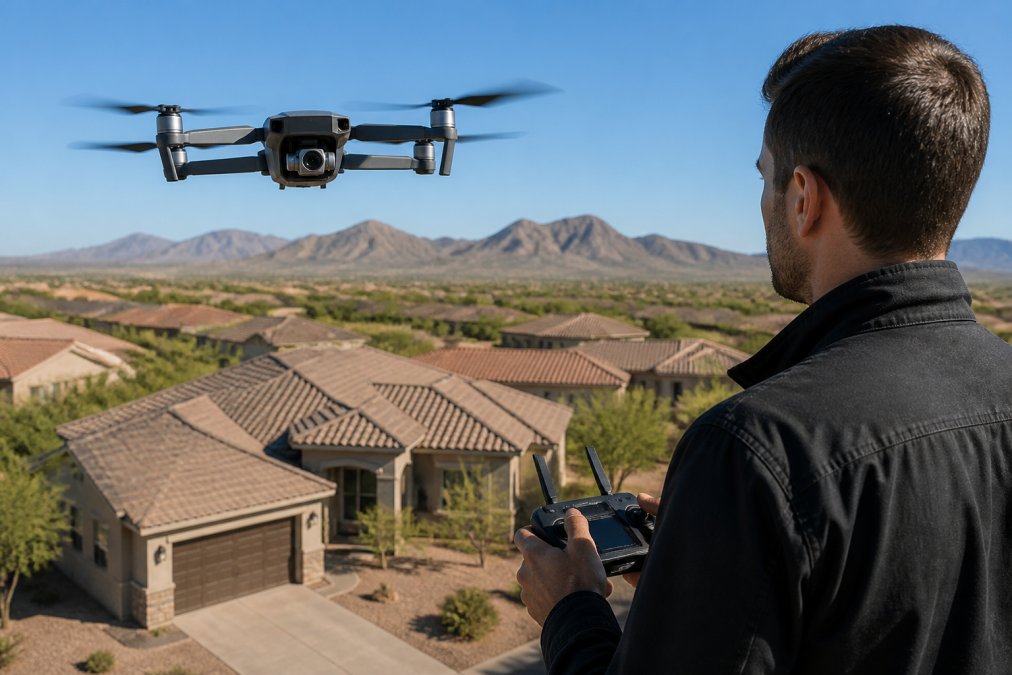
Drone photography and virtual tours come with legal requirements that DIY shooters often overlook. Commercial drone work in the U.S. requires FAA certification, and flying without it exposes you to liability if something goes wrong (faa.gov).
FAA commercial drone regulations set the rules for licensed operators, including registration and operating limits. When you hire a photographer, confirm they hold that certification and carry insurance. Desert Home Photography's FAA-licensed drone operators handle this for you, so the liability stays off your plate.
Virtual tours raise a separate question: how much of a home should you show? A tour that reveals too much can reduce showing requests, while one that highlights flow and layout draws buyers in. Licensing also matters if you plan to reuse images across marketing channels, so clarify usage rights upfront.
Hybrid Approaches and Mobile-First Listing Performance
A hybrid approach often delivers the best return: use professional photography for the hero shots and drone or virtual tour work, then supplement with quick phone video for social media teasers. This keeps your listing fresh across channels without a full reshoot.
What a Hybrid Workflow Actually Looks Like
The middle ground most agents miss is pairing professional capture with AI-assisted editing tools for the secondary assets. A practical workflow:
- Hero stills: Professional shoot for the MLS cover photo and primary gallery images.
- Drone and twilight: Bundled with the pro shoot, since both require licensed operators and specialized gear.
- Social teasers: Short phone clips shot during the same walkthrough, edited with AI-assisted tools for color, stabilization, and vertical framing.
- Refresh content: Re-shoot one or two rooms with a phone after staging changes, rather than booking a full second session.
This keeps the listing visually consistent while giving you fresh content for social channels without paying for a second professional visit.
Why Mobile Performance Decides the Click
Most buyers scroll listings on their phones, and the mechanics of that scroll are unforgiving. A real estate portal typically shows a grid of thumbnail images before a buyer ever opens a listing. On a small screen, three things determine whether your thumbnail earns the tap:
- Contrast and brightness. A dark or low-contrast cover photo disappears next to brighter competitors in the grid.
- Composition at thumbnail size. Wide-angle shots that read well on a desktop monitor can turn into visual noise when shrunk to a phone thumbnail. The best cover photos have a clear focal point that survives the downsize.
- Load speed. Oversized image files stall the gallery, and a buyer who waits more than a beat on a slow-loading photo swipes past. Compressing images to web-appropriate resolution without visible quality loss is a core part of listing prep, not an afterthought.
Optimizing Assets for the Scroll
A few practical steps close the gap between a professional shoot and a mobile-optimized listing:
- Export at web resolution. Full-resolution files belong in your archive, not on the listing. Resize for the platform's recommended dimensions before uploading.
- Test the cover photo on your own phone. If it doesn't stop your scroll in a grid of competing listings, it won't stop a buyer's either.
- Keep vertical video vertical. Social teasers shot horizontally get cropped awkwardly on phones; shoot vertical or reframe in editing.
- Match the platform. MLS galleries, portal grids, and social feeds each have different aspect ratios and load behaviors. Optimize for each rather than uploading one file everywhere.
The strongest listings pair professional stills with mobile-optimized media. Buyers who engage on their phones are your best lead generation source, and image quality, measured at thumbnail size, not full screen, is what earns that engagement.
Conclusion
Every listing competes for the same scrolling buyer, and the photos decide who wins that attention. Desert Home Photography captures the unique features of each home with hand-blended imaging, immersive virtual walk-through tours, and FAA-licensed drone photography that keep your listings ahead. Get started with Desert Home Photography and give every property the visual edge it deserves.
Frequently Asked Questions
What is the going rate for a real estate photographer?
Real estate photography pricing depends on the size of the property, the number of images, and whether you add drone or virtual tour services. Most photographers charge per listing rather than per hour, and luxury properties with more rooms and amenities cost more. Desert Home Photography can provide a custom quote based on your specific needs and listing volume.
Does professional real estate photography actually increase home sale prices?
Professional photos do not change the home's appraised value, but they can influence how buyers perceive it. High-quality images help listings stand out, attract more clicks, and generate stronger offers. When a home shows well online, buyers are more likely to schedule showings and submit competitive bids. The benefits of professional real estate photography show up in buyer engagement and time on market.
What are some red flags when hiring a photographer?
Watch for photographers who cannot show a portfolio of similar properties, lack FAA licensing for drone work, or promise unrealistic turnaround times. Ask whether they carry liability insurance and how they handle MLS compliance for image dimensions and file formats. A professional will answer these questions directly and provide references from other agents in your area.
How do FAA-licensed drone photos change the perspective of a listing?
FAA-licensed drone photography captures aerial views that ground-level cameras cannot, showing lot size, neighborhood context, and property surroundings. For luxury or large-acreage listings, drone images help buyers understand the full scope of the property. Using a licensed operator also protects you from liability issues if something goes wrong during the flight.