 listicle
Virtual Tours for New Construction: 7 Key Benefits
Table of Contents
- Why Virtual Tours Are Essential for New Construction Sales
- 1. Sell Homes Before the Foundation Is Poured
- 2. Build Homebuyer Confidence With Accurate 3D Virtual Tours
- 3. Expand Your Reach to Remote Buyers 24/7
- 4. Virtual Staging for New Construction: Visualize Finishes and Upgrades
- 5. Boost Sales Conversion and Cut Time-to-Market
- 6. Best Practices for Real Estate Virtual Tours That Convert
- 7. The Cost of 3D Virtual Tours for Real Estate vs. the Payoff
- Frequently Asked Questions
Last Updated: September 8, 2026
Selling new construction carries a paradox: asking buyers to commit hundreds of thousands of dollars to a home that does not exist yet. Floor plans and renderings only carry the story so far. That gap between promise and proof is exactly where virtual tours for new construction close the deal. This guide breaks down the seven benefits that matter most to builders and agents.
The core advantage is simple: virtual tours for new construction replace guesswork with certainty. When buyers can walk through a digital version of their future home, they stop trying to fill in the blanks and start making decisions. Below, we show how this technology accelerates sales, expands your buyer pool, and reduces friction in pre-construction marketing.
Why Virtual Tours Are Essential for New Construction Sales
New construction sales hinge on a buyer's ability to project themselves into an unfinished space. Traditional listings give dimensions and angles but demand imagination. A 3D virtual tour removes that burden, communicating layout, scale, and flow with far more clarity than static images.
This matters more now than it once did. Buyers have grown accustomed to interactive, on-demand experiences in every other part of their lives, and property exploration is no exception. When a listing offers only flat photography while competitors provide walkable digital twins, the difference in perceived quality is immediate. As research on consumer behavior in real estate technology has noted, the buyer journey increasingly begins online, and the depth of that first impression shapes everything that follows National Association of Realtors technology report.
The practical effect is a shorter path to the sales office. Buyers arrive pre-qualified and pre-sold on the layout, having already walked the home virtually, shifting the on-site conversation from basic orientation to upgrades, financing, and timelines.
1. Sell Homes Before the Foundation Is Poured
The single biggest advantage of virtual tours for new construction is the ability to market homes while they exist only as blueprints. Pre-construction sales reduce carrying costs and improve cash flow, but they depend entirely on buyer confidence. A virtual tour provides that confidence by showing exactly what will be built.
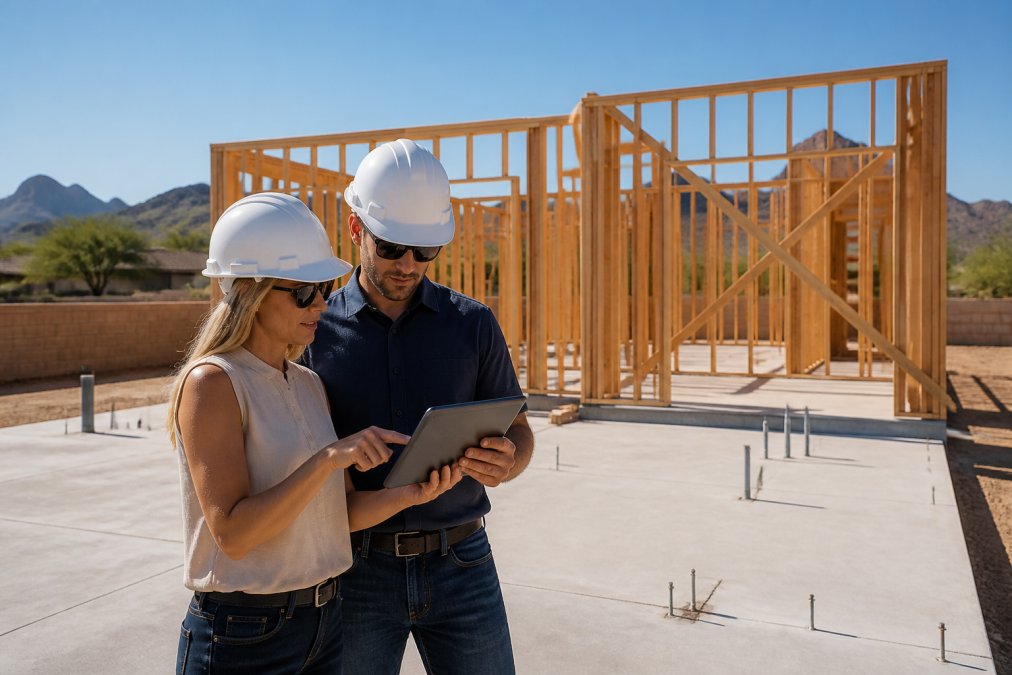
Instead of asking buyers to visualize from a two-dimensional plan, you invite them to walk through every room, check sightlines, and understand the floor plan's flow. This is particularly effective for multi-phase communities where early phases must sell to fund later construction. Builders who market this way can secure deposits and sign contracts months ahead of completion, shortening time-to-market for each phase.
The key is accuracy. A virtual tour that misrepresents proportions will create problems at walkthrough, so the best results come from tours built directly from the architectural plans. When executed properly, buyers treat the digital version as the promise and the finished home as the delivery.
2. Build Homebuyer Confidence With Accurate 3D Virtual Tours
Homebuyer confidence is the currency of new construction sales, earned through transparency. The most common objection builders face is fear of the unknown: will rooms feel cramped, will windows let in enough light, will the kitchen layout work for entertaining? A high-quality 3D virtual tour answers these questions before they are asked.
The spatial awareness from walking through a digital model is dramatically better than floor plans provide. Buyers can judge whether a king bed will fit in the primary suite or whether the great room has enough clearance for their furniture. This accuracy reassures; when buyers verify details themselves, they trust the builder more, and that trust carries through construction.
The Hidden Benefit: Reducing Post-Purchase Anxiety
Most marketing content focuses on the sale, but the real value of a virtual tour extends beyond contract signing. New construction buyers often experience "buyer's remorse" during the months between deposit and move-in. They see the foundation poured, framing go up, and drywall installed, but cannot visualize the finished product. Doubt creeps in: Did I choose the right floor plan? Will the kitchen feel as open as it did in the model?
A virtual tour becomes an anchor of certainty during this vulnerable period. Buyers can revisit the digital walkthrough at any time, reminding themselves of the exact layout, finishes, and spatial flow they purchased. This repeated exposure reinforces their decision and reduces cognitive dissonance that leads to cancellations or change orders. Builders who share the tour link after the sale report fewer anxious phone calls and a smoother construction process.
A Psychological Framework: The Mere Exposure Effect
The psychological principle at play is the mere exposure effect: people develop a preference for things they are familiar with (apa.org). Each time a buyer views the virtual tour, their familiarity and attachment grow. This is especially powerful for relocating buyers who cannot visit the site frequently; for them, the tour is a way to stay connected to a home they have not yet stepped foot in.
Practical Tips for Leveraging Post-Purchase Confidence
- Send the tour link immediately after contract signing with a note like, "We know you're excited, here's a reminder of what you're building."
- Update the tour as upgrades are selected to show the buyer their personalized choices, reinforcing that the home is becoming uniquely theirs.
- Use the tour in construction updates, for example, a monthly email that pairs a progress photo with the corresponding virtual view of the finished space.
3. Expand Your Reach to Remote Buyers 24/7
Geographical constraints used to limit new construction buyers to those within driving distance of the site. Virtual tours break that barrier entirely. A buyer relocating from another state can explore every detail of a home without booking a flight, expanding your qualified lead pool far beyond your local market.
These tours work around the clock. Buyers browse listings at night, on weekends, and during lunch breaks, and the best real estate virtual tours are available whenever the buyer is ready. This 24/7 accessibility means your marketing never sleeps.
For relocation buyers, the virtual tour often serves as the first filter. They shortlist homes that meet their criteria, then schedule site visits only for finalists. That efficiency benefits the buyer and your sales team, which spends time only on prospects who have demonstrated serious intent through remote viewing.
4. Virtual Staging for New Construction: Visualize Finishes and Upgrades
Virtual staging for new construction solves one of the most difficult problems in selling unfinished homes: helping buyers understand finishes that do not exist yet. A buyer standing on a concrete slab cannot easily picture hardwood floors, quartz countertops, or cabinet styles. Virtual staging fills that gap with high-definition imagery showing exactly what each upgrade package delivers.
This transforms the upgrade selection process. Instead of explaining the visual impact of a premium kitchen package, you show the buyer a virtual version finished with those exact materials. The upgrade becomes tangible, and buyers are far more willing to spend on options they can see clearly. Many builders report that virtual staging increases uptake of premium finishes because it removes the risk of choosing blind.
Interactive floor plans take this further by letting buyers toggle between standard and upgraded versions. This side-by-side comparison turns an abstract upsell into a concrete choice between two clearly different outcomes.
5. Boost Sales Conversion and Cut Time-to-Market
Virtual tours do more than impress buyers, they generate behavioral data that, when wired into your sales funnel, accelerates conversion and shortens time-to-market. Most builders treat virtual tours as a marketing expense, but many treat them as a lead-scoring engine.
Turning Tour Data into Sales Signals
Every interaction a buyer has with a virtual tour is a signal. How long they linger in the primary suite, whether they toggle between finishes, and how many times they revisit the tour before contacting your sales team all indicate purchase intent. By integrating your tour platform with your CRM, you can capture these signals automatically and route them to your sales team in real time.
For example, a common pattern is to set up automation that triggers an email or SMS follow-up when a prospect spends more than two minutes in a specific floor plan or views the same tour three times within a week. This kind of engagement-based lead scoring ensures your team prioritizes prospects who have already demonstrated serious interest, rather than wasting time on cold inquiries. As one industry observer noted, "The data from virtual tours is a goldmine for sales teams, it tells you exactly what the buyer cares about before they ever step foot on site." Real estate tech blog
Reducing Bounce Rates and Increasing Dwell Time
A listing with a virtual tour holds attention longer than one with static photos. This increased engagement translates to lower bounce rates and more time spent exploring the property, signaling genuine interest to your sales team and lead-scoring systems. When integrated with your CRM, tour interactions can trigger automated follow-ups, ensuring no engaged prospect slips through the cracks.
Shortening the Sales Cycle with Pre-Qualified Leads
The cumulative effect is a shorter time-to-market for each phase of construction. Homes sell faster, meaning capital cycles back into the next phase sooner. For builders operating multiple communities, that acceleration compounds across every project.
A Simple ROI Framework for Builders
To quantify the impact, builders can use a basic formula: (Average sales price × number of homes sold faster) ÷ (cost of virtual tour production + CRM integration) = ROI. For instance, if a virtual tour helps sell one home just two weeks earlier, the savings on carrying costs alone can often exceed the tour's price. Even a single accelerated sale can justify the investment many times over.
6. Best Practices for Real Estate Virtual Tours That Convert
Best practices for real estate virtual tours start with quality. A grainy or glitchy tour damages your credibility faster than no tour at all, so professional-grade capture and rendering are non-negotiable. Buyers expect a smooth, immersive experience; anything less signals a builder who cuts corners.
The tour should follow a logical path that mirrors how a buyer would walk the home. Start at the entry, move through main living areas, and finish in private spaces. This narrative flow helps buyers build a mental model of the layout and keeps them engaged.
Accessibility matters too. Tours should be viewable on any device, from desktop to mobile, and include navigation options for users who cannot rely on mouse control. Considering accessibility compliance broadens your audience and reflects well on your brand's attention to detail.
| Best Practice | Why It Matters | Common Mistake |
|---|---|---|
| Professional capture quality | Builds trust and credibility | Using grainy or low-resolution imagery |
| Logical room-by-room flow | Mirrors natural walkthrough | Jumping randomly between rooms |
| Mobile-responsive design | Reaches buyers on any device | Desktop-only viewing experience |
| Clear upgrade visualization | Drives premium finish sales | Showing only standard finishes |
7. The Cost of 3D Virtual Tours for Real Estate vs. the Payoff
The cost of 3D virtual tours for real estate is often the first question builders ask, and it deserves an honest answer. Pricing depends on the scope of the project, the number of units or floor plans, and the level of interactivity required. While the upfront investment is real, it must be weighed against the cost of unsold inventory and price concessions needed to move homes that sit on the market.
Builders can use a simple framework to evaluate the return. Compare the cost of the tour against the carrying cost of a single unsold home for one month, and the math becomes clear quickly. If a tour helps sell even one home a few weeks faster, it has typically paid for itself many times over. Data-driven decisions help builders see the investment for what it is: a tool that reduces risk.
For builders weighing the expense, the question is not whether you can afford the tour, but whether you can afford to market without it. In a competitive market, the listing with the immersive experience wins the buyer's attention every time.
The challenge of selling new construction is asking buyers to invest in a promise. Virtual tours for new construction make that promise visible, walkable, and believable, turning uncertainty into confidence at every stage of the buyer journey. Desert Home Photography helps builders and agents capture that confidence with immersive virtual walk-through tours and FAA-licensed drone photography, all delivered with the hand-blended imaging quality that makes every property look its best. Call or text Desert Home Photography to see how virtual tours can move your next phase faster.
Frequently Asked Questions
Are virtual tours effective for selling new construction homes that aren't built yet?
Yes. 3D virtual tours are one of the most effective tools for pre-selling new construction. They let buyers walk through floor plans, test finish options, and understand the scale of rooms before the foundation is poured. This immersive experience builds confidence and reduces hesitation, which translates to faster deposits and fewer buyer objections during the design phase.
How do virtual tours compare to traditional photography for new builds?
Traditional photography captures what exists; virtual tours capture what will exist. For new construction, photos of dirt or framing do little to excite buyers. A 3D virtual tour shows the finished home with accurate lighting, dimensions, and materials. This makes it a stronger sales tool for pre-construction marketing because it removes guesswork and lets buyers emotionally connect with the property.
What is virtual staging and how does it help sell new construction?
Virtual staging adds digital furniture and decor to a 3D tour or still image. For new construction, it helps buyers see how a room functions and how their furniture might fit. It is far more cost-effective than renting physical furniture for a model home, and it helps buyers visualize the potential of each space, making them more likely to choose upgrades.
Do virtual tours increase engagement for new home listings?
Yes. Listings with 3D virtual tours generate significantly more clicks and longer time-on-page than photo-only listings. Buyers spend more time exploring a property they can virtually walk through, which signals strong interest to the algorithm and to your sales team. This increased engagement directly supports lead generation and conversion rate optimization.