 how-to
How to Stage a Small Backyard for Sale: A Practical Guide
Last Updated: November 1, 2026
Quick Summary
To stage a small backyard for sale, clear out all clutter, clean hard surfaces and trim plants first, then arrange one or two small seating zones with clear walking paths. Pull furniture off the walls, use round or small pieces, and avoid filling every square foot so the space reads as open and usable.
- Remove toys, tools, hoses, and trash bins from the yard before anything else.
- Sweep or power wash the patio, deck, and walkways, and trim overgrown plants.
- Use one seating group and a round table of 36 to 42 inches for a compact patio.
- Keep the walking path from the back door at least 36 inches wide and unobstructed.
- Pull furniture a few inches away from the walls to create depth in the space.
Table of Contents
- Why a Small Backyard Needs Its Own Staging Plan
- Clean and Declutter the Yard Before Anything Else
- Small Backyard Staging Ideas That Create Room to Breathe
- How to Make a Small Backyard Look Bigger
- Outdoor Staging Checklist for Sellers
- How to Prepare a Backyard for Real Estate Photos
- Booking Professional Photos Once Your Backyard Is Ready
- Frequently Asked Questions
Selling a home with a small backyard presents a specific challenge. Buyers walk through a compact outdoor space and form an impression in seconds, so every corner has to earn its place. Agents and homeowners often see the same mistakes repeat: cluttered patios, forgotten planters, and furniture that fills the space instead of showing it off. This guide walks through how to stage a small backyard for sale, step by step.
Why a Small Backyard Needs Its Own Staging Plan
A small yard does not need less staging. It needs different staging. In a large lot, a buyer can see the whole property and imagine using it. In a small yard, every object is visible at once, so one bulky item can make the whole space feel cramped.
A common mistake is treating a small backyard like a scaled-down version of a big one. The goal is to make the space feel open and usable, not crowded.
- Fewer, better-chosen pieces work best
- Clear pathways make the yard feel bigger
- Each area should suggest one clear use
Clean and Declutter the Yard Before Anything Else
Cleaning comes first because nothing else helps if the space looks neglected. Start by removing everything that does not belong in the final presentation. Storage bins, old toys, spare pots, and hoses should go into the garage or a rented storage unit for the duration of the listing.
Work through the yard in this order:
- Remove debris, dead leaves, and fallen branches
- Sweep or power wash the patio, deck, and walkways
- Clean exterior windows, sliding doors, and shutters
- Trim overgrown plants and edge the lawn
- Pull weeds from beds, gravel, and cracks in pavers
A tidy yard is also easier to photograph. For more on getting the whole house ready, see our declutter for a quick home sale: 2026 guide.
Small Backyard Staging Ideas That Create Room to Breathe
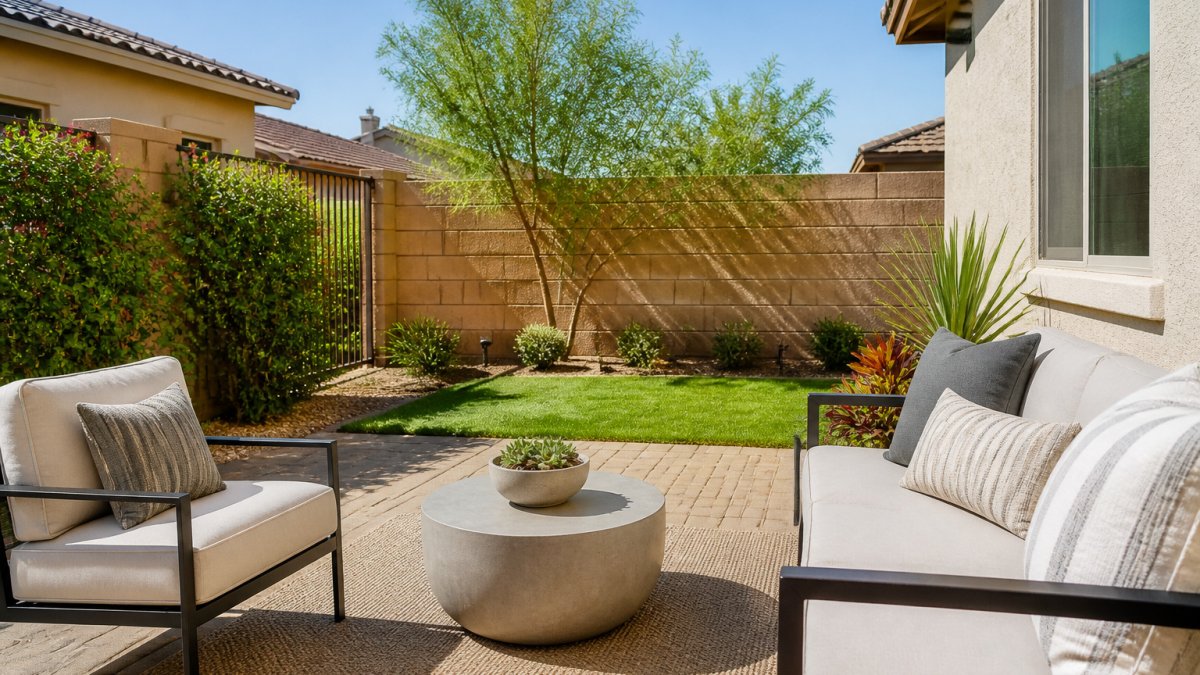
Once the yard is clean, focus on arrangement. The aim is a few defined zones: a seating area, a dining spot, and maybe a small green feature. Avoid filling every square foot. What separates a staged small yard from a crowded one is scale, the right piece in the right footprint, and clear walking paths.
Start with the walking path, then place furniture
Before you move a single chair, walk the route a buyer will take from the back door to the far fence.
Layouts for narrow, compact, and awkward yards
- Narrow side yard or long strip: Run a single bench or a pair of chairs along one long edge, not both. Keep the opposite edge open with low planters or a narrow bed. A bistro table set against the fence line works better than a full dining set.
- Compact square patio: Use one round table (36-42 inches across seats two to four comfortably) centered on the patio, with two chairs rather than four. Round shapes let people slide in and out without the corner collisions a rectangular set causes.
- Awkward L-shaped or offset yard: Treat the two legs as separate zones, seating on one, a small dining or grill area on the other, and connect them with the walking path. Do not try to force one large furniture group across the corner.
- Tiny urban courtyard: Choose a two-chair set with a small side table, one vertical element (a tall planter or a trellis) to draw the eye up, and a single rug to define the seating footprint. Resist adding a second zone; one clear use reads as intentional.
Scale rules that keep a small yard open
- Choose one seating group, such as a two-chair set or a small loveseat.
- Place a round or small dining table instead of a large rectangular one.
- Add a rug sized to the seating area, the front legs of every chair should sit on it, to define the zone on a patio.
- Use one or two planters in the corners rather than along every edge.
- Keep furniture off the walls by a few inches; pulling pieces slightly away from the fence creates depth.
Color helps. Flowering plants in one or two shades give a welcoming look, while a mix of too many colors can make the space feel busy. Replace worn cushions and remove furniture covers. If a piece is too large for the footprint, sell or store it for the listing rather than squeezing it in, an empty corner reads bigger than an overcrowded one.
How to Make a Small Backyard Look Bigger
Visual tricks can stretch the feel of a small yard. These are simple to apply and cost little.
- Pull furniture away from the walls to create depth
- Use lighter-colored cushions and umbrellas
- Place a mirror or light-reflecting planter where it catches the sun
- Lift plants on stands to add height without adding width
- Keep the lawn mowed short so the space reads as continuous
Lighting matters too. String lights or a small lantern near the patio make the space feel open in the evening photos and during showings.
Outdoor Staging Checklist for Sellers
Use this checklist before the first showing. The order matters: cleaning and decluttering cost little and deliver the biggest visual change, so do those first. Repairs and purchases come after, and only where they will show.
Prioritize low-cost, high-impact work first
Removing clutter, sweeping and washing hard surfaces, trimming overgrowth, and pulling weeds are often the most cost-effective staging steps.
- High impact, low cost: declutter, sweep, power wash, edge beds, mow, pull weeds, clean windows and doors.
- Moderate cost, worth it when visible: fresh mulch in beds, a new doormat, replacement cushions, one or two flowering planters at the focal point.
A practical staging timeline
Work backward from your listing date. A common sequence:
- Two to three weeks out: declutter, haul away debris, and schedule any power washing or exterior cleaning.
- One to two weeks out: trim plants, edge beds, mow, pull weeds, and make small repairs (latches, loose pavers, burned-out bulbs).
- Three to five days out: add mulch, set out planters and cushions, arrange furniture into the final layout, and test the walking path.
- One to two days out: final sweep, water plants, wipe down furniture, and remove trash bins and hoses from view.
- Showing day: quick pass, sweep the path, fluff cushions, confirm lights work, and remove pet waste.
Pre-showing checklist
- Yard is free of toys, tools, and trash bins
- Patio and walkways are swept or washed
- Furniture is clean, uncovered, and arranged in one or two zones
- Walking path from the back door is at least 36 inches wide and unobstructed
- Plants are watered, trimmed, and free of dead leaves
- Outdoor lights work and bulbs match
- Gate and fence latches function properly
- Trip hazards, loose pavers, uneven steps, hoses, are removed or repaired
- Pet waste is removed from the yard
Many sellers find it helpful to walk the yard as a buyer would, starting at the street. Look at what catches your eye first and adjust from there. For more on getting the whole house ready, see our declutter for a quick home sale: 2026 guide.
The table below summarises the priority order for staging work, from the highest-impact, lowest-cost tasks to the moderate-cost ones.
| Task | Cost | When to do it |
|---|---|---|
| Declutter and remove trash bins | Low | Two to three weeks out |
| Sweep or power wash surfaces | Low | Two to three weeks out |
| Trim plants, edge beds, mow | Low | One to two weeks out |
| Pull weeds, clean windows and doors | Low | One to two weeks out |
| Add mulch and replacement cushions | Moderate | Three to five days out |
| Fix safety-related repairs | Varies | Before any showing |
How to Prepare a Backyard for Real Estate Photos
Listing photos are often the first look buyers get. Preparing the yard specifically for the camera can make a noticeable difference. Remove anything that blocks the view of the main patio or the most attractive feature.
A tidy small backyard patio in late afternoon light, with two chairs, a potted plant, and a freshly swept stone floor, makes a strong listing image.
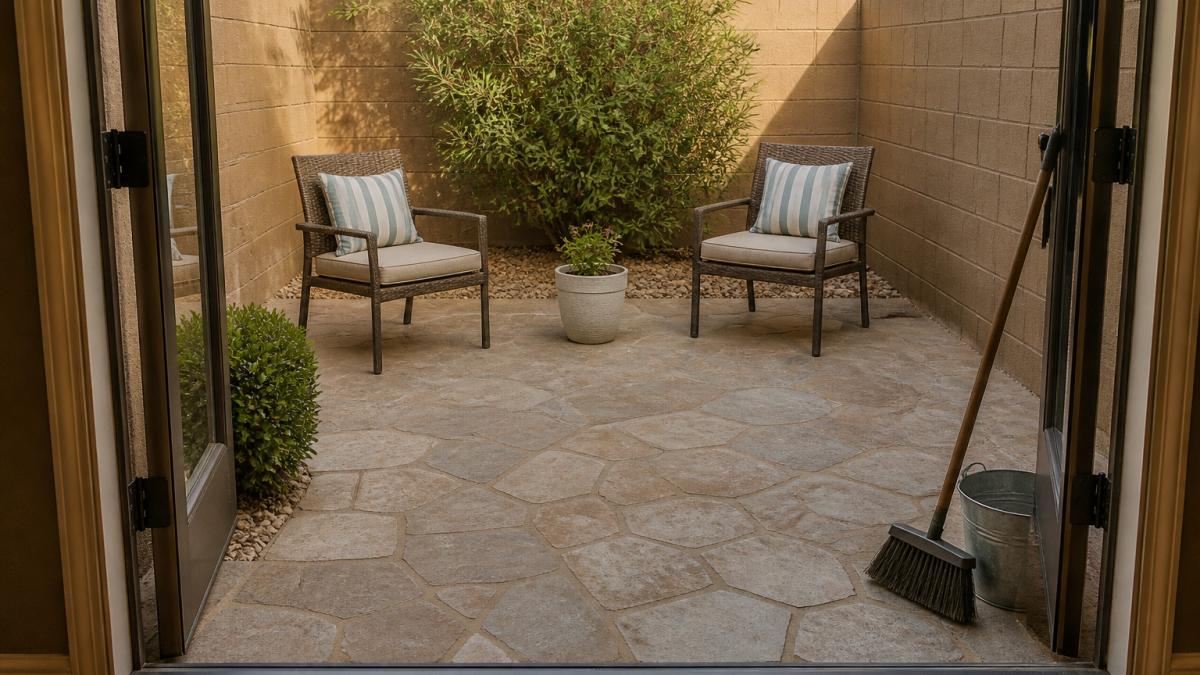
Check that the grass is trimmed, pathways are clear, and any hoses or trash bins are out of frame. Browse the Desert Home Photography gallery to see examples of finished real estate photos of well-prepared yards.
Booking Professional Photos Once Your Backyard Is Ready
Once the yard is staged, professional photos help showcase the work. Desert Home Photography offers real estate and architectural photography for the Phoenix Valley, along with hand-blended imaging, FAA-licensed drone photography, and immersive virtual walk-through tours.
Pricing depends on property size, the services you need, and your scheduling. For current rates, visit our pricing page or contact our team for a quote before you book.
Our team at Desert Home Photography would be glad to help you show off your yard. Call or text us to schedule your shoot, and we will make sure your small backyard shows its best from the first photo.
Frequently Asked Questions
What is home staging?
Home staging is the practice of arranging and preparing a property so buyers can picture themselves living in it. It covers decluttering, cleaning, arranging furniture, and removing personal items so rooms and outdoor areas look open and inviting. For a backyard, staging means clearing debris, defining a seating area, adding simple color through plants, and keeping the space neat. The goal is not to make the yard look expensive but to make it look usable and well cared for in listing photos and during showings.
How do you make a small backyard look bigger?
Start by removing anything that blocks sightlines, such as oversized planters or stored items along the fence line. Use one clearly defined seating area rather than several crowded ones, and choose furniture scaled to the space. Light-colored or simple patio pieces can help the area feel open, and a runner or rug can anchor a seating zone without cluttering it. Keep the lawn trimmed and edges crisp so the yard reads as one continuous space rather than a collection of small corners.
What should you remove from a backyard before selling?
Remove personal items such as toys, tools, pet bowls, trash bins, hoses, and seasonal decorations. Clear leaves, debris, and dead plants, and store any excess furniture. Take down clotheslines, loose cords, and anything that signals ongoing projects. Buyers should see a clean, open yard that feels ready to use. Storing items out of sight also reduces clutter in your listing photos, which often show more of the yard than buyers expect.
How do you stage a patio for a home sale?
Sweep and pressure wash the patio surface, then arrange one main seating group that fits the available space with room to walk around it. Add a small table, a few potted plants, and a simple outdoor rug if it suits the floor material. Avoid crowding the patio with furniture, and keep door paths clear. If the patio is near the house, make sure it is visible from the main living areas so buyers can imagine using it during a showing.