 how-to
Does Interior Photography Really Increase Property Value?
Last Updated: October 31, 2026
Quick Summary
Professional interior photography does not raise a home's appraised value, but it increases perceived value by attracting more clicks, showings, and buyer competition. Photos are the first thing buyers see, so strong images shape how a home is judged before anyone steps inside.
- Photos can raise clicks, showings, and competition, but cannot change an appraisal or square footage.
- A listing gets a second or two to earn a click, and the cover photo does most of that work.
- Accurate, well-shot photos mean buyers arrive already interested; misleading photos make them suspicious.
- Editing should correct exposure, white balance, and lens distortion without inventing a room that doesn't exist.
- Skip professional photography for tear-downs, investor sales, or rentals not marketed to retail buyers.
Table of Contents
- Why Professional Interior Photography Matters for Your Listing
- How High-Quality Images Attract Buyer Attention and Drive Online Views
- From Clicks to Showings: How Strong Visuals Turn Browsers Into Buyers
- How to Prepare a House for Real Estate Photos: A Room-by-Room Checklist
- Real Estate Photography Tips for Sellers: Lighting, Composition, and Editing
- Real Estate Photography Cost: What You Pay For and How to Calculate ROI
- When Professional Photography May Not Be Worth It
- Book Your Interior Photo Shoot with Desert Home Photography
- Frequently Asked Questions
Why Professional Interior Photography Matters for Your Listing
Professional interior photography is the practice of using trained photographers, proper lighting, and careful editing to capture a home's interior spaces for a listing. It matters because the photos are the first thing buyers see, and they shape how a home is judged before anyone steps inside.
Photos do not raise an appraisal. For evidence on how high-quality photos impact home sale price, see our article. A real estate marketing analysis on photography and perceived value makes the same point: presentation affects how buyers see value, while photography itself does not set the home's value.
Photography sells the home's story. The market sets the number.
Perceived Value vs. Appraised Value: What Photos Can and Cannot Change
**Perceived value is what a buyer believes a home is worth after seeing it online.
Photos move the first number. They cannot move the second.
An appraiser works from square footage, condition, location, and recent sales of similar homes, no photo changes those facts.
- What photos can do: raise clicks, raise showings, raise competition among buyers
- What photos cannot do: change an appraisal, change square footage, change the neighborhood
- What that means: treat photography as a marketing investment, not a valuation tool
Sellers who expect photos to add a set dollar figure to the appraisal will be disappointed.
How High-Quality Images Attract Buyer Attention and Drive Online Views
Buyers scroll. A listing gets a second or two to earn a click, and the cover photo does most of that work. High-quality images attract attention because they look like a home someone cared for, and they stand out next to dim, cluttered, phone-shot listings.
Three things drive that first click:
- Light: rooms that read bright and open pull the eye
- Clarity: sharp images signal a well-kept home
- Composition: a photo that shows the room's best angle tells a story
More clicks lead to more saves, more shares, and more requests to tour. That's the real funnel, and it starts with one image.
From Clicks to Showings: How Strong Visuals Turn Browsers Into Buyers
Strong visuals turn browsers into buyers by setting expectations the home can actually meet. Accurate, well-shot photos mean buyers arrive already interested; misleading photos make them suspicious, and suspicion kills deals.
The path is simple:
- A buyer clicks because the cover photo looks good
- They scroll through the gallery and picture themselves in the rooms
- They request a showing
- They walk in and the home matches the photos
That match is what converts. An overview of how listing photos affect buyer behavior from the National Association of Realtors supports the general point that photos are a top factor buyers use when deciding which homes to see.
How to Prepare a House for Real Estate Photos: A Room-by-Room Checklist
Preparation is where most sellers leave money on the table. A clean, staged, decluttered home photographs better and sells faster. Use this checklist before the photographer arrives.
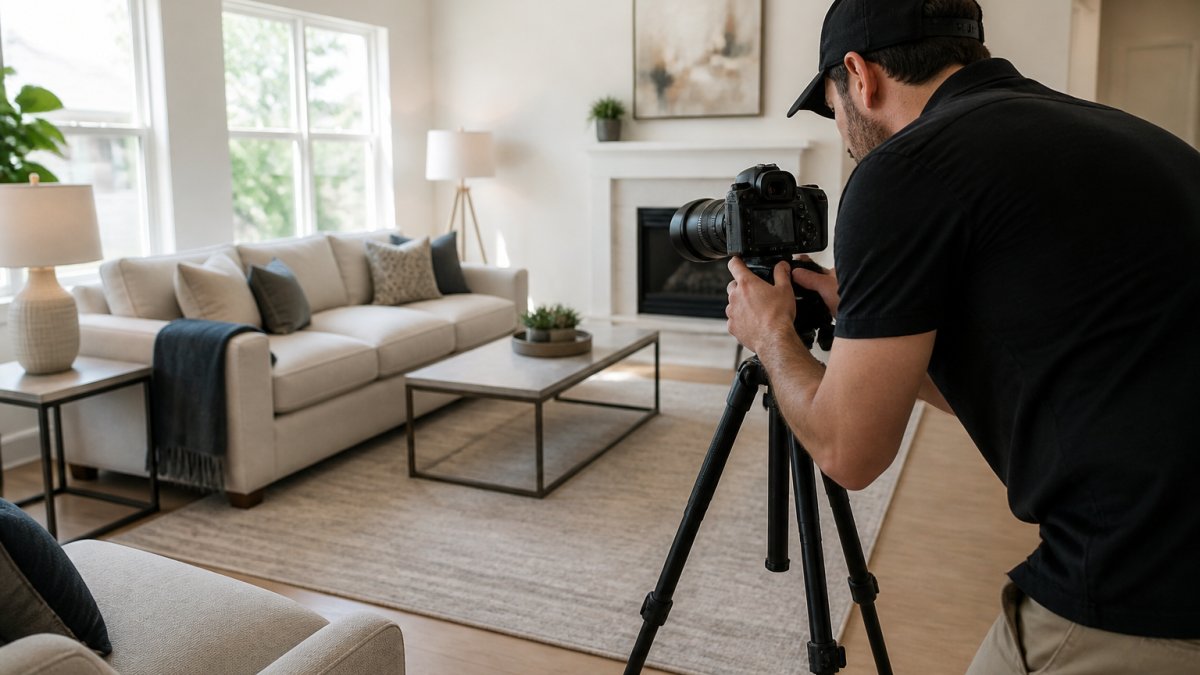
Living room
- Clear all personal items from surfaces
- Open curtains and blinds for natural light
- Fluff pillows and straighten throws
Kitchen
- Clear counters down to one or two items
- Empty the sink and hide dish towels
- Wipe appliances and remove magnets
Bedrooms
- Make beds with clean, neutral bedding
- Clear nightstands
- Hide laundry and hampers
Bathrooms
- Remove personal products from view
- Close toilet lids
- Hang fresh towels
Exterior
- Sweep walkways and clear the porch
- Move cars and trash bins out of view
- Tidy landscaping and remove dead plants
For deeper staging guidance, our guide on tips for staging homes for professional photography walks through each room in more detail.
Real Estate Photography Tips for Sellers: Lighting, Composition, and Editing
Lighting, composition, and editing separate a professional shot from a phone photo. Get all three right and a room looks bigger, brighter, and more inviting. These levers change from room to room, so here are the interior-specific techniques a professional uses.
Lighting: Control the Contrast
Natural light is the best tool, but it has to be controlled. Blown-out windows and dark corners are the two most common failures. Balancing interior light with the window view is what keeps both readable.
- Living rooms and bedrooms: Open curtains and blinds to let in natural light, but avoid direct sun that creates harsh shadows.
- Kitchens: Under-cabinet lighting and overhead fixtures can cast uneven light.
- Bathrooms: Small, often windowless spaces are the hardest to light.
Composition: Frame the Room's Best Angle
Wide shots that show the full space work better than tight angles that hide it.
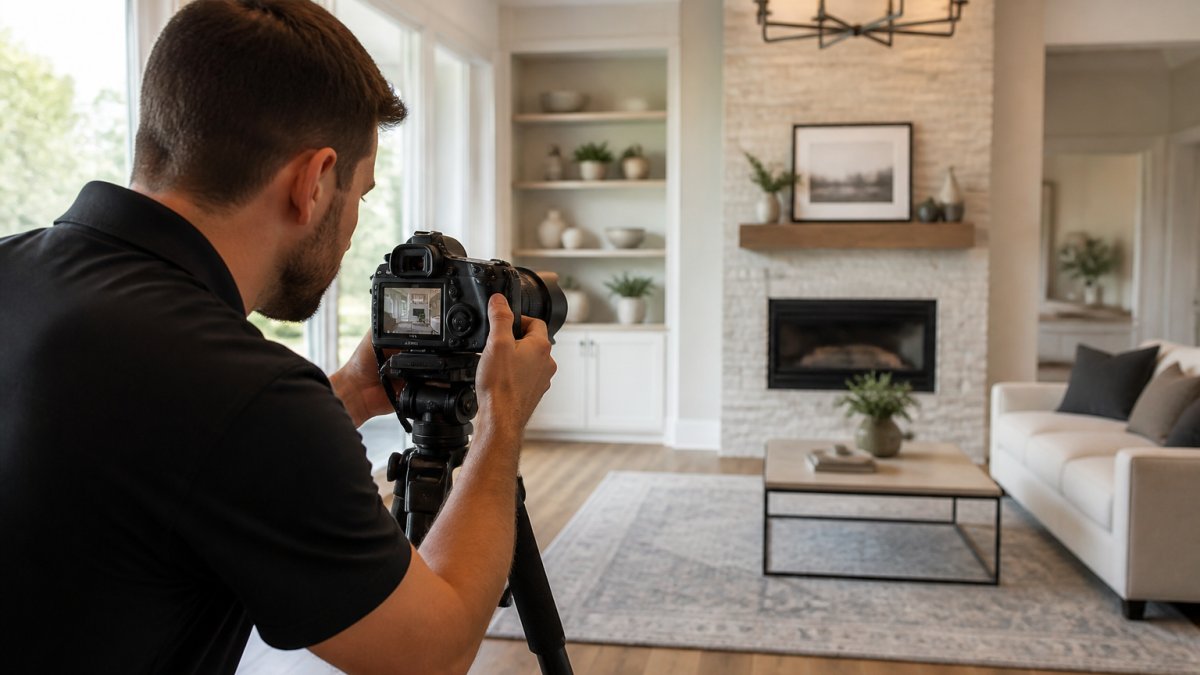
- Living room: Shoot from a corner to capture the full seating area and show the flow to adjoining spaces. Keep the camera level so vertical lines stay vertical.
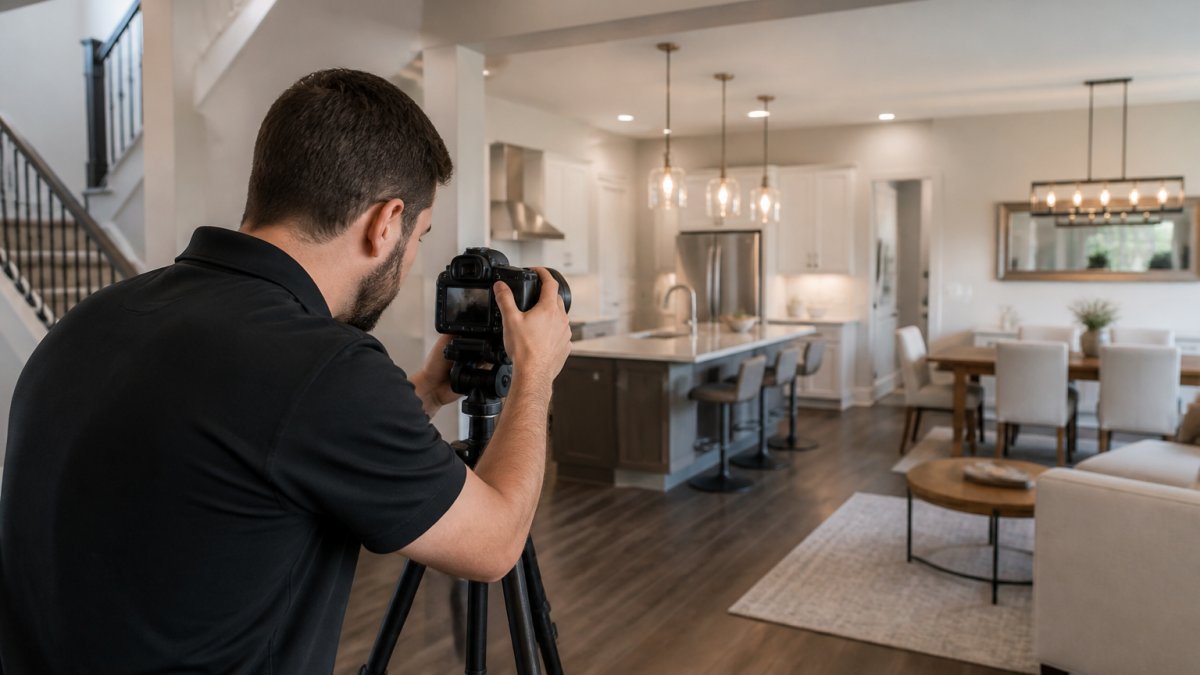
- Kitchen: Frame the work triangle, sink, stove, and refrigerator, so buyers understand the layout. Avoid shooting directly into a bright window; angle the shot to show cabinetry and counter space.
- Bedrooms: Show the bed as the focal point and include enough of the room to convey size.
Editing: Correct, Don't Invent
Editing should correct exposure, white balance, and lens distortion without inventing a room that doesn't exist. The goal is an accurate, flattering image, not a fantasy.
- Color correction: Neutralize color casts from mixed lighting so walls and finishes read true.
- Lens correction: Straighten vertical lines and remove distortion so rooms look proportional.
Room-by-Room Quick Reference
| Room | Lighting focus | Composition focus | Editing focus |
|---|---|---|---|
| Living room | Balance window light with interior fill | Corner shot showing seating and flow | Blend exposures for window views |
| Kitchen | Even out under-cabinet and overhead light | Frame the work triangle | Correct color casts from mixed lighting |
| Bedroom | Soft, diffused natural light | Bed as focal point, show room size | Straighten verticals, neutralize color |
| Bathroom | Diffused light to avoid mirror glare | Vanity and storage, toilet out of frame | Remove glare, correct white balance |
For deeper guidance on light control, see our article on choosing the right lighting for interior home photos. For a complete preparation checklist before the shoot, see our guide on tips for staging homes for professional photography.
Real Estate Photography Cost: What You Pay For and How to Calculate ROI
Real estate photography cost depends on factors such as the size of the home, the number of rooms, add-ons, and delivery speed. Our residential architectural photography pricing guide breaks down the details. Contact Desert Home Photography through our website for current pricing or a quote based on your specific listing.
What Drives the Price
Available add-ons may include:
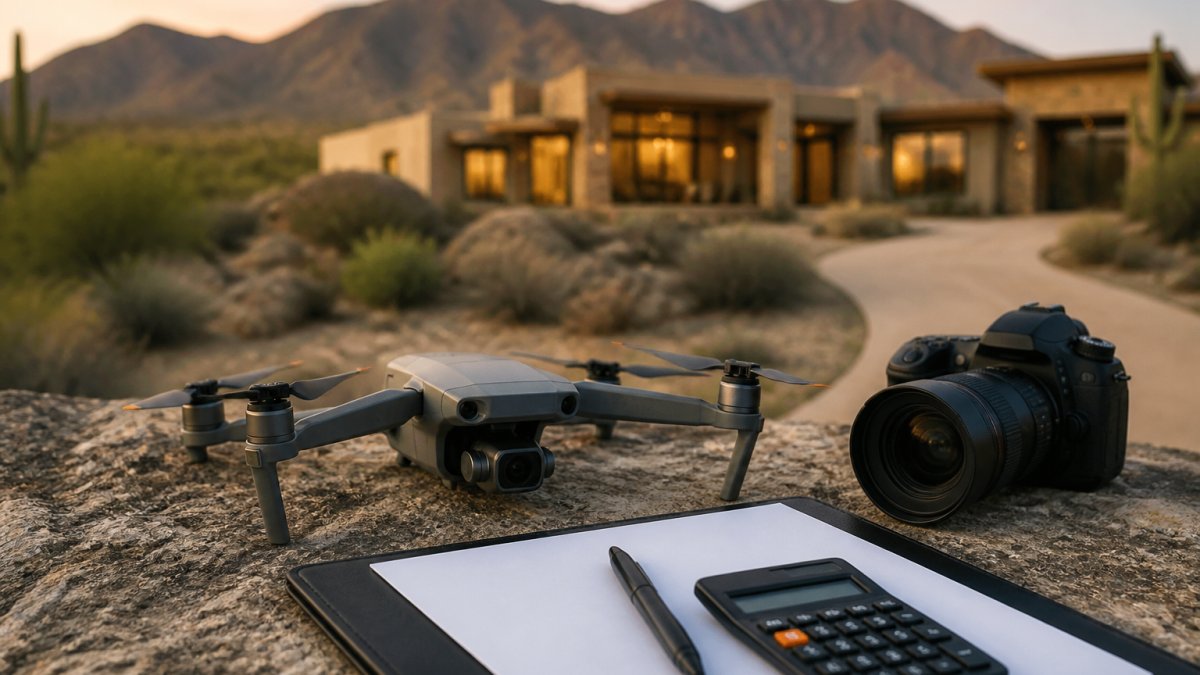
- Drone or aerial shots for lot size, neighborhood context, or exterior appeal
- Virtual walk-through tours that let buyers explore before visiting
For current pricing, visit the Desert Home Photography website or request a quote for your specific square footage and add-on list.
A Worked ROI Example
ROI on photography depends on your sale price, commission structure, carrying costs, and how much the photos move buyer behavior.
Step 1: Count the cost per listing. Add the base shoot fee plus any add-ons you select.
Step 3: Estimate the value of a stronger sale price. Photography does not set the price; the market does.
Step 4: Compare against the alternative. A re-shoot costs money. A price cut costs more.
What the Fee Actually Buys
Beyond the images themselves, a professional shoot buys you:
- Marketing assets. The same gallery can feed your listing and marketing materials.
Treat the fee as a marketing line item, not a valuation tool. When the photos do their job, the cost is a small slice of the outcome.
When Professional Photography May Not Be Worth It
Professional photography is not worth it in every case. For a tear-down, a home sold strictly to investors, or a property where speed matters more than presentation, the return may be thin. Be honest about the situation before you spend.
- Skip it if: the home will be demolished or sold as-is to a cash buyer
- Skip it if: the property is a rental that won't be marketed to retail buyers
- Keep it if: you want retail buyers, multiple offers, and a faster sale
For most sellers in the Phoenix Valley, the math favors professional work. The exceptions are narrow, but worth naming so you can judge your own situation.
Book Your Interior Photo Shoot with Desert Home Photography
The gap between a listing that sits and one that sells often comes down to the photos.
A recent client put it plainly: "I'm amazed by the stunning photographs of my home captured by Jim with Desert Home.
Ready to give your listing the visual edge it deserves? Call or text Desert Home Photography to schedule your interior photo shoot.
Frequently Asked Questions
Does professional real estate photography increase a home's value?
It can increase the price buyers are willing to offer, but it does not change the home's appraised value. Appraisals are based on square footage, condition, location, and comparable sales. What interior photography does is shape perceived value: it helps buyers see the home at its best, which can lead to stronger offers and fewer days on market. Think of it as a marketing investment, not a valuation tool.
How should you prepare a home for a real estate photo shoot?
Declutter every surface, clear countertops, remove personal photos, and open blinds to let in natural light. Clean windows inside and out, make beds, and tuck away cords and small appliances. In bathrooms, remove bath mats and toiletries. Outdoors, clear the driveway and tidy the entryway. A simple rule: if you would not see it in a model home, put it away before the photographer arrives.
What makes professional real estate photography different from phone photos?
Professional interior photography uses controlled lighting and hand-blended editing to balance bright windows against darker room interiors. Phone photos often blow out window views or leave rooms looking dim. The result is listing photos that look accurate and inviting rather than distorted or flat.
Can real estate photography make a home look more appealing without misleading buyers?
Yes, when editing stays honest. Professional photography should correct lighting, color, and perspective, not remove flaws or add features that do not exist. Hand-blended editing balances exposure so a room looks the way it does in person on a good day. Buyers notice when photos exaggerate, and that erodes trust before a showing. Ask your photographer about their editing approach so the images set accurate expectations.
Your listing's first impression happens online, long before a buyer walks through the door. Don't leave it to a phone camera. Desert Home Photography brings hand-blended editing, FAA-licensed drone work, and immersive virtual tours to every shoot, so your property looks its best from the first click. Get started with Desert Home Photography and put your listing in front of buyers the right way.