 how-to
How Professional Photography Increases Luxury Home Sale Price
Table of Contents
- How Professional Photography Increases Luxury Home Sale Price
- The Direct Link Between Listing Photos and Buyer Behavior
- Real Estate Photography ROI: What the Data Shows
- Preparing a Luxury Home for Photography: A Practical Workflow
- Real Estate Photography Cost and Budget Planning
- What Makes Luxury Home Listing Photos Stand Out
- Professional Versus Amateur Photography: The Measurable Difference
- Measuring Photography's Impact on Your Bottom Line
- Frequently Asked Questions
Last Updated: October 13, 2026
How Professional Photography Increases Luxury Home Sale Price
When a luxury home hits the market, the first impression happens online. A buyer scrolling listings spends seconds deciding whether to click, and professional photography is what makes them stop.
How professional photography increases luxury home sale price comes down to one fact: buyers decide based on what they see. High-quality images show a property's best features, build confidence that the home is worth the asking price, and create urgency to schedule a viewing.
At Desert Home Photography, we've worked with agents and homeowners across the Phoenix Valley. Professional photos capture lighting, space, and detail in ways smartphones cannot, and listing presentation directly influences buyer behavior, negotiation use, and the final sale price.
Below: how professional photography impacts luxury home sales, what the data shows about ROI, and how to measure whether it's worth the investment.
The Direct Link Between Listing Photos and Buyer Behavior
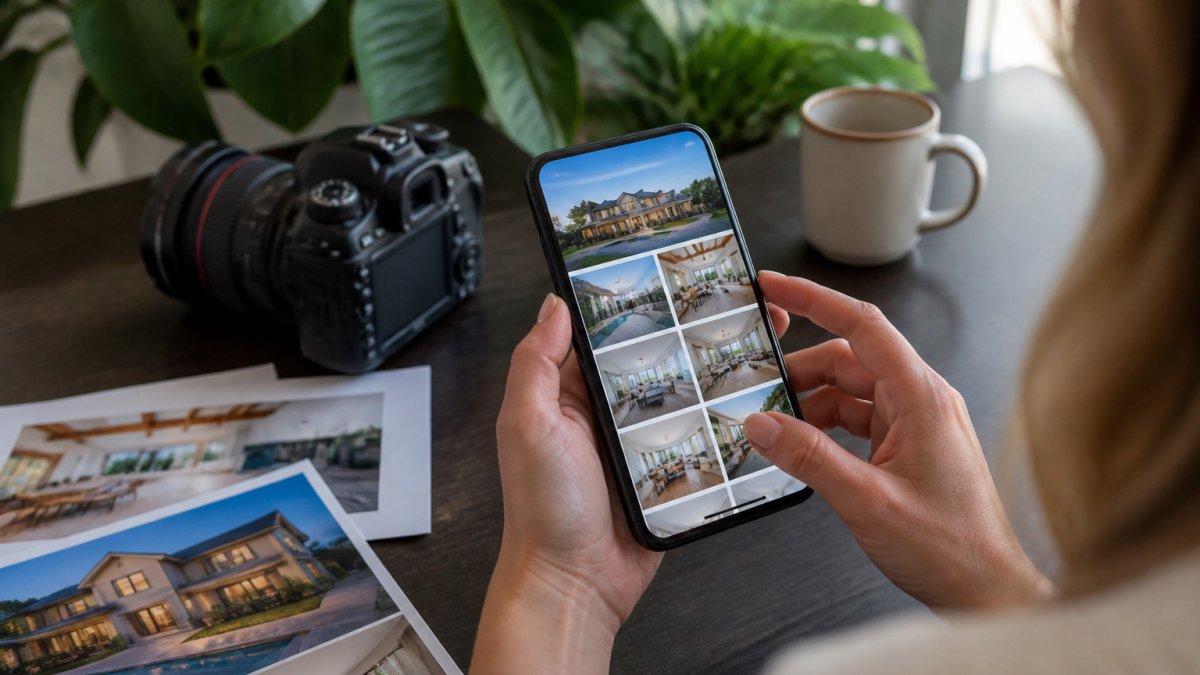
Buyer behavior starts with the listing photo. In search results, buyers see thumbnails first: a blurry or poorly lit photo means they skip your listing entirely, while a sharp, well-lit professional image stops them.
Research from the National Association of Realtors shows that online listings with high-quality photos generate significantly more buyer inquiries than those with amateur images. Homes with professional photography see more property viewings scheduled. More viewings lead to more offers. More offers create negotiating use that drives up the final sale price.
The psychology is straightforward. Buyers assume a home that looks neglected in photos is neglected in reality; dark, cluttered, poorly composed shots make them question what the owner is hiding. Professional images signal the seller takes pride in the property and that it's worth serious money.
For luxury properties, this perception gap is wider. High-end buyers expect professional presentation and compare your listing against other luxury homes. If your photos look amateur while competitors' look polished, you lose the sale before the showing.
Real Estate Photography ROI: What the Data Shows
No controlled study isolates professional photography as the sole cause of a higher luxury sale price.
Here is what the evidence actually supports, and where it stops.
What is well established. the National Association of Realtors has repeatedly found that the vast majority of buyers begin their home search online, and that listing photos are the feature buyers rate as most valuable in a listing.
What is commonly reported but weaker. Brokerages and vendors cite figures like "homes with professional photos sell X% faster" or "for Y% more." These usually come from internal data, small samples, or self-selected listings where sellers also invest in staging, pricing, and marketing.
What is luxury-specific. For high-end properties, the buyer pool is smaller and more deliberate. A luxury buyer isn't scrolling past a dim thumbnail, they're deciding whether the property is worth a private showing at all.
The carrying-cost math is the strongest argument. For a luxury home, holding costs, mortgage interest, taxes, insurance, utilities, maintenance, can run into the thousands per month. If professional photography shortens time on market by even a few weeks, the carrying-cost savings alone can exceed the photography fee many times over, a mechanism you can calculate, not a marketing claim.
Why the effect is larger at the high end. A $500,000 home and a $5,000,000 home may both cost a few hundred to a few thousand dollars to photograph. The cost is roughly flat; the property value is not.
What to watch for in vendor claims. If a photographer or marketing service quotes a precise ROI percentage, ask three questions: What was the sample size? Were listings matched on price, location, and condition?
Preparing a Luxury Home for Photography: A Practical Workflow
Professional photography starts before the photographer arrives. Preparation determines whether the final images showcase the home's true potential or highlight its flaws.
A practical luxury home photography workflow follows these steps:
- Deep clean everything. Dust, fingerprints, and clutter show up in professional photos. Clean baseboards, windows, and light fixtures. Vacuum carpets thoroughly. Wipe down countertops and appliances.
- Stage for space and flow. Remove excess furniture. Open curtains to let natural light in. Arrange remaining furniture to show room dimensions and flow.
- Declutter completely. Personal items, family photos, and visible storage should be removed. The home should feel like a blank canvas the buyer can imagine themselves in.
- Fix lighting issues. Turn on all interior lights. Open all window coverings. Professional photographers use additional lighting, but starting with good natural light helps.
- Address problem areas. Repair visible damage. Paint over marks on walls. Fix broken fixtures. These details matter in luxury photography.
- Plan the shot list. Work with your photographer to identify the home's best features. Exterior shots, entry, kitchen, master bedroom, bathrooms, and outdoor spaces should all be included.
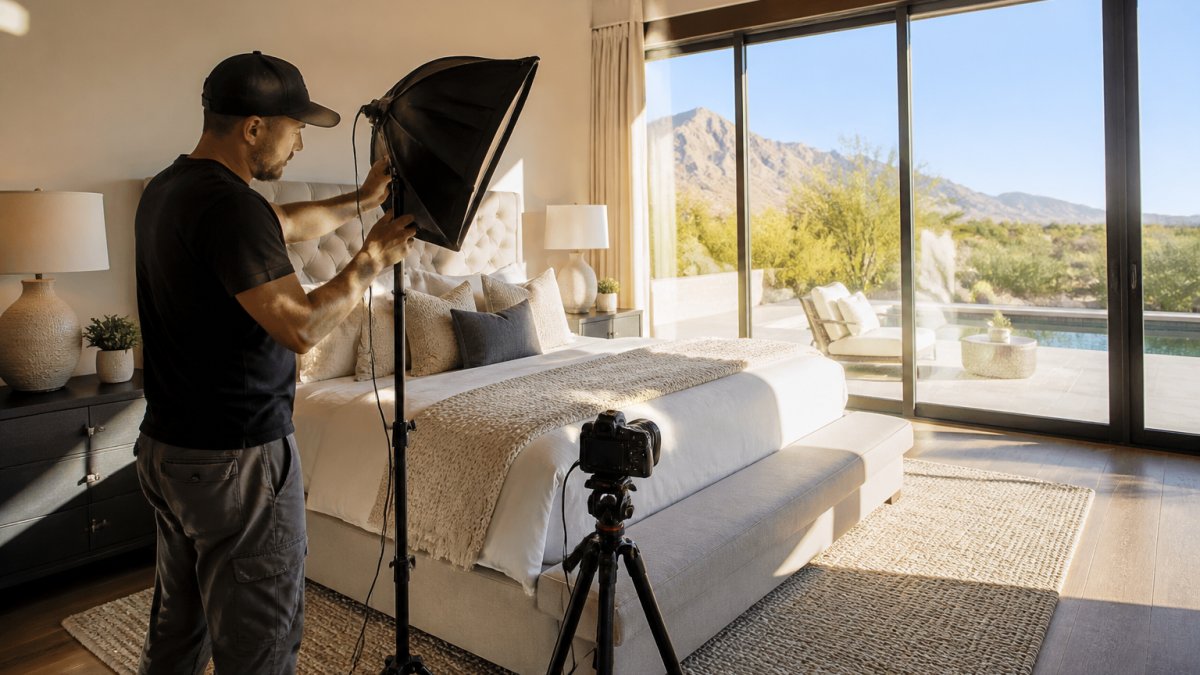
Preparation typically takes one to two days and is the difference between good and exceptional photos. Desert Home Photography works with agents and homeowners to identify what needs attention before the shoot, ensuring the final images showcase the property's true value.
Real Estate Photography Cost and Budget Planning
Photography cost varies by property size, location, and add-ons like drone photography or virtual tours. For agents managing multiple listings monthly, understanding the cost structure helps with budget planning.
A common approach is budgeting professional photography as a percentage of the listing commission. Since professional photos influence sale price and time on market, the cost typically pays for itself, agents who treat photography as a marketing investment, not an expense, see better returns.
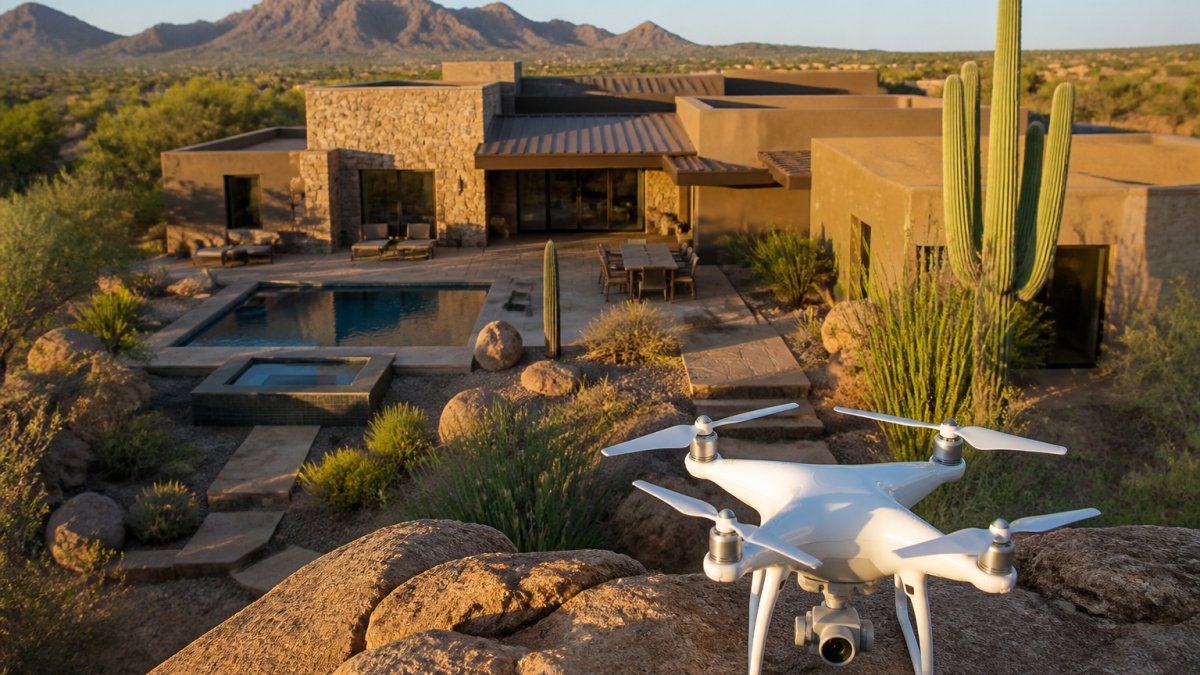
Add-ons like drone photography or immersive virtual tours add value for luxury properties. They command premium pricing because they provide marketing assets other listings lack, and for high-end homes in competitive markets they often justify their cost by attracting more serious buyers.
When evaluating providers, don't prioritize lowest cost, prioritize quality and reliability. A photographer who understands luxury home marketing and delivers quickly serves you better than a cheaper option producing mediocre results or missing deadlines.
What Makes Luxury Home Listing Photos Stand Out
Luxury listing photos succeed when they tell a story about lifestyle and quality, showing how someone actually lives in the space, not just what it looks like.
Professional luxury photography emphasizes several key elements:
- Natural light and warmth. Luxury homes should feel inviting. Professional photographers use natural light to create warmth and dimension. Harsh shadows and artificial-looking lighting undermine the luxury feel.
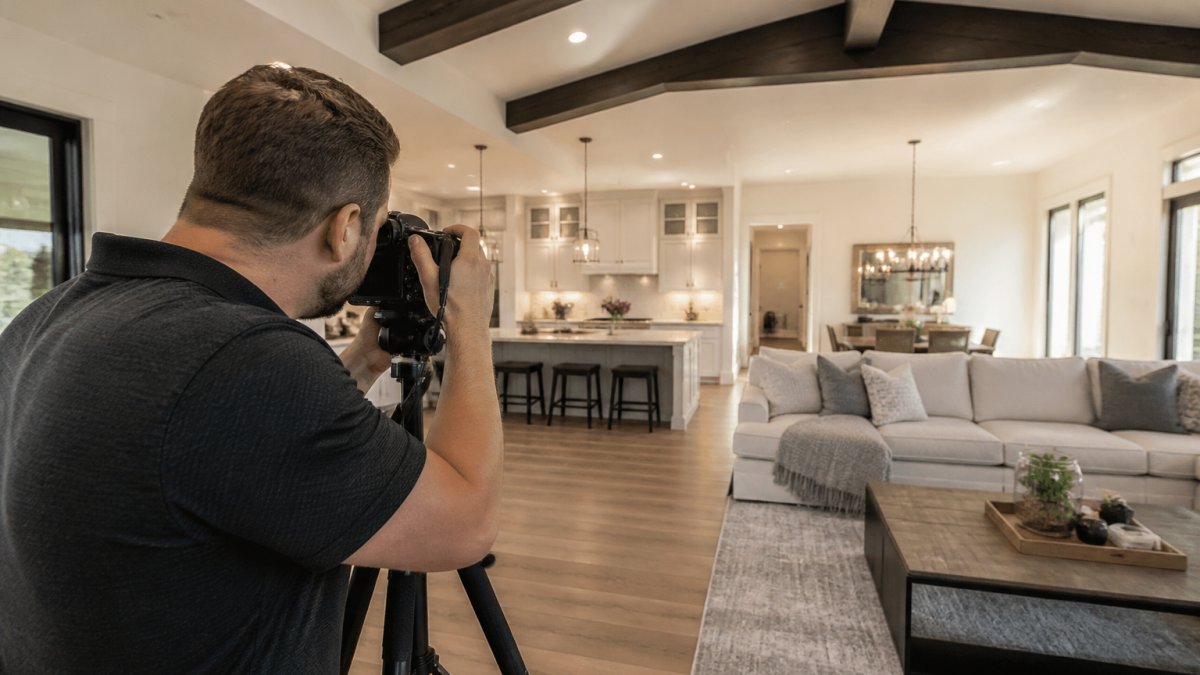
- Composition and framing. Every shot is composed to show the home's best proportions. Wide-angle lenses show spaciousness. Careful framing eliminates distracting elements.
- Detail and texture. High-end finishes, marble countertops, hardwood floors, crown molding, should be visible and sharp. Professional images capture these details clearly.
- Lifestyle imagery. The best luxury photos show the home in context. An outdoor space photographed at sunset with ambient lighting suggests entertaining and relaxation. A kitchen photographed with fresh flowers and soft lighting suggests gatherings and memories.
The difference between amateur and professional luxury photography is immediately obvious: professional images are sharp, well-lit, and composed, with accurate colors and spaces that feel larger and more inviting. Buyers feel confident about the property's condition and value.
Professional Versus Amateur Photography: The Measurable Difference
Amateur photos, taken with a smartphone or basic camera, struggle technically: lighting is uneven, wide-angle smartphone lenses distort rooms, colors look washed out or too yellow, and composition is haphazard.
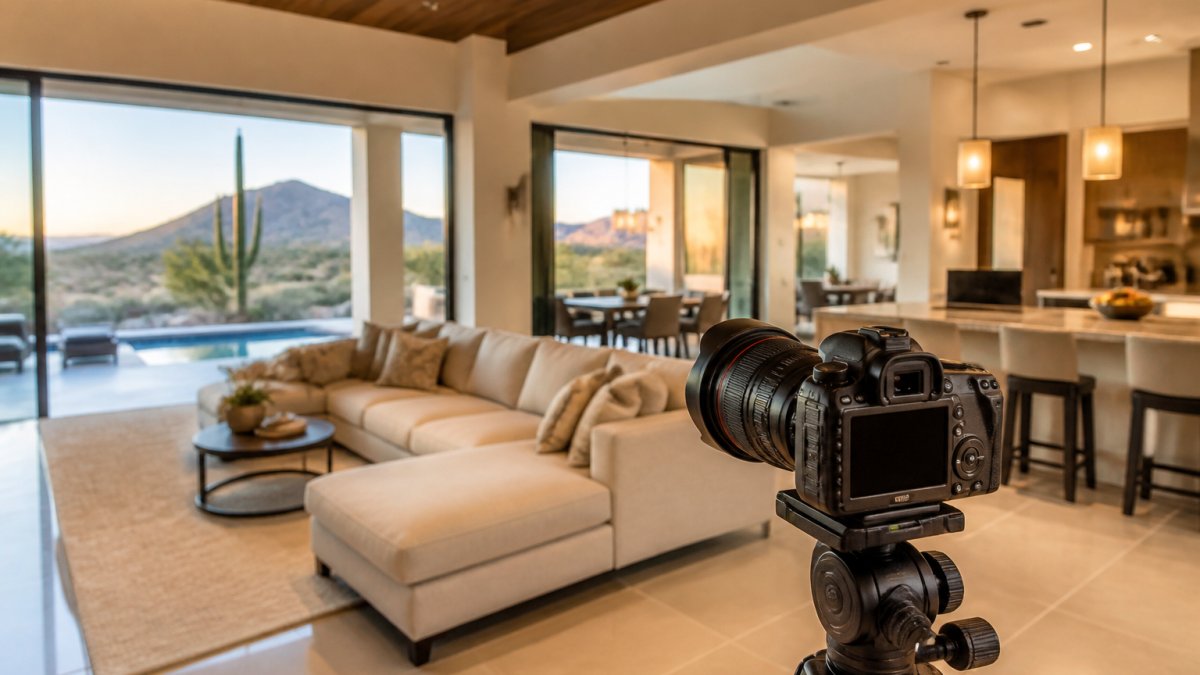
Professional photographers use equipment and techniques designed for real estate: high-quality cameras that capture fine detail, wide-angle lenses that show space without distortion, additional lighting to balance natural light and fill shadows, and post-processing for accurate colors and sharp images.
The measurable difference shows up in buyer behavior. Homes photographed professionally receive more online views. More views lead to more showings. More showings lead to more offers. More offers drive up the final sale price.
For luxury properties, this difference is magnified. High-end buyers expect professional presentation and compare your listing against other luxury homes, many with professional photos. If yours look amateur while competitors' look polished, buyers assume your home is less desirable, even if it's superior.
Measuring Photography's Impact on Your Bottom Line
Most articles tell you to "track your metrics", that's not a framework. Here's a practical one you can run across your own listings, using numbers you already have.
Step 1: Establish a baseline. You can't measure photography's effect without a comparison group. Pull your last 10 to 20 listings and split them into two buckets: shot professionally versus phone or amateur photos.
Step 2: Calculate the photography cost per listing. Add up everything: base shoot fee, drone add-on, twilight shots, virtual tour, floor plans, and any re-shoot. Divide by the number of listings if you buy in bulk.
Step 3: Calculate carrying cost per day. For a luxury listing, this is the number that makes the argument. Add monthly mortgage interest, property taxes, insurance, utilities, HOA dues, and landscaping or pool service, then divide by 30.
Step 4: Track four outcome metrics, not one.
- Sale-to-list-price ratio. Did the home close at, above, or below asking? Compare against your baseline bucket.
- Days on market. Measured from list date to accepted offer, not to closing.
- Showing requests in the first 14 days. This is the cleanest early signal. If professional photos are working, the first two weeks should show a spike in qualified showings.
- Offer count and terms. One full-price offer and four competing offers are very different outcomes even at the same sale price.
Step 5: Run the comparison over at least one full quarter. A single listing proves nothing, one home may sell fast because of location, timing, or a motivated buyer.
What the numbers usually show. In practice, the strongest, most consistent signal isn't sale price, it's showing volume in the first two weeks and days on market. Sale price is influenced by too many variables (appraisal, negotiation, buyer financing) to isolate photography's contribution cleanly, while showing volume and time on market tie directly to the listing presentation photography controls.
A simple ROI formula. Take carrying cost per day, multiply by the days professional photography appears to save versus your baseline, and subtract total photography cost.
Frequently Asked Questions
Can professional real estate photos help a home sell for more?
Yes. Professional photography influences buyer perception of property value and quality. Homes with high-quality listing photos attract more serious inquiries, generate stronger opening offers, and often spend less time on the market. The visual presentation directly affects how buyers perceive the home's condition, finishes, and desirability, factors that influence their willingness to pay.
How should you prepare a luxury home for a photo shoot?
Declutter and depersonalize each room, ensuring clear sightlines and unobstructed views. Deep clean all surfaces, windows, and fixtures. Stage rooms to highlight scale and flow rather than personal items. Address lighting by opening curtains and removing heavy window treatments where possible. Fix obvious maintenance issues like burnt-out bulbs or water spots. Coordinate with your photographer about timing and weather conditions for optimal natural light and exterior shots.
Is professional photography worth the cost when selling a luxury home?
For luxury properties, professional photography typically delivers measurable ROI. The cost of professional photography is a fraction of the carrying costs (mortgage, taxes, utilities) of a home sitting on the market longer. Homes with professional photos sell faster and often command higher prices. The investment pays for itself if it reduces days on market by even a few weeks or generates a single additional offer that negotiates higher.
What is the difference between real estate photography and architectural photography?
Real estate photography focuses on showcasing a home as a lifestyle and living space to attract buyers, emphasizing rooms, layouts, and livability. Architectural photography highlights the design, materials, structural elements, and artistic qualities of the building itself, often for design portfolios or publications. For luxury home sales, professional real estate photography is the priority, though high-end properties may benefit from architectural details that reinforce quality and design appeal.